The following are the heritage sites, grouped into recommended gateway cities. This may help in planning on the logistics (travel and accommodation) of your journey.
ARKHANGELSK (ARH)
Stretched along the banks of the Northern Dvina near the White Sea, Arkhangelsk is a historic sentinel of the Russian North. Founded in 1584, it served as the empire’s primary international seaport until the rise of St. Petersburg. Today, it is a hub of Pomor culture, defined by its maritime heritage and timber industry. Visitors can explore the Malye Korely Open-Air Museum, a vast collection of traditional wooden architecture, or stroll the scenic river embankment. From the 17th-century Gostiny Dvor (Merchant Court) to its role as a launchpad for legendary Arctic expeditions, Arkhangelsk offers a rugged, atmospheric journey into Russia’s seafaring past.

CHEREPOVETS (CEE)
Cherepovets, the industrial powerhouse of the Vologda Oblast, is a city forged by iron and water at the confluence of the Sheksna and Yagorba rivers. Known as the “Northern Athens” for its 19th-century educational roots, it is now dominated by Severstal, one of the world’s largest steel mills. Visitors can explore the Museum of the Steel Industry to witness the city’s metal-making heart or stroll through the historic Galsky Estate, a rare preserved wooden manor. The majestic Resurrection Cathedral serves as a spiritual anchor, while the innovative October Bridge links the Soviet-era districts. Cherepovets offers a unique, grit-meets-culture glimpse into Russia’s industrial soul.

KALININGRAD (KGD)
Nestled between Poland and Lithuania, Kaliningrad is a unique Russian enclave where Prussian history meets Soviet legacy. Once the German city of Königsberg, its heart is the restored Gothic Königsberg Cathedral, home to Immanuel Kant’s tomb. The city’s maritime identity shines at the Museum of the World Ocean, while its geological wealth is celebrated at the Amber Museum. Beyond the urban center, the UNESCO-listed Curonian Spit National Park features dramatic shifting dunes and the surreal Dancing Forest. This atmospheric destination offers a rare cultural crossroads, blending European architectural roots with a contemporary Russian pulse.

KAZAN (KZN)
Kazan, Russia’s “Third Capital,” is a mesmerizing fusion of Slavic and Tatar traditions where the Volga meets the Kazanka. Designated the Cultural Capital of the Islamic World for 2026, the city’s heart is the UNESCO-listed Kazan Kremlin, a unique site where the turquoise-domed Kul Sharif Mosque stands beside the Orthodox Annunciation Cathedral. Visitors can stroll the bustling Bauman Street, sample honey-drenched chak-chak, or explore the futuristic Palace of Farmers. While travelers should monitor regional logistics, Kazan’s legendary hospitality and its vibrant blend of minarets and bell towers offer an unforgettable, cross-cultural adventure.

MAKHACHKALA (MCX)
The capital of Dagestan, Makhachkala is a dynamic port city where the Caucasus Mountains meet the Caspian Sea. Its architectural centerpiece is the snow-white Central Juma Mosque, modeled after Istanbul’s Blue Mosque. While the city pulses with modern energy and a renowned coffee culture, it serves as the primary gateway to the region’s ancient wonders. Visitors often day-trip to the UNESCO-listed Naryn-Kala fortress in nearby Derbent or marvel at the Sarykum Dune, Eurasia’s largest sand mountain. Between exploring ethnographic museums and enjoying Khinkal at the waterfront, travelers experience a unique intersection of over 30 distinct ethnic cultures.

MOSCOW (DME/MOW/SVO/VKO)
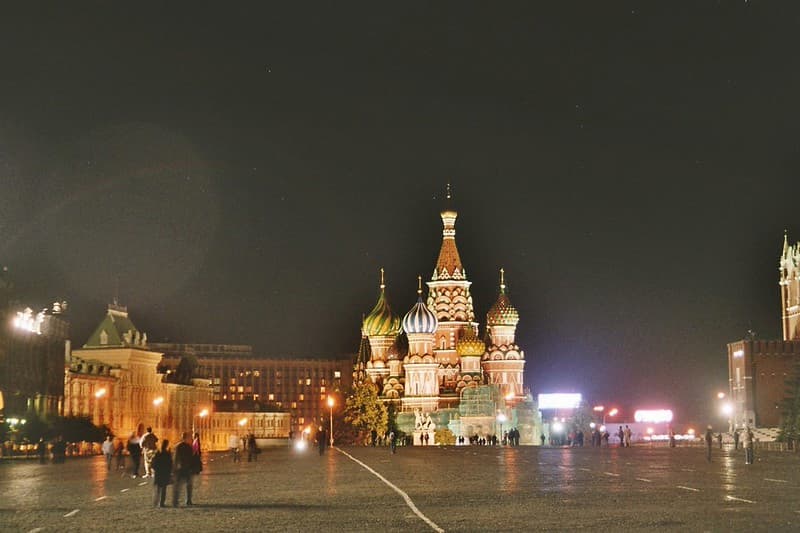
A sprawling megalopolis of dramatic contrasts, Moscow is the political and cultural epicenter of Russia. Its soul resides in Red Square, where the kaleidoscopic domes of Saint Basil’s Cathedral stand against the formidable brick walls of the Kremlin. Beyond the seat of power, the city boasts the world’s most opulent Metro system, featuring stations that double as subterranean palaces. Visitors can explore the world-class Tretyakov Gallery, stroll the expansive Gorky Park, or marvel at the Stalinist “Seven Sisters” skyscrapers. From the historic Bolshoi Theatre to the futuristic glitz of Moscow City, the capital is a relentless, high-energy fusion of imperial grandeur and Soviet history.

PLASTUN (TLY)
Nestled on the rugged coast of the Sea of Japan, Plastun is a remote industrial and ecological gateway in the Russian Far East. Primarily a timber-exporting hub, this quiet settlement serves as the southern threshold to the breathtaking Sikhote-Alin Nature Reserve, a UNESCO World Heritage site. Known for its dramatic coastal cliffs and pristine taiga, the region is a sanctuary for the endangered Amur tiger. Travelers venture here for “expedition-style” tourism, exploring the crystal-clear waters of Plastun Bay, the scenic Lake Blagodatnoye, and the wild, rocky landscapes that define Russia’s untamed maritime frontier.

PSKOV (PKV)
One of Russia’s oldest cities, Pskov is a living monument to medieval defense and spirituality. Its skyline is dominated by the Pskov Krom (Kremlin), a formidable white-stone fortress at the confluence of the Velikaya and Pskova rivers. Within its towering walls lies the gold-domed Trinity Cathedral, while the surrounding city preserves the UNESCO-listed Churches of the Pskov School of Architecture. Visitors can admire 12th-century frescoes at the Mirozhsky Monastery or explore the merchant history of the Pogankin Chambers. Just beyond the city, the 14th-century Izborsk Fortress and the sacred caves of Pechory offer a profound journey into Russia’s storied past.

ST PETERSBURG (LED)
Saint Petersburg, Russia’s imperial capital on the Baltic Sea, is a breathtaking cultural metropolis built across dozens of islands and canals. Founded by Tsar Peter the Great, its UNESCO-listed historic center showcases magnificent Baroque and Neoclassical architecture. The city’s crowning glory is the colossal Winter Palace, home to the world-renowned Hermitage Museum, alongside the striking, mosaic-filled Church of the Savior on Spilled Blood. Visitors can stroll down the lively Nevsky Prospekt, admire grand imperial palaces, or experience the magical summer White Nights, when the sun barely sets. Saint Petersburg offers an unforgettable, romantic journey into Russia’s rich artistic and royal past.


VLADIVOSTOK (VVO)
Perched on the Muravyov-Amursky Peninsula, Vladivostok is a ruggedly beautiful port city where European elegance meets Pacific frontier grit. As the terminus of the legendary Trans-Siberian Railway, its historic station serves as a monument to Russia’s eastward expansion. The city’s skyline is defined by the soaring cable-stayed Golden Bridge and the majestic Russky Bridge, spanning the fog-swept Golden Horn Bay. Visitors can explore the S-56 Submarine Museum, climb to the Eagle’s Nest viewpoint for panoramic vistas, or watch the sunset at the iconic Tokarevsky Lighthouse. Rich in maritime history and fresh king crab, it is Russia’s vibrant window to Asia.
VOLOGDA (VGD)
Vologda, the “Soul of the Russian North,” is a tranquil riverside city celebrated for its spiritual heritage and traditional craftsmanship. Its centerpiece is the Vologda Kremlin, an architectural ensemble housing the Saint Sophia Cathedral, which features a striking 17th-century bell tower and rare frescoes. Nearby, the Lace Museum preserves the delicate, globally renowned art of Vologda lace-making. The city is equally famous for its “wooden lace”—the intricate carvings on historic mansions that line its quiet streets. With its lush parks, legendary Vologda butter, and proximity to the Spaso-Prilutsky Monastery, Vologda offers a deeply authentic journey into Russia’s cultural heart.
Featured Image
Red Square, Moscow (Arian Zwegers, Flickr/CC BY 2.0).
News Feed
-
Archival Insights: Sundukyan’s Architecture in Derbent
-
The Journey of Ferapontov Monastery: A Blend of Prophecy and Frescoes
-
Red Square: A Hub of History and Celebration
-
Top 15 Natural Wonders in Russia
-
NASA and Google Earth Join Forces to Protect Tigers
-
UNESCO Recognizes Tatarstan’s Astronomical Observatories
-
Putin’s Visit to Dagestan: UNESCO Heritage Sites Explored
-
Physico-Chemical Analysis of Mirozhsky Cathedral Art
Advertisement


Comments:
Leave a Reply