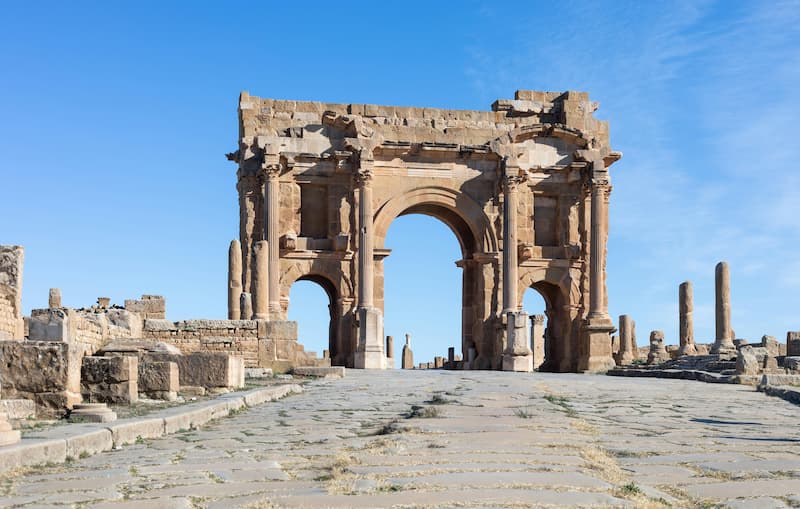
The following are the heritage sites, grouped into recommended gateway cities. This may help in planning on the logistics (travel and accommodation) of your journey.
GHARDAIA (GHA)
A stunning architectural jewel in the northern Sahara, Ghardaïa is the heart of the UNESCO-listed M’Zab Valley. This 11th-century “Pentapolis” consists of five fortified hilltop cities, each spiraling around a central mosque that doubles as a watchtower. The city is a masterpiece of early urban planning, featuring pastel-colored adobe houses, narrow winding alleys designed for cooling, and a sophisticated ancient irrigation system that sustains its lush palm groves. Visitors are captivated by the vibrant Market Square, the spiritual serenity of the Sidi Brahim Mosque, and the unique, preserved traditions of the Mozabite people. Ghardaïa remains a profound testament to human ingenuity and desert survival.

SETIF (QSF)
Sétif, the bustling “capital of the high plateaus,” is a dynamic crossroads in northeastern Algeria where ancient history meets modern commercial energy. The city remains famous for the Ain El Fouara Fountain, an iconic French-colonial landmark, and its world-class Archaeological Museum, which houses the breathtaking “Triumph of Dionysus” mosaic. As the gateway to the nearby UNESCO-listed Roman ruins of Djemila, Sétif offers a vibrant urban experience featuring a modern tramway and the expansive Park Mall. Renowned for its unique Sétifian Chakhchoukha and high-altitude charm, it is an essential hub for exploring Algeria’s rich Roman and Amazigh heritage.


Comments:
Leave a Reply