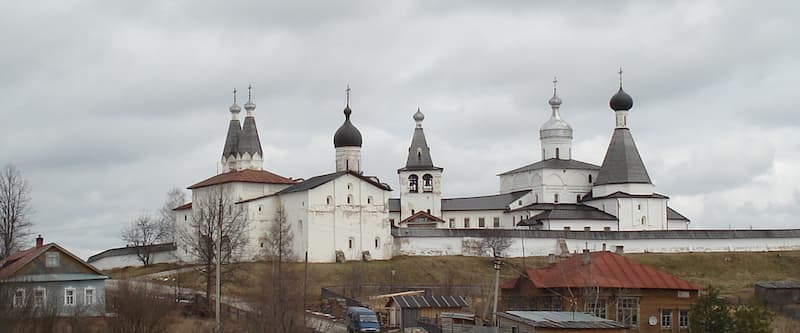
The Ensemble of the Ferapontov Monastery is a rare, perfectly preserved jewel of medieval Russian architecture and art. Situated in the tranquil, lake-dotted landscape of the Vologda region in Northern RUSSIA, it serves as a “time capsule” for the spiritual and artistic heights reached during the formation of the Russian state.
The Ferapontov Monastery, founded in 1398 by Saint Ferapont, is a compact complex of stone buildings that represents the peak of Russian Orthodox monasticism from the 15th to the 17th centuries. Unlike many other Russian monasteries that were heavily modified or expanded into massive fortresses, Ferapontov has retained its original medieval scale and aesthetic.
The heart of the ensemble is the Cathedral of the Nativity of the Virgin (1490), built of brick by masters from Rostov. Surrounding it are several other key structures:
- The Church of the Annunciation (1530): Notable for its refectory and unique belfry.
- The Treasury Chamber: One of the oldest surviving administrative stone buildings in the region.
- The Church of Saint Martinian (1641): Featuring a distinctive “tent-roof” style typical of later Russian architecture.
- The Barbican Gate Churches (1650): Two small churches built directly above the main monastery gates.
The site is nestled between the Borodaevskoe and Paskoye lakes, creating a visual harmony between the white-stone walls and the surrounding northern wilderness.
Attraction
The primary magnet for international travelers is the unparalleled fresco cycle by Dionisy.
- The “Dionisy” Factor: Dionisy was the most famous Russian iconographer of the late 15th century, a successor to Andrei Rublev. In 1502, he and his sons painted the entire interior of the Cathedral of the Nativity of the Virgin in just 34 days.
- Pristine Preservation: These are the only frescoes by Dionisy that have survived in their original location without being repainted or heavily “restored” over the centuries. The colors—sourced from local northern minerals—remain vibrant, dominated by soft blues, pinks, and gold.
- Spiritual Isolation: Travelers seeking a “slow travel” experience are drawn to the monastery’s remote location. It offers a profound sense of peace and a glimpse into the ascetic life of the “Northern Thebaid.”

(Sergey Sebelev, Wikimedia/CC BY-SA 4.0).
Heritage
Inscribed on the UNESCO World Heritage list in 2000, the monastery meets two key criteria:
- Masterpiece of Human Creative Genius (Criterion i): The wall paintings of the Cathedral of the Nativity represent the highest achievement of medieval Russian art. Dionisy’s work is recognized for its sophisticated color palette, rhythmic compositions, and theological depth.
- Outstanding Monastic Ensemble (Criterion iv): The complex is the purest and most complete surviving example of an Orthodox monastic community from the 15th–17th centuries. It illustrates the transition from the independent principalities to a unified Russian state.
Gateway
The most practical gateway to the Ferapontov Monastery is the city of Cherepovets, Russia.
- Commercial Airport: Cherepovets Airport (CEE). It is a well-equipped regional hub with daily commercial flights from Moscow and Saint Petersburg, primarily operated by Severstal Aircompany.
- Lodging: As a major industrial and cultural center, Cherepovets offers sufficient lodging, including business-class hotels (e.g., Hotel Amparo, Skandinavia Hotel) and various modern apartments.
- Logistics: The monastery is located approximately 110 km (68 miles) northeast of Cherepovets. The journey takes about 1.5 to 2 hours by car or organized tour bus. While the city of Vologda (VGD) is also a gateway, Cherepovets typically offers better air connectivity for international travelers arriving via Moscow.
When
- Summer (June to August): This is the optimal time to visit. The roads are clear, the “White Nights” provide extended daylight for photography, and the lush green landscape against the white monastery walls is stunning.
- September (Golden Autumn): The surrounding forests turn vibrant shades of yellow and orange, offering a spectacular contrast with the blue lakes.
- Winter (January to February): For those seeking a traditional “Russian Winter” aesthetic, the site is beautiful under heavy snow. However, be prepared for temperatures as low as -20°C and shorter museum hours.

Consideration
- Climate-Controlled Access: Because the Dionisy frescoes are extremely fragile, the Cathedral of the Nativity is subject to strict humidity and temperature controls. During periods of heavy rain or high humidity, the cathedral may be closed to the public without notice to protect the art.
- Guided Tours: To truly appreciate the complex iconography of the frescoes, it is highly recommended to hire a licensed guide. Most signage is in Russian, though the main museum offers some English materials.
- The “Remote” Factor: There are very few dining options in the immediate village of Ferapontovo. It is wise to pack snacks or a lunch if you are not part of an organized tour that includes a meal.
- Combined Visit: Most visitors combine Ferapontov with the nearby Kirillo-Belozersky Monastery (only 20 km away), which is much larger and offers a different, more fortress-like perspective of monastic history.

(Usadboved, Wikimedia/CC BY-SA 4.0).
Resources
- UNESCO World Heritage Centre – Ferapontov – The official dossier on its historical and artistic significance.
- Museum of Dionisy’s Frescoes (Official Site) – A detailed digital resource featuring a virtual tour of the murals.
- Kirillo-Belozersky Museum-Preserve – The managing body’s site with information on tickets, hours, and special exhibitions.
- Factum Foundation Project – A fascinating look at the high-resolution digital preservation of the frescoes.
- Trip.com – Vologda Oblast Travel – A platform for booking flights to Cherepovets and lodging in the region.


Comments:
Leave a Reply