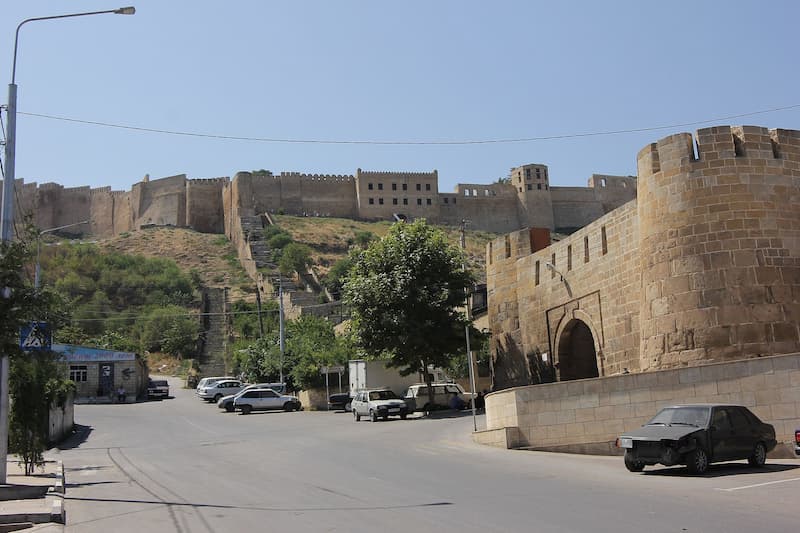
Sasanian engineering shapes the formidable defensive walls of Derbent
The UNESCO World Heritage site titled “Citadel, Ancient City and Fortress Buildings of Derbent” is a historic strategic defensive complex situated on the western shore of the Caspian Sea in the Republic of Dagestan, southern RUSSIA. Strategically guarding the narrow three-kilometer coastal corridor between the Greater Caucasus Mountains and the Caspian Sea, known historically as the “Caspian Gates,” Derbent is widely recognized as one of the oldest continuously inhabited settlements in the region.
The property encompasses three integrated structural components: the hilltop Naryn-Kala Citadel, two parallel massive stone defensive walls running from the citadel down across the ancient city and into the Caspian Sea, and the mountain wall (Dag-Bary) extending 40 kilometers westward into the Caucasus range. Constructed under the Sasanian Empire in the 6th century AD using monumental ashlar stone blocks, the ancient city inside the fortification walls preserves an intact historic urban fabric. Key architectural landmarks include the 8th-century Juma Mosque—the oldest surviving mosque in Russia—historic subterranean stone reservoirs, medieval bathhouses (hammams), traditional residential quarters (mahallas), and ancient Persian and Arabic inscriptions.
Attraction
The ancient city of Derbent draws international travelers, historians, and lovers of military architecture who wish to explore a living crossroad where Middle Eastern, Persian, Caucasian, and Russian cultures converged over millennia.
Visitors climb the imposing stone ramparts of the Naryn-Kala Citadel to enjoy sweeping panoramic views across the ancient terraced town, the surrounding Caspian coastline, and the distant Caucasian peaks. Tourists wander through the narrow, winding alleys of the old mahallas to visit the tranquil courtyard of the Juma Mosque, shaded by multi-century-old plane trees (Platanus). Beyond exploring ancient battlements and subterranean water cisterns, travelers experience rich Caucasian hospitality, sample traditional Dagestani culinary specialties such as mirza and chudou flatbreads, and browse artisan shops selling hand-woven carpets and traditional metalwork.

World Heritage
Inscribed on the UNESCO World Heritage List in 2003, the defensive ensemble of Derbent is recognized under Cultural Criteria (iii) and (iv):
- Criterion (iii) – Exceptional Testimony to Great Empires: The site provides an exceptional physical testimony to the strategic power, engineering mastery, and architectural influence of the Sasanian Persian Empire, as well as subsequent Arab, Seljuk, Safavid, and Russian historical periods along a critical Eurasian trade and defense route.
- Criterion (iv) – Outstanding Architectural and Strategic Ensemble: The Citadel, city walls, and Dag-Bary mountain wall constitute an outstanding example of a Sasanian defensive fortification system built from massive stone ashlar blocks, representing a unique masterpiece of military engineering adapted to a dramatic natural landscape.
Gateway
Travelers planning an expedition to Derbent can access the region via practical Russian gateway cities featuring public IATA-listed airports searchable directly on IATA’s directory, complete lodging choices, transport connections, and local guide services:
- Makhachkala (Primary Regional Gateway / Nearest Airport):
- Airport: Makhachkala Uytash International Airport (IATA Code: MCX; ICAO Code: URML).
- Infrastructure and Distance: Located approximately 106 kilometers north of Derbent. MCX is an active international airport fully indexed in IATA’s public directory, offering regular flights to Moscow, Saint Petersburg, and regional hubs. As the capital of the Republic of Dagestan, Makhachkala provides extensive accommodation options ranging from modern business hotels to seaside resorts. Direct regional suburban electric trains (elektrichkas), express intercity buses, rental car desks, and certified Dagestani tour guides operate daily transfers south along the coast to Derbent in under two hours.
- Grozny (Secondary Regional Gateway):
- Airport: Grozny Kadyrov International Airport (IATA Code: GRV; ICAO Code: URMG).
- Infrastructure and Distance: Located approximately 270 kilometers northwest of Derbent. GRV is a public international commercial airport searchable in IATA’s directory. Grozny provides full hotel infrastructure, car rental options, intercity coach services, and tour operators running overland Caucasian heritage circuits into Dagestan and Derbent.
When
The ideal windows to visit Derbent are during Late Spring (May to June) and Early Autumn (September to October):
- Late Spring (May to June): Delivers delightful warm weather (18°C to 25°C), long daylight hours, and vibrant green vegetation along the coastal hillsides, perfect for walking around the outdoor fortress walls.
- Early Autumn (September to October): Offers dry, comfortable sightseeing conditions (17°C to 24°C) with low humidity and warm Caspian sea waters, making autumn ideal for combining historic tours with coastal walks.
- Summer (July to August): Warm to hot (28°C to 34°C) and humid along the Caspian coast; while seaside tourism peaks, midday walking along unshaded stone ramparts requires sun protection.
- Winter (December to February): Cool to cold (1°C to 7°C) with frequent coastal winds and occasional light rain or snow; indoor museum exhibits remain open, though outdoor exploration requires heavy winter coats.
Consideration
- Cultural Sensitivity and Dress Code: Dagestan is a predominantly Muslim region with traditional social customs. Visitors should dress modestly when exploring the old town and religious sites: men should avoid shorts and sleeveless shirts, while women should wear clothing covering shoulders and knees, carrying a scarf for head covering inside mosques.
- Walking on Historic Ramparts: Navigating the Naryn-Kala Citadel and medieval mahalla streets involves steep stone steps, cobblestone alleys, and unpaved paths. Wearing sturdy, non-slip walking shoes is essential.
- Guided Tours for Context: Because site signage in historical zones is primarily in Russian, hiring a licensed local guide near the citadel gates or via tour agencies in Makhachkala greatly enhances the historical experience.
- Hydration and Sun Safety: The open stone fortress is fully exposed to sun and coastal winds. Carrying bottled water, high-SPF sunscreen, sunglasses, and a wide-brimmed hat is recommended during warmer months.
- Currency and Cash: Transactions use the Russian Ruble (RUB). Due to international banking restrictions, foreign credit and debit cards issued outside Russia do not function; carrying local cash is necessary for entrance tickets, local transport, souvenirs, and dining.

Resources
- UNESCO World Heritage Centre: Official inscription portal detailing site boundaries, criteria evaluations, and state of conservation reports.
- Derbent State Museum-Reserve Official Portal: Official administrative website providing opening hours, ticket prices, and historical exhibits for Naryn-Kala Citadel.
- Visit Dagestan Official Tourism Portal: Official regional travel site offering transit information, city guides, and accommodation directories across Derbent and Makhachkala.
- Russia Travel Official Directory: Official national portal detailing cultural history, Caucasian travel itineraries, and transport logistics for southern Russia.
- Trip.com: Major international travel platform offering bookings for hotels in Makhachkala and Derbent, regional train tickets, and transfer services.


Comments:
Leave a Reply