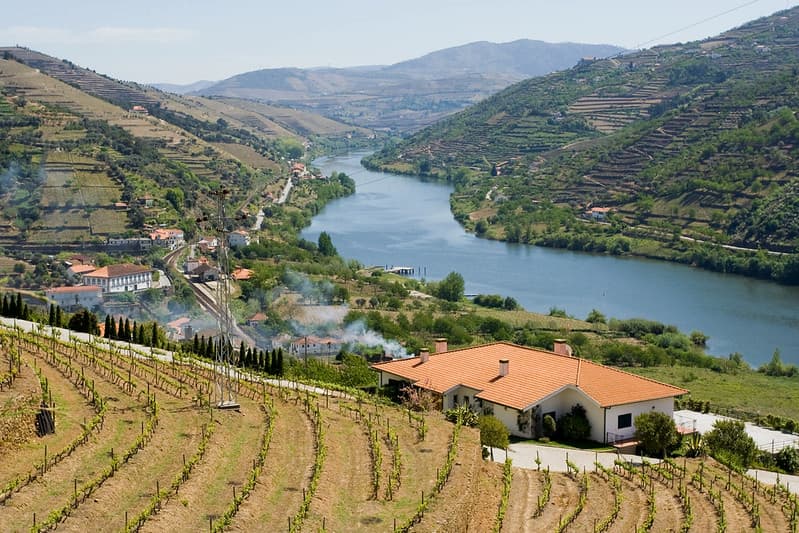
The world’s oldest officially demarcated and regulated wine region
The UNESCO World Heritage site titled “Alto Douro Wine Region” (Região Vinhateira do Alto Douro) is a cultural landscape located in northeastern PORTUGAL along the winding corridor of the Douro River. Covering over 24,000 hectares, it is framed by the Marão and Montemuro mountain ranges, which shelter the valley from Atlantic winds and create a unique Mediterranean microclimate ideal for viticulture.
The region represents the oldest demarcated and regulated wine-producing region in the world, formally established by the Marquis of Pombal in 1756. The landscape is visually defined by steep, schistose river slopes sculpted into thousands of hand-built, stone-walled terraces (socalcos) and narrower modern earth banks (patamares). The area is dotted with historic wine-producing estates (quintas), traditional white-washed villages, whitewashed chapels, and historic river towns such as Peso da Régua and Pinhão. For centuries, oak barrels of Port wine were transported from these mountain vineyards down the Douro River to the wine lodges of Vila Nova de Gaia on traditional wooden sail-powered cargo boats (barcos rabelos).
Attraction
The Alto Douro Wine Region attracts wine connoisseurs, luxury travelers, naturalists, and cultural enthusiasts who come to experience one of Europe’s most visually dramatic agricultural landscapes. The dramatic sight of terraced vineyards plunging directly into the shimmering Douro River creates an unforgettable setting for luxury river cruises, scenic train journeys, and epicurean travel.
Visitors flock to the valley to tour world-famous quintas, indulge in curated Port and Douro red wine tastings, and dine on regional Portuguese gastronomy overlooking sweeping river bends. Tourists travel along the scenic Linha do Douro historic railway line, which hugs the riverbank between Porto and Pocinho, or drive along the famous N222 highway between Peso da Régua and Pinhão, frequently named one of the most beautiful drive routes in the world. Visitors also enjoy traditional rabelo boat cruises along the river, participating in autumn grape harvesting (vindimas), and hiking along ancient vineyard trails.

World Heritage
Inscribed on the UNESCO World Heritage List in 2001 under Cultural Criteria (iii), (iv), and (v), the Alto Douro Wine Region is recognized for its cultural and agricultural significance:
- Criterion (iii) – Cultural Tradition: The site bears exceptional witness to the long tradition of winemaking in a challenging environment. Human ingenuity transformed steep, unyielding slate mountains into productive agricultural terraces over two millennia, creating a unique socio-technical system centered around wine production.
- Criterion (iv) – Outstanding Cultural Landscape: The property represents an outstanding example of a traditional European wine-producing region, illustrating the evolution of human interaction with a demanding natural environment over time.
- Criterion (v) – Traditional Land-Use Pattern: The region illustrates an extraordinary traditional land-use pattern where physical terracing, water management, agricultural practices, and architectural ensembles (quintas) harmoniously integrate with the dramatic physical geography of the Douro Valley.
Gateway
Travelers planning an excursion to the Alto Douro Wine Region can access the site via two practical Portuguese gateway cities featuring public IATA-listed commercial airports, overnight accommodation options, public transport infrastructure, and tour guide services:
- Porto (Primary Regional Gateway):
- Airport: Francisco Sá Carneiro Airport (IATA Code: OPO; ICAO Code: LPPR).
- Infrastructure and Distance: Situated approximately 100 kilometers west of Peso da Régua (the Western entryway to the Alto Douro region). As Northern Portugal’s primary international aviation hub, OPO operates extensive direct domestic and international flights. Porto offers a complete range of accommodations, from luxury five-star riverfront hotels to historic boutique guesthouses. Direct Linha do Douro passenger trains run regularly from Porto’s São Bento and Campanhã stations straight into the heart of the wine region at Peso da Régua (in 1 hour 40 minutes) and Pinhão (in 2 hours 15 minutes). Car rentals, river cruise ships, and daily guided tour buses are universally available.
- Vila Real (Secondary Local Gateway):
- Airport: Vila Real Airport (IATA Code: VRL; ICAO Code: LPVR).
- Infrastructure and Distance: Located 25 kilometers north of Peso da Régua. VRL is a public regional airport. Vila Real offers local hotels, car hire services, bus connections, and quick road access straight down the Corgo Valley into the Douro wine estates.
When
The ideal window to visit the Alto Douro Wine Region is during Early Autumn (September to October) and Late Spring (May to June):
- Autumn Harvest Season (September to October): The absolute highlight period when grape harvesting (vindimas) takes place across all quintas. Temperatures are warm and pleasant (20°C to 28°C / 68°F to 82°F), the vine foliage turns brilliant shades of gold and red, and visitors can participate in traditional grape treading in stone lagares.
- Late Spring (May to June): Offers comfortable weather (20°C to 26°C / 68°F to 79°F), lush green terraced hillsides, blooming wildflowers, and lower tourist crowds along river cruise ships and tasting rooms.
- Summer (July to August): Very hot and dry, with valley temperatures frequently exceeding 38°C (100°F).
- Winter (November to March): Mild to chilly (8°C to 15°C / 46°F to 59°F) with increased rainfall; many quintas operate on reduced visitor schedules.
Consideration
- Winery Reservations Required: Visiting historic quintas for guided estate tours and wine tastings requires advance reservations, particularly during the peak autumn harvest season.
- Narrow, Winding Mountain Roads: Driving along river roads like the N222 involves steep drop-offs, sharp hairpin turns, and narrow lanes. Drivers should exercise caution and consider hiring local drivers or using train services if uncomfortable with mountain driving.
- Footwear and Terrain: Vineyards feature uneven, gravelly schist terrain, steep stone stairs, and cobbled village streets. Wearing sturdy, non-slip walking shoes or boots is essential.
- Sun Protection and Hydration: The microclimate in the valley can trap heat intense solar radiation requires high-SPF sunscreen, wide-brimmed hats, sunglasses, and carrying plenty of drinking water during daytime walking tours.
- Local Currency and Tipping: Transactions use the Euro (EUR). Cards are widely accepted at major wineries and hotels, but cash is helpful for small village taverns, taxi rides, and tips.

Resources
- UNESCO World Heritage Centre: Official inscription portal detailing boundaries, criteria summaries, and conservation state reports.
- Visit Portugal Official Tourism Portal: Official national tourism board site providing Douro itineraries, travel planning tools, and regional guides.
- Visit Porto and North Official Portal: Regional tourism board portal offering transportation information, accommodation listings, and event schedules.
- Instituto dos Vinhos do Douro e do Porto (IVDP): Official governing body portal for Port and Douro wine regulation, history, and certified winery directories.
- GetYourGuide: Booking marketplace offering day tours, river boat cruises, wine tastings, and transit packages from Porto to the Alto Douro region.


Comments:
3 responses to “Alto Douro Wine Region”
-
The Upper Douro region, with its terraced vineyards and stark beauty is still new territory for tourists, so make sure you visit before everyone else discovers it. You can drive there or get the train from Porto. The line hugs the river, and is one of the best railway journeys in the world. The new visitor centre at Quinta de Bomfim in Pinhão is the place to visit to see some of the history of the region through a series of rare old photographs. You can visit the lodge where there are huge oak vats used for maturing port since the 19th century and at vintage time you will also be able to see the grapes being crushed and fermented in the lagars.
-
What attracted me so to the region? Firstly, the striking landscapes, with terraced vineyards everywhere made of schist and granite. The region is simply stunning. Secondly, it has a lot of history. In 1756, the Marquês of Pombal demarcated the Douro Valley, the first [wine] region in the world to be so designated. Producers showed us the stones from that demarcation.
Thirdly, it is an amazing place to visit for wine tourism, where there are small and big wineries happy to host you, allow you to taste their wines, and in many cases, participate in harvesting. The Douro is a feast for the senses: the sound of the river everywhere you go, the beauty of the hills, the delicious foods and wines, the lagares – old-fashioned stone tanks that are still used to crush grapes give texture to your trip, and more than anything else, the people.
-
The Douro River Valley is one of the most charmingly idyllic places we have ever visited. Terraced vineyards rise up from the edge of the river to the sky with red-roofed villages and quintas (wine estates) dotting the hillsides. The location of the Douro River Valley on the Iberian Peninsula provides the perfect microclimate for growing grapes for the region’s famous port wine.

Leave a Reply