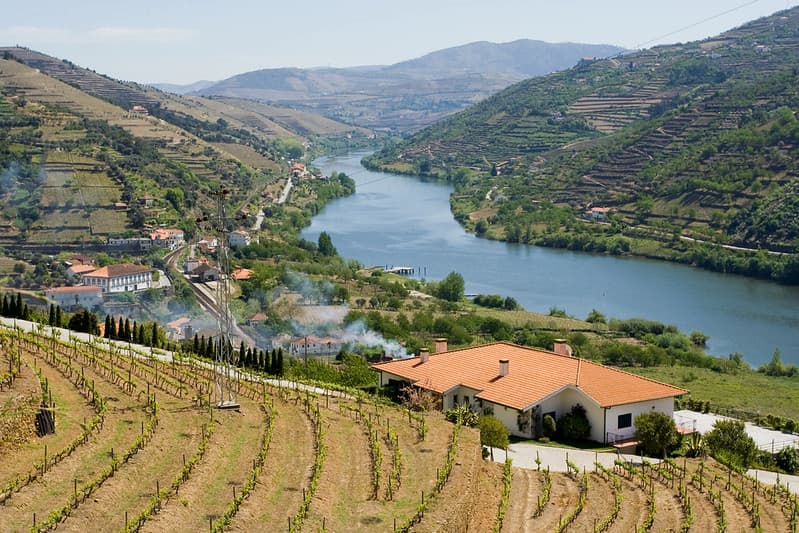
The Alto Douro Wine Region in northeastern Portugal is a monumental cultural landscape where humanity has literally reshaped the earth. For over 2,000 years, the steep, rocky slopes of the Douro River valley have been transformed into thousands of hand-built stone terraces. It is the world’s oldest demarcated and regulated wine region (formalized in 1756), historically famous for producing the grapes that become Port wine.
The region is divided into three sub-zones: Baixo Corgo, Cima Corgo (the heart of the valley), and Douro Superior. It is a living, working landscape characterized by:
- The Terraces: Spectacular tiers of vines carved into schist rock.
- The Quintas: Grand, white-walled wine estates that dominate the hillsides.
- The River: The winding Douro River, which served for centuries as the highway for Rabelo boats transporting wine barrels to the coast.
Attraction
Travelers are drawn to the Douro for its theatrical scenery and oenological heritage.
- Wine Tourism: Visiting historic Quintas for tastings of both Port and high-quality Douro DOC table wines.
- River Cruises: Taking a traditional Rabelo boat or a luxury river cruise to see the terraces from the water.
- Scenic Transit: The Douro Train Line is considered one of the most beautiful rail journeys in Europe, hugging the riverbank for miles.

Heritage
Inscribed in 2001, the site represents an “evolving cultural landscape” under three criteria:
- Criterion (iii): It has produced wine for two millennia, molding the landscape through human activity.
- Criterion (iv): The landscape features (terraces, quintas, villages) represent the full technological and social range of winemaking.
- Criterion (v): It is an outstanding example of a traditional European wine region that has evolved sustainably over time despite a hostile natural environment.
Gateway
- The City: Porto, the second-largest city in Portugal, is the essential gateway.
- Airport: Francisco Sá Carneiro Airport (OPO) is a major international commercial hub.
- Lodging: Porto offers a vast array of hotels, from the ultra-luxury The Yeatman (overlooking the Port lodges) to historic guesthouses in the Ribeira district.
When
- September to October: The Harvest Season is the peak experience. The valley is alive with activity, the vines turn golden-red, and many Quintas allow tourists to participate in traditional grape treading.
- Spring (April to June): The weather is mild, the almond trees are in bloom, and the crowds are thinner than in late summer.

Consideration
- Transportation: While the train is scenic, renting a car is best for reaching the most remote and authentic wineries.
- The Heat: Summer temperatures in the “Douro Superior” can exceed 40°C. Plan outdoor activities for early morning.
- Reservations: Many of the most famous Quintas (like Quinta do Bomfim or Quinta da Roêda) require advance booking for tours and tastings.
- Vila Nova de Gaia: Remember that while the wine is grown in the Douro, it was historically aged in the cellars of Gaia, across from Porto. Visiting both is the only way to see the full story.

Resources
- UNESCO World Heritage – Alto Douro: Official maps and the technical justification for its status.
- Visit Portugal – Douro Valley: The national tourism portal for regional itineraries.
- Douro Valley Guide: A dedicated regional site covering history and events.
- CP – Comboios de Portugal: The official railway site for booking the Linha do Douro train.
- Viator – Porto Tours: A reliable platform for booking guided day trips and river cruises from Porto.
Featured Image
Douro Valley (Marco Varisco, Flickr/CC BY-SA 2.0).
In The News
Advertisement



Comment:
3 responses to “Alto Douro Wine Region”
-
The Upper Douro region, with its terraced vineyards and stark beauty is still new territory for tourists, so make sure you visit before everyone else discovers it. You can drive there or get the train from Porto. The line hugs the river, and is one of the best railway journeys in the world. The new visitor centre at Quinta de Bomfim in Pinhão is the place to visit to see some of the history of the region through a series of rare old photographs. You can visit the lodge where there are huge oak vats used for maturing port since the 19th century and at vintage time you will also be able to see the grapes being crushed and fermented in the lagars.
LikeLike
-
What attracted me so to the region? Firstly, the striking landscapes, with terraced vineyards everywhere made of schist and granite. The region is simply stunning. Secondly, it has a lot of history. In 1756, the Marquês of Pombal demarcated the Douro Valley, the first [wine] region in the world to be so designated. Producers showed us the stones from that demarcation.
Thirdly, it is an amazing place to visit for wine tourism, where there are small and big wineries happy to host you, allow you to taste their wines, and in many cases, participate in harvesting. The Douro is a feast for the senses: the sound of the river everywhere you go, the beauty of the hills, the delicious foods and wines, the lagares – old-fashioned stone tanks that are still used to crush grapes give texture to your trip, and more than anything else, the people.
LikeLike
-
The Douro River Valley is one of the most charmingly idyllic places we have ever visited. Terraced vineyards rise up from the edge of the river to the sky with red-roofed villages and quintas (wine estates) dotting the hillsides. The location of the Douro River Valley on the Iberian Peninsula provides the perfect microclimate for growing grapes for the region’s famous port wine.
LikeLike

 All About World Heritage Sites (...and more)
Leave a reply to Christine Cancel reply