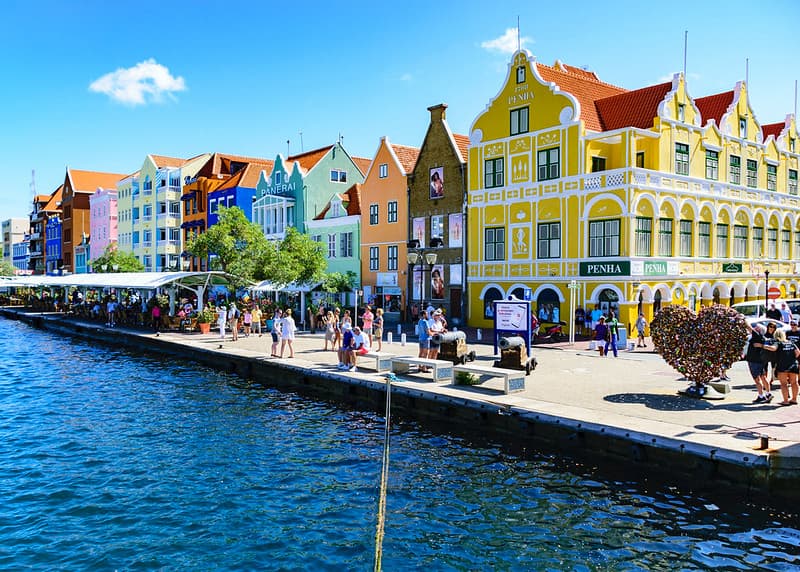
The Historic Area of Willemstad, Inner City and Harbour, Curaçao is a striking example of a well-preserved Dutch colonial trading settlement. Located on the Caribbean island of Curaçao—a country within the Kingdom of the NETHERLANDS—the city is famous for its vibrant, pastel-colored colonial architecture and its strategic harbor at Sint Anna Bay.
Inscribed as a UNESCO World Heritage site in 1997, Willemstad reflects over three centuries of multicultural development. The city is divided into four primary historic districts: Punda, Otrobanda, Pietermaai, and Scharloo. Its urban landscape features a unique blend of Dutch, Spanish, and Portuguese architectural styles, shaped by its history as a thriving trade hub. Unlike static museum cities, Willemstad remains an actively lived-in capital, where historic shops, townhouses, and mansions continue to function in daily life.
Attraction
Willemstad is a major draw for tourists due to its unique aesthetic and atmosphere:
- Colorful Architecture: The waterfront, lined with iconic pastel-colored Dutch colonial buildings, is a photographer’s dream and the most recognizable symbol of the island.
- Cultural Blend: Visitors enjoy the walkability between districts, such as the iconic Queen Emma Bridge (a floating pontoon bridge) that links the commercial center of Punda with the residential and creative vibe of Otrobanda.
- Living History: Because the city is not a museum, travelers can experience authentic Caribbean culture, dining, and vibrant daily rhythms within protected historical structures.

World Heritage
Willemstad earned its status for its outstanding universal value and integrity:
- Architectural Diversity: It showcases a rare convergence of European urban-planning concepts adapted to the Caribbean environment, incorporating Dutch, Spanish, and Portuguese influences.
- Cultural Continuity: The city serves as a testament to the organic growth of a multicultural community over three centuries, maintaining its historic layout while evolving through trade and defense.
- Preservation: It possesses a high degree of preservation, with hundreds of listed monuments—ranging from grand mansions to modest vernacular homes—that reflect the island’s colonial past.
Gateways
The primary gateway is Willemstad, which is served by Curaçao International Airport (CUR), also known as Hato International Airport.
- Transport: Located approximately 12 kilometers from the city center, the airport is well-equipped to handle international and regional traffic, offering car rentals, taxis, and hotel shuttles for a 15–20 minute transit to the historic districts.
- Lodging: As the capital, Willemstad provides extensive lodging options, ranging from historic boutique hotels within the UNESCO-listed districts to modern resorts nearby.
When
Curaçao enjoys stable, warm, and sunny weather year-round, making it a great destination at any time. However, many travelers prefer:
- December to April: This period is generally considered the best time to visit, offering ideal conditions for beach activities and exploring the city.
- Note: The island is largely outside the Caribbean hurricane belt, meaning it is a reliable destination even during the traditional hurricane season (June to November).
Consideration
- Transportation: While the central neighborhoods are very walkable, renting a car is highly recommended if you plan to explore the island’s beautiful Westpunt beaches or other areas outside the city.
- Length of Stay: While a weekend is possible, a stay of at least four to seven days is recommended to fully appreciate the historic city and the island’s natural highlights.
- Costs: Taxis can be expensive; plan your transportation budget accordingly, especially if you rely on them rather than renting a vehicle.

Resources
- Curaçao Monuments: The definitive source for information on the city’s 743+ listed monuments and historic districts.
- UNESCO World Heritage Centre: Official documentation and historical background on the site.
- Curaçao Tourist Board: The official tourism portal for travel planning and local events.
- Lonely Planet – Curaçao Guide: A reliable, comprehensive guide for first-time visitors covering logistics and highlights.
- Trip.com: A travel platform where you can book flights, hotels, and tours.


Comments:
5 responses to “Historic Area of Willemstad, Inner City and Harbour, Curaçao”
-
Willemstad is delightfully walkable, with cobbled lanes, restaurants, shops and gabled houses that were painted white until 1817 when the Governor ordered them repainted in a palette of crayon colors to combat the glare from the sun. The oldest district, called Punda, is charming with a pastel-pretty waterfront and the big Curacao sign near the information booth where you can snag gratis maps of the city.
-
Visit the Kura Hulanda Museum where you can descend into the hold of a slave ship. The museum examines the transatlantic slave trade that once made Curacao a wealthy island.
-
Kura Hulanda is a truly first-class, if deeply disturbing, slavery museum. It was really worth seeing. And the Pontoon Bridge known as “the Swinging Old Lady” is a must-experience.
-
The charms of Willemstad, with its rainbow palette of gabled buildings accented with louvered shutters and white gingerbread trim, never lose their appeal. The winding cobblestone streets and alleyways of this 17th century city, located on Santa Anna Bay, are crowded with art galleries, restaurants, shops and little plazas shaded by acacia trees.
Enjoy a scoop of Lover’s, a super creamy island made ice cream or a slice of Dutch Apple Cake at the cafes while watching the Queen Emma Pontoon Bridge swing open and close letting walkers cross between Punda and Otrabanda districts of the city.
Stroll to the Floating Market, a Curacao tradition where boats from Venezuela, 38 miles away, tie up in early morning along the quay, displaying their wares of brilliantly colored fresh fruit, vegetables and flowers, mounds of glistening fish and such Caribbean specialties as tamarind candies and sugar cane. Take in the smells — and if you’re hungry, the tastes — of the foods cooked by vendors along the docks. Pause in Jo Jo Correa, a lovely plaza just across the street where artisans sell their wares.
-
The Queen Emma Bridge, called the “swinging old lady” by locals, is a pontoon bridge originally built in 1888 and restored in 2005/2006. I am told that it is free to cross NOW but originally there was a fee of 1/2 a cent to walk across the bridge if you were wearing shoes, but if you had no shoes on there was no fee (people caught on very quickly). As I was walking across the wooden bridge (with my shoes on) I could feel a slight bobbing motion and the slight sway of the bridge as it floats over the water. If you are crossing when it is windy, or the water is rough, it’s as if you are drunk, and I can well imagine this because even in calm waters I found it difficult to walk in a straight line.
The long bridge opens and moves to the side about 30 times per day to allow for ships to enter the harbour. When the bridge is open, free ferries called “ponchi” are in operation to accommodate people who wish to cross from side to side.
It is worth mentioning that even though St. Anna Bay looks narrow, it is very deep. It’s misleading when you are standing on the Queen Emma Bridge, and you look inland towards the 56 meters high Queen Juliana Bridge. But if you follow it further it opens up into a vast and deep shipping port area with container ships and dry docks.

Leave a Reply