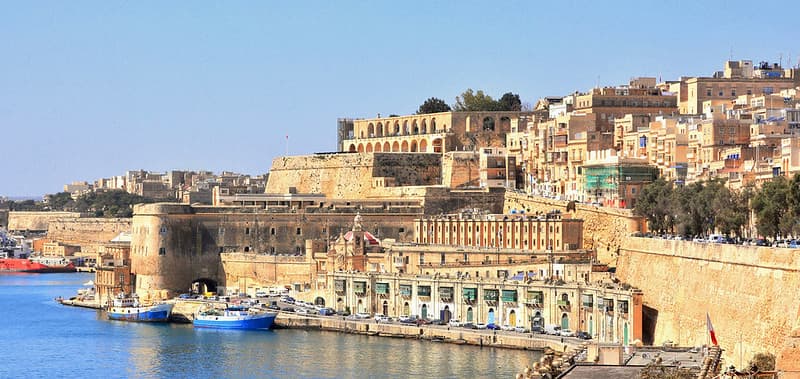
Discover Valletta: A Mediterranean Cultural Hub
The UNESCO World Heritage property titled “City of Valletta” is the historic capital city of the Republic of MALTA, situated on a narrow, rocky peninsula between two expansive natural harbors—Marsamxett Harbour to the west and the Grand Harbour to the east. Encompassing roughly 55 hectares (0.55 square kilometers), Valletta is one of the smallest capital cities in Europe, yet it boasts one of the world’s most concentrated historic urban footprints.
Founded in 1566 by Jean Parisot de Valette, Grand Master of the Order of Saint John (Knights Hospitaller), following the victory in the Great Siege of 1565 against the Ottoman Empire, Valletta was meticulously constructed as a fortified citadel. Designed by Italian military engineer Francesco Laparelli using Renaissance principles, the city features a uniform grid layout built directly onto the peninsula’s steep terrain. The city is enclosed by towering bastions, deep moats, and stone ramparts, blending honey-colored limestone architecture, Mannerist and Baroque palaces, opulent churches, and iconic colorful wooden balcony enclosures known locally as gallariji.
Attraction
Valletta lures international travelers with its extraordinary density of historical monuments, dramatic harbor views, and vibrant Mediterranean culture. Often described as an open-air museum, the city packs 320 historic monuments into its compact footprint, making nearly every street an architectural landmark.
The primary attraction is St. John’s Co-Cathedral, a Baroque masterpiece whose gilded interior houses Caravaggio’s famous painting The Beheading of Saint John the Baptist. Visitors flock to the Upper and Lower Barrakka Gardens for panoramic views across the Grand Harbour toward the historic “Three Cities” (Birgu, Senglea, and Cospicua), as well as to witness the daily noon firing of the Saluting Battery. Other prominent attractions include the grand Grandmaster’s Palace, Fort St. Elmo housing the National War Museum, the National Museum of Archaeology inside the Auberge de Provence, and the historic subterranean tunnels of Underground Valletta. Beyond history, the city offers bustling pedestrian shopping avenues along Republic Street and Merchant Street, world-class Mediterranean seafood, and lively alfresco wine bars.

World Heritage
Inscribed on the UNESCO World Heritage List in 1980, the City of Valletta was recognized as a Cultural World Heritage Site fulfilling criteria (i) and (vi):
- Criterion (i) – Masterpiece of Human Creative Genius and Late Renaissance Planning: Valletta is an ideal creation of the late Renaissance. Designed on a rigid grid plan inspired by Neo-Platonic principles, it harmoniously integrates military defensive walls and massive bastions into the natural cliffside topography. The uniform urban layout incorporates major administrative buildings, palaces, and churches within a disciplined street grid, maintaining its intact 16th-to-18th-century urban character despite extensive bombing during World War II.
- Criterion (vi) – Association with Events and Historical Significance: Valletta is inextricably linked to the military and charitable Order of Saint John of Jerusalem (the Knights of Malta). The Knights established and ruled the fortified city for over two centuries, making Valletta a pivotal stronghold for the defense of Christian Europe in the Mediterranean basin.
Gateway
Travelers visiting Valletta can utilize two practical Maltese gateway locations equipped with an active IATA-coded airport, lodging, transport links, and tour services:
- Luqa / Gudja (Immediate National Gateway):
- Airport: Malta International Airport (IATA Code: MLA; ICAO Code: LMML).
- Infrastructure: Located in the municipality of Luqa, just 8 kilometers (5 miles) south of Valletta, Malta International Airport is the nation’s sole commercial air gateway. Luqa and the surrounding central municipalities provide business hotels, guesthouses, car rental services, and direct public transit buses (including express routes X1, X2, X3, and X4) operated by Malta Public Transport, connecting the terminal straight to the main bus terminus just outside Valletta’s City Gate.
- Valletta / Floriana (Capital Hub Gateway):
- Airport Served: Malta International Airport (IATA Code: MLA).
- Infrastructure: Situated immediately adjacent to the capital, the Valletta and Floriana urban center acts as the primary lodging and tourism hub for the island nation. It offers a vast range of boutique luxury hotels, historic guesthouses, and apartments. The central bus station at Valletta’s Triton Fountain provides direct routes across the entire island, while ferry services link the capital directly to Sliema and the Three Cities. Innumerable local agencies offer licensed tour guides, walking tours, and harbor cruises departing daily.
When
The ideal period to visit the City of Valletta is during Spring (April to June) and Autumn (September to October).
- Spring and Autumn: Offer ideal sightseeing conditions with comfortable daylight temperatures ranging between 18°C and 26°C (64°F to 79°F). Rainfall is minimal, sea waters are warm enough for swimming by late spring, and walking the city’s open-air streets is pleasant without extreme heat.
- Summer (July to August): Brings hot, humid conditions (temperatures frequently exceeding 32°C / 90°F) and heavy tourist crowds from cruise ship arrivals, though summer nights feature lively outdoor dining and coastal fireworks.
- Winter (November to March): Mild temperatures (12°C to 17°C / 54°F to 63°F) and low crowds make winter appealing for museum exploration, though occasional coastal rainstorms occur.
Consideration
- Hilly Topography and Footwear: Built across a high peninsula ridge, Valletta’s grid streets feature steep inclines and stone staircases. Wearing comfortable walking shoes with good traction is essential.
- Cruise Ship Congestion: Valletta is a major Mediterranean cruise port. On days when multiple cruise ships dock at the Valletta Waterfront, daytime pedestrian traffic at main attractions increases dramatically. Visiting key sites like St. John’s Co-Cathedral early in the morning helps avoid long lines.
- Advance Booking Required: Popular historical landmarks with strict entrance quotas—such as the nearby Ħal Saflieni Hypogeum and Underground Valletta—require booking tickets weeks or months in advance online.
- Currency and Language: Malta uses the Euro (€) and has two official languages: Maltese and English. English is universally spoken across tourism and commercial sectors.
- Sun Protection: The exposed stone fortifications absorb heat and reflect sunlight intensely; sunscreen, hats, and water are necessary when touring outdoors.

(Frank Vincentz, Wikimedia/CC BY-SA 3.0).
Resources
- UNESCO World Heritage Centre: Official property portal outlining inscription criteria, conservation reports, and geographic boundaries.
- Visit Malta: Official national tourism authority site providing travel guides, event calendars, and transit links for Valletta.
- Heritage Malta: Official national agency managing museums and heritage sites, offering ticket purchasing and opening hours.
- Valletta Cultural Agency: Official municipal entity providing details on local cultural events, arts festivals, and historical exhibits.
- GetYourGuide: Leading online travel marketplace offering walking tours, harbor cruises, and skip-the-line tickets in Valletta.


Comments:
4 responses to “City of Valletta”
-
The streets are full of life with live music and street performers giving a wonderful atmosphere whether you are walking the cobbled streets appreciating the architecture or sitting at one of the many restaurants the city has to offer.
-
No trip to Malta would be complete without exploring the streets of Valletta. The capital city is not only home to St. John’s Co-Cathedral, but also home to charming narrow streets, trendy restaurants and Upper Barrakka Gardens which boasts a panoramic view of Grand Harbour. Walk the hilly streets and keep an eye out for the colorful enclosed balconies that date back to the early 17th century.I absolutely fell in love with them and have 100s of photos to prove it! When your feet start to get tired (and they will!), pop into one of the many cafes.
-
The most amazing place I visited was St Peter’s Pool. It’s off the beaten track but well worth the effort. Natural rock formations of pools with crystal clear water. Haven’t seen anything like it anywhere in the world.
-
Visit the National Museum of Archaeology, walk the narrow side streets full of tiny quaint shops and cafés or see Valletta’s beautiful gardens including the Upper Barrakka Gardens, Hastings Gardens and the Lower Barrakka Gardens. Everywhere you turn, you will see beauty and history in this lively and culturally rich capital.

Leave a Reply