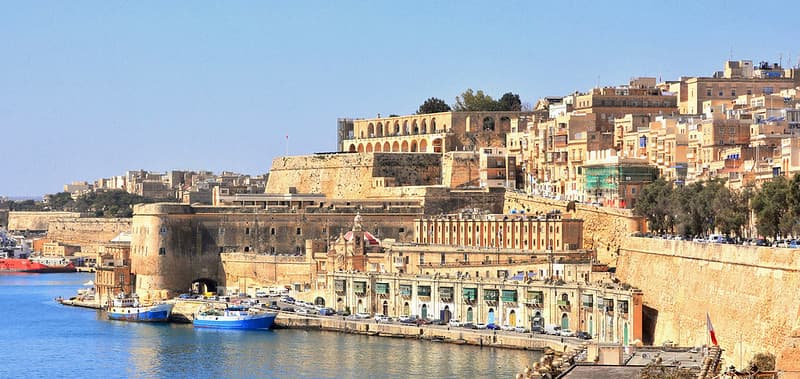
The City of Valletta, the fortress-capital of Malta, is one of the most concentrated historic areas in the world. Often described as an “open-air museum,” this tiny city (just 0.61 km) is a jewel of the Mediterranean, built by the Knights of Saint John in the 16th century following the Great Siege of 1565.
Valletta occupies the rugged Sciberras peninsula, flanked by two of the finest natural harbors in Europe: the Grand Harbour and Marsamxett Harbour. The city is instantly recognizable for its “honey-colored” limestone walls, dramatic bastions, and a unique orthogonal (grid) street plan.
The architecture is pre-eminently Baroque, though it incorporates elements of Mannerist, Neo-classical, and Modern design. Walking through its streets, you’ll see the famous colorful Maltese balconies (gallarijas) and steep, stepped alleys designed specifically to allow knights in heavy armor to climb with ease.
Attraction
Valletta draws millions of visitors worldwide because of its dense layering of history and art:
- St. John’s Co-Cathedral: While its exterior is austere and fortress-like, the interior is a dazzling explosion of Baroque gold leaf and marble. It houses Caravaggio’s only signed work, The Beheading of St. John the Baptist.
- The Upper Barrakka Gardens: This public park offers the most famous panoramic view in Malta, overlooking the Grand Harbour and the fortified “Three Cities” across the water.
- The Saluting Battery: Visitors gather daily at 12:00 PM and 4:00 PM to witness the ceremonial firing of cannons, a tradition dating back centuries.
- A Living History: Unlike some museum cities, Valletta is a vibrant capital. You can enjoy high-end Mediterranean gastronomy in the ruins of the Royal Opera House or explore the nightlife of Strait Street, once the rowdy haunt of British sailors.

Heritage
UNESCO inscribed the City of Valletta in 1980 as a Cultural site based on its exceptional universal value:
- Criterion (i): It is an “ideal creation of the late Renaissance.” The city was planned as a single, holistic urban entity, reflecting the innovative military and urban theories of the 16th century.
- Criterion (vi): It is inextricably linked to the Order of the Knights of St. John of Jerusalem, one of the most significant military and charitable organizations of the Crusades and early modern Europe.
- Historical Density: With 320 monuments within its tiny footprint, it is officially recognized as one of the most concentrated historic areas on the planet.
Gateway
The primary gateway to Valletta is the town of Luqa, located approximately 8 km southwest of the capital.
- Commercial Airport: Malta International Airport (MLA) is located in Luqa and is the only commercial airport serving the entire Maltese archipelago. It connects Malta to major hubs across Europe, North Africa, and the Middle East.
- Lodging: Luqa and the adjacent town of Gudja offer several convenient lodging options, such as the Talbot & Bons Boutique Bed & Breakfast. However, because of Malta’s small size, most travelers arrive via Luqa and stay directly in Valletta or nearby Sliema, which provide thousands of hotel rooms and luxury boutique accommodations.
When
- Spring (April to June): This is the “Goldilocks” season. The weather is mild (18°C to 25°C), the wildflowers are in bloom, and you avoid the intense heat of the peak summer months.
- Autumn (September to October): The Mediterranean Sea remains warm enough for swimming, and the summer crowds have thinned. The soft autumn light is perfect for photography of the golden limestone.
- January: For culture lovers, the Valletta Baroque Festival takes place in January, featuring world-class performances in the city’s historic theaters and churches.

Consideration
- Respectful Dress: When visiting St. John’s Co-Cathedral or any of Valletta’s many churches, you must cover your shoulders and knees. Stiletto heels are often banned inside the cathedral to protect the intricate marble floors.
- Terrain: Valletta is built on a ridge. Many streets are actually long flights of stairs. Wear comfortable, non-slip walking shoes, as the limestone can become very slippery when wet.
- Sun Protection: Due to the narrow streets and stone architecture, the city can trap heat. There is very little shade in the large squares, so a hat and high-SPF sunscreen are essential even in the shoulder seasons.
- The Ferry: For the best approach to the city, take the Sliema-Valletta Ferry. It costs only a few Euros and provides a “knight’s-eye view” of the massive bastions as you enter the harbor.

(Frank Vincentz, Wikimedia/CC BY-SA 3.0).
Resources
- UNESCO World Heritage Centre – The official source for the technical history and conservation status of the site.
- Visit Malta – The official national tourism website with up-to-date events and travel guides.
- Heritage Malta – The national agency for museums and cultural heritage; best for booking tickets to the Grandmaster’s Palace or Fort St. Elmo.
- Lonely Planet: Malta – Excellent for logistical advice, restaurant reviews, and independent travel tips.
- Be-lavie – A detailed travel blog with a specific “Ultimate Guide to Malta” for hotel and tour bookings to help travelers plan their stay.
Featured Image
Grand Harbour, Malta (Mike McBey, Flickr/CC BY 2.0).
In The News
Advertisement

Comment:
4 responses to “City of Valletta”
-
The streets are full of life with live music and street performers giving a wonderful atmosphere whether you are walking the cobbled streets appreciating the architecture or sitting at one of the many restaurants the city has to offer.
LikeLike
-
No trip to Malta would be complete without exploring the streets of Valletta. The capital city is not only home to St. John’s Co-Cathedral, but also home to charming narrow streets, trendy restaurants and Upper Barrakka Gardens which boasts a panoramic view of Grand Harbour. Walk the hilly streets and keep an eye out for the colorful enclosed balconies that date back to the early 17th century.I absolutely fell in love with them and have 100s of photos to prove it! When your feet start to get tired (and they will!), pop into one of the many cafes.
LikeLike
-
The most amazing place I visited was St Peter’s Pool. It’s off the beaten track but well worth the effort. Natural rock formations of pools with crystal clear water. Haven’t seen anything like it anywhere in the world.
LikeLike
-
Visit the National Museum of Archaeology, walk the narrow side streets full of tiny quaint shops and cafés or see Valletta’s beautiful gardens including the Upper Barrakka Gardens, Hastings Gardens and the Lower Barrakka Gardens. Everywhere you turn, you will see beauty and history in this lively and culturally rich capital.
LikeLike

 All About World Heritage Sites (...and more)
Leave a reply to Laura Cancel reply