Art Nouveau Marvels in Riga: A Cultural Journey
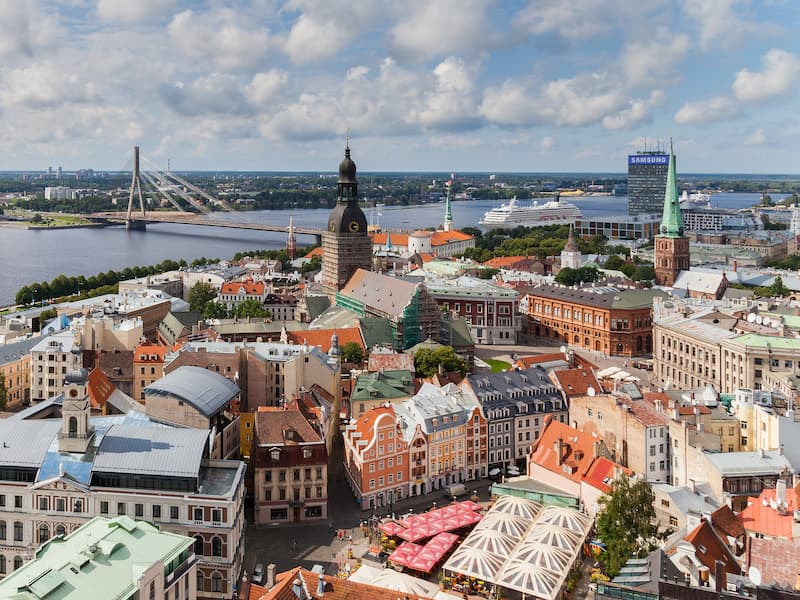
The UNESCO World Heritage property “Historic Centre of Riga” is an extraordinary urban ensemble in northwestern LATVIA at the mouth of the Daugava River. Inscribed in 1997, the site covers an area of 438.3 hectares across three historical zones: the medieval core of Old Riga (Vecrīga), the 19th-century boulevard ring, and surrounding historic suburban quarters. Founded in 1201 by Bishop Albert as a Hanseatic trading port, Riga developed into the largest metropolis in the Baltic region.
The site displays a multi-layered urban fabric showcasing a progression from medieval Gothic cathedrals to 19th-century wooden housing and early 20th-century Art Nouveau (Jugendstil) avenues. Major architectural landmarks include the 13th-century Riga Dome Cathedral, St. Peter’s Church, the reconstructed House of the Blackheads, the Three Brothers complex, and the Freedom Monument. The property holds the world’s finest collection of Art Nouveau buildings, concentrated along Alberta iela and Elizabetes iela, alongside historic wooden enclaves in Ķīpsala and Kalnciems.
Attraction
The Historic Centre of Riga attracts global travelers due to its architectural diversity, vibrant cultural life, walkable layout, and rich maritime heritage. Celebrated as Europe’s Art Nouveau capital, it draws art lovers and architects to examine over 800 buildings decorated with stone reliefs, gargoyles, mythological figures, floral motifs, and sculpted masks.
Old Riga (Vecrīga) enchants visitors with romantic streetscapes filled with narrow cobblestone alleys, public squares, outdoor cafes, and historic cellars. Tourists can attend organ recitals in Riga Cathedral, watch performances at the Latvian National Opera, or explore Riga Central Market—housed inside five repurposed 1920s Zeppelin hangars—to sample local rye bread, smoked fish, and Riga Black Balsam herbal liqueur. The city’s compact design allows travelers to combine walking tours with scenic river cruises along the Daugava and canal boat rides through surrounding parks.

World Heritage
Inscribed on the UNESCO World Heritage List in 1997, the property satisfies two cultural criteria (i and ii):
- Criterion (i) – Masterpiece of Human Creative Genius: The medieval urban structure of Riga, combined with the volume and technical excellence of its Art Nouveau architecture—recognized by UNESCO as having no global equal—and its 19th-century wooden architecture, possesses Outstanding Universal Value. Riga represents the world’s finest collection of Art Nouveau building facades, illustrating the transition from Eclectic decorative Art Nouveau to Perpendicular and Latvian Romantic Nationalism.
- Criterion (ii) – Interchange of Human Values: Riga exerted a major architectural influence on urban development, sculpture, and park design across the Baltic Sea region. As a Hanseatic trade hub, the city synthesized German, Swedish, Polish, Russian, and indigenous Latvian artistic traditions into a unique urban landscape that served as a model for regional development.
Gateway
Travelers can utilize three practical Latvian gateway cities equipped with active or certified IATA-coded airports, lodging, transit, and tour services:
- Riga (Direct Municipal Gateway):
- Airport: Riga International Airport (IATA Code: RIX; ICAO Code: EVRA).
- Infrastructure: Located ten kilometers southwest of the historic center. RIX is the principal aviation hub of the Baltic region, handling international long-haul and regional flights. Riga provides extensive accommodation ranging from luxury hotels to boutique guesthouses, public buses (Bus 22), taxis, car rentals, and licensed tour guides.
- Liepāja (Western Coastal Gateway):
- Airport: Liepāja International Airport (IATA Code: LPX; ICAO Code: EVLA).
- Infrastructure: Located 210 kilometers west of Riga in South Kurzeme. LPX is a certified regional airport handling charter and private aviation. Liepāja offers quality hotels, direct coach services and passenger trains to Riga, vehicle rentals, and excursion guides.
- Ventspils (Northwestern Port Gateway):
- Airport: Ventspils Airport (IATA Code: VNT; ICAO Code: EVVA).
- Infrastructure: Located 190 kilometers northwest of Riga. Ventspils features an active regional airport, hotel lodging, regular intercity bus links along the A10 highway, and tourist assistance centers.
When
The optimal period to visit the Historic Centre of Riga is during Late Spring to Early Autumn (May to September).
- Late Spring to Early Autumn (May to September): Delivers pleasant weather with comfortable daytime temperatures ranging between 18°C and 25°C (64°F to 77°F). June features the “White Nights” phenomenon with extended daylight hours, outdoor dining, and traditional Midsummer (Jāņi) festivities.
- Winter / Festive Season (December): Offers a festive winter atmosphere with traditional Christmas markets in Cathedral Square, sparkling holiday light displays across Old Riga, and crisp winter weather (-5°C to 2°C / 23°F to 36°F).
- Late Autumn and Winter (November, January to March): Characterized by chilly, damp conditions, short daylight hours, and quiet streets, though ideal for uncrowded museum visits and lower accommodation prices.
Considerations
- Footwear for Cobblestones: Old Riga’s street network consists of historical medieval cobblestones. Wearing flat, sturdy walking shoes is necessary to prevent trips; high heels are unsuited.
- Public Transportation Ticketing: Public transit uses a digital contactless ticketing system (Mobilly app or bank card tap). Tickets must be validated upon entry to prevent fines.
- Nightlife Safety: While Riga is a very safe European capital, travelers visiting Old Town bars late at night should verify menu prices beforehand to avoid overcharging scams.
- Rapidly Changing Maritime Weather: Positioned near the Baltic coast, Riga experiences sudden weather changes. Carrying a compact umbrella or rain jacket is recommended, even during summer.
- Language and Currency: The official language is Latvian, though English is widely spoken in tourism. The official currency is the Euro (€), with credit cards accepted almost everywhere.

Resources
- UNESCO World Heritage Centre: Official platform details property criteria, boundaries, and conservation status reports.
- Latvia Travel: Official national tourism board portal offering travel guides, regional itineraries, and event calendars.
- LiveRiga: Official city tourism website featuring neighborhood maps, Art Nouveau walking routes, and visitor guides.
- Riga Art Nouveau Centre: Official museum website dedicated to Riga’s Jugendstil architectural heritage and archives.
- GetYourGuide: Global travel booking marketplace offering guided Old Town walking tours, Art Nouveau excursions, and affiliate booking packages.


Comments:
3 responses to “Historic Centre of Riga”
-
Riga’s medieval core on the right bank of the Daugava river is where you’d love to get lost in. With a skyline dominated by church and cathedral towers, head to the top of St. Peter’s Church for a bird-eye view of the capital. It’s also a lesson in architectural styles — while it followed the style of Gothic architecture during the Middle Ages, it has since been remodeled twice to reflect Romanesque and Baroque features. Maza Pils street is home to the oldest medieval houses in Riga, affectionately known as The Three Brothers, standing since 1490. Photo opportunities are abound at the Swedish Gate, the only remaining entrance to Old Riga, as well as the Bremen Town Musicians, where you can rub the structures of the Brothers Grimm fairytale characters for good luck.
-
Riga a damn cool city. It has an old town with winding, cobbled streets, and outside that the newer-but-still-old town is reminiscent of the Pest side of Budapest. It has a good mix of old world charm and Euro city grit.
-
Riga’s most gorgeous ’hood is its art nouveau district in and around Alberta iela (Albert Street). This spectacular concentration of some 800 elaborately decorated buildings was built from 1896 to 1913, when Riga was booming. The local tourist office offers a great self-guided walking tour of the area, but the best place to start is at the Riga Art Nouveau Museum, which is housed in an apartment where one of Latvia’s best architects of the period, Konstantīns Peksens, once lived. Peksenss designed over 250 art nouveau buildings in Riga, including this spectacularly beautiful building. Another stunner is the Peitav Shul, which is the city’s last surviving synagogue after the city’s Jewish community was decimated by the Nazis.


.JPG)
Leave a Reply