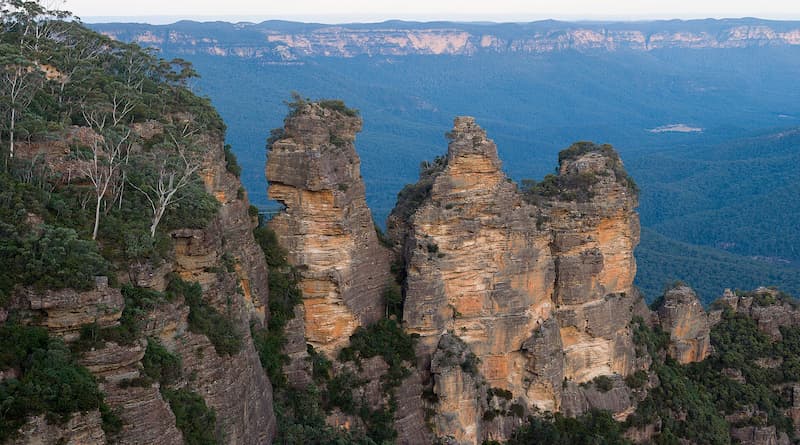
The Greater Blue Mountains Area is a vast, UNESCO-listed wilderness in New South Wales, AUSTRALIA, located approximately 50 to 100 kilometers west of Sydney. Spanning over one million hectares, it is dominated by a temperate eucalypt forest atop a sandstone tableland, characterized by deep slot canyons, towering 300-meter cliffs, and dramatic waterfalls.
The area consists of eight connected national parks and a karst conservation reserve. It serves as a vital refuge for biodiversity, featuring woodlands, scrublands, wetlands, and swamps. It is famously home to the endangered Wollemi Pine, a “living fossil” previously known only through fossil records, and over 130 threatened plant and animal species, including the brush-tailed rock-wallaby.
Attraction
- Accessible Wilderness: Its proximity to Sydney makes it one of Australia’s most reachable wilderness areas for international visitors.
- Iconic Scenery: Sites like the Three Sisters at Echo Point, Govett’s Leap, and the scenic drive routes draw photographers and nature lovers.
- Outdoor Adventure: The region offers extensive walking tracks, rock climbing, abseiling, and canyoning opportunities.
- Cultural Experience: Visitors can explore the region’s rich Aboriginal heritage (with sites tied to Dreaming and rock art) and charming, historic mountain villages like Katoomba and Leura.

World Heritage
Inscribed in 2000, it is recognized for its Outstanding Universal Value in:
- Evolutionary History: It provides a critical record of the evolution of the eucalypt genus in Australia following the continent’s isolation from the Gondwana landmass.
- Biodiversity: The sheer variety of eucalypt species and the presence of relic species (like the Wollemi Pine) make it globally significant for scientific study and ecological preservation.
Gateway
Sydney is the definitive gateway.
- Airport: Sydney Airport (SYD) is a major international hub serving flights from across the globe.
- Lodging: As Australia’s largest city, Sydney offers unlimited lodging options. Once you move toward the Blue Mountains, towns like Katoomba and Leura provide a wealth of boutique hotels, guesthouses, and scenic lodges for overnight stays.
When
- Spring (September–November): Ideally, the best time to visit. Temperatures are mild, and the region’s famous cool-climate gardens (particularly in Leura and Blackheath) are in full bloom.
- Autumn (March–May): Also excellent, featuring vibrant foliage colors and crisp weather perfect for hiking.
Consideration
- Weather Variability: Mountain weather can change rapidly. Always pack layers and waterproof gear.
- Transport: While trains run from Sydney Central to Katoomba (approx. 2 hours), renting a car is highly recommended for exploring the more remote parts of the World Heritage area.
- Safety: Stick to marked trails. The wilderness is vast, and mobile phone coverage can be non-existent in deeper valleys.
- Bushfire Awareness: The region is fire-prone. Check local park alerts (NSW National Parks and Wildlife Service) for any track or park closures before heading out.

Resources
- NSW National Parks – Greater Blue Mountains – The official authority on park access and heritage status.
- UNESCO World Heritage Centre – Official documentation regarding the site’s criteria and protection.
- Blue Mountains City Council – Provides local insights, event calendars, and visitor planning.
- Blue Mountains Conservation Society – Offers deep context on the region’s flora, fauna, and environmental challenges.
- Trip.com – Blue Mountains Hotels – A reliable platform for comparing accommodation options in the region.


Comments:
Leave a Reply