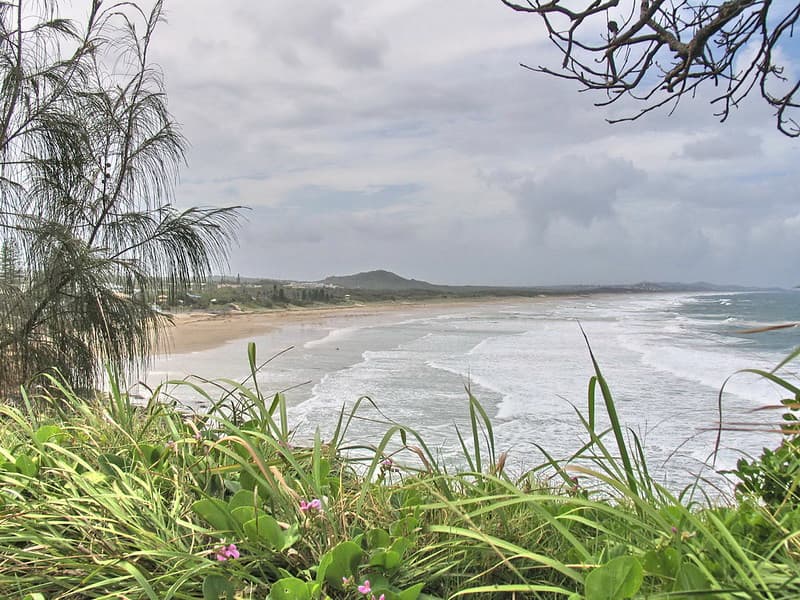
Sunshine Coast pairs Indigenous stewardship with subtropical-to-temperate biodiversity
“Sunshine Coast” (Sunshine Coast Biosphere Reserve) is a coastal, marine, and hinterland conservation and community region spanning 258,535 hectares—comprising 224,573 hectares of terrestrial land and 33,962 hectares of coastal waters—in South East Queensland, AUSTRALIA. Situated roughly 90 to 100 kilometers north of Brisbane, the reserve covers the Sunshine Coast Local Government Area from the Blackall Range and volcanic Glass House Mountains down across fertile river valleys, coastal wetlands, dunes, and surf beaches out to three nautical miles offshore.
Located where tropical and temperate climate zones overlap, the region supports exceptionally diverse ecosystems—from subtropical rainforests, eucalypt woodlands, and wallum heathlands to estuaries, mangrove creeks, and rocky headlands. Home to approximately 383,100 residents alongside the Traditional Custodians, the Kabi Kabi and Jinibara peoples, it balances thriving agriculture and sustainable tourism with active ecological stewardship.
Attraction
Sunshine Coast attracts beachgoers, hikers, wildlife enthusiasts, and culinary travelers globally who want pristine natural landscapes paired with relaxed coastal towns and hinterland villages.
Visitors hike the ancient volcanic plugs of the Glass House Mountains such as Mount Ngungun, walk along coastal headlands in Noosa and Coolum, swim and surf at Mooloolaba, Maroochydore, and Caloundra beaches, and kayak through tranquil estuaries and Pumicestone Passage. Travelers also explore hinterland waterfalls and rainforest trails in Kondalilla and Mapleton Falls National Parks, browse artisan markets in Eumundi and Montville, spot migrating humpback whales and nesting sea turtles, and sample farm-to-table produce and local seafood.
Biosphere Reserve
Designated in June 2022 under UNESCO’s Man and the Biosphere (MAB) Programme—forming part of the world’s only contiguous cluster of three adjacent biosphere reserves alongside Noosa and Great Sandy—the Sunshine Coast is recognized for uniting biodiversity protection with sustainable living:
- Ecological Transition Zone: Situated at the meeting point of tropical and temperate biogeographic zones, the reserve protects high concentrations of native flora, marine habitats, and threatened species across core conservation areas, buffer zones, and community transition areas.
- Community-Led Sustainability and Indigenous Partnership: Guided by Sunshine Coast Council, Traditional Custodians, researchers, and local businesses, the reserve advances climate resilience, eco-certified tourism, sustainable agribusiness, and environmental education aligned with the United Nations Sustainable Development Goals.
Gateway
Travelers planning a visit to the Sunshine Coast Biosphere Reserve can enter directly via the local regional airport inside the reserve or through Brisbane immediately to the south, with each airport verified in IATA’s official directory, supported by extensive overnight lodging, transport links, and tour guides:
- Maroochydore / Sunshine Coast (Primary Local Gateway / Nearest Commercial Airport Hub):
- Airport: Sunshine Coast Airport (IATA Code: MCY; ICAO Code: YBSU).
- Infrastructure and Distance: Located at Marcoola within the coastal heart of the biosphere reserve, roughly 10 kilometers (about 10 to 15 minutes by road) north of Maroochydore and within 20 to 45 minutes of Mooloolaba, Caloundra, and the hinterland. MCY is an active public airport indexed in IATA’s directory with direct domestic flights across Australia, backed by beachfront resorts, hinterland eco-retreats, car rentals, Translink buses, airport shuttles, and eco-certified tour operators.
- Caloundra (Southern Coastal Local Airfield Gateway):
- Airport: Caloundra Airport (IATA Code: CUD; ICAO Code: YCDR).
- Infrastructure and Distance: Located at the southern end of the Sunshine Coast Biosphere Reserve, roughly 2 to 3 kilometers west of central Caloundra and minutes from Pumicestone Passage and the Glass House Mountains. CUD is an active general aviation airfield listed in IATA’s directory, while Caloundra offers plentiful coastal hotels, holiday apartments, local bus connections, and regional tour access.
- Brisbane (Primary Southern International Gateway):
- Airport: Brisbane Airport (IATA Code: BNE; ICAO Code: YBBN).
- Infrastructure and Distance: Located roughly 85 to 95 kilometers (about 1 to 1.5 hours by road via the Bruce Highway or by Queensland Rail and connecting buses) south of the Sunshine Coast. BNE is a major active public international airport indexed in IATA’s directory, providing extensive city hotels, car rentals, intercity rail and coach links, and guided day-trip operators.
When
The ideal window to visit the Sunshine Coast is during Autumn and Spring (April to May and September to November):
- Autumn and Spring (April to May & September to November): Recommended for hiking the Glass House Mountains, coastal walks, beach activities, and whale watching (typically June to November), offering warm sunny days, lower humidity, and comfortable temperatures averaging 17°C to 26°C (63°F to 79°F).
- Summer and Winter (December to March & June to August): Summer brings warmer temperatures and afternoon tropical showers ideal for swimming, while winter delivers crisp, dry, sunny days with cooler evenings suited to hinterland trekking.
Consideration
- Beach and Sun Safety: Swim only between the red-and-yellow flags patrolled by surf lifesavers, check coastal swell warnings, and wear broad-spectrum sunscreen, a hat, and UV-protective clothing year-round.
- Rent a Car for Hinterland Exploration: While coastal buses connect main beach towns, reaching trailheads in the Glass House Mountains, Kondalilla Falls, and hinterland villages is far easier with a rental car or guided tour.
- Advance Booking for Peak School Holidays: Accommodation, eco-certified tours, and national park campsites fill quickly during Australian school holidays and long weekends; book stays and activities ahead.
- Currency and Payments: The official currency is the Australian Dollar (AUD). Contactless debit and credit cards and mobile wallets are accepted nearly everywhere, though carrying a small amount of cash helps at rural farm gates and weekend markets.

Resources
- UNESCO Man and the Biosphere Programme (Sunshine Coast Profile): Official UNESCO portal detailing reserve boundaries, surface area, climate overlap, and designation data.
- Sunshine Coast Council (Sunshine Coast Biosphere Portal): Official managing authority website covering governance, sustainability programs, maps, and community initiatives.
- Visit Sunshine Coast (Our Biosphere Corridor): Official regional tourism portal featuring eco-certified accommodations, sustainable tour operators, and destination guides.
- Tourism and Events Queensland: Official state destination website offering Sunshine Coast itineraries, national park highlights, and seasonal travel tips.
- GetYourGuide: Online travel booking marketplace offering bookings for Sunshine Coast wildlife cruises, hinterland excursions, and day tours from Brisbane.


Comments:
Leave a Reply