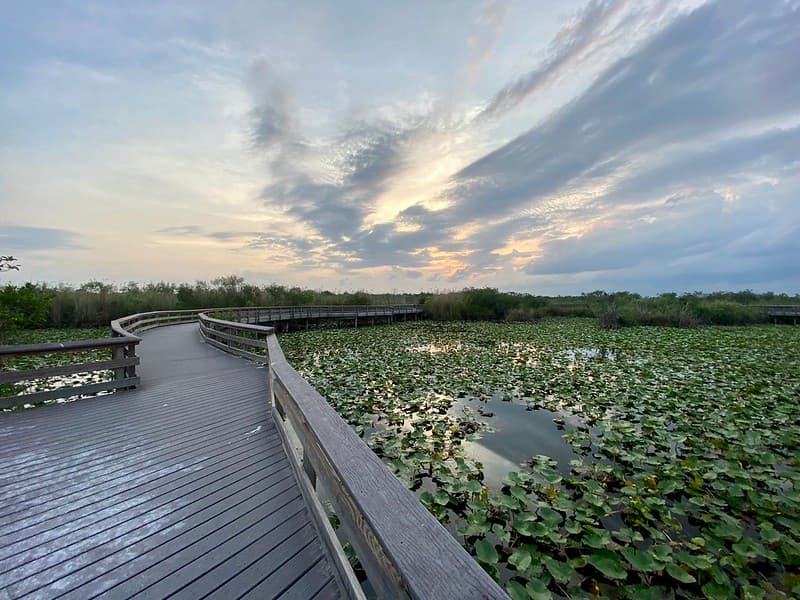
Everglades National Park is a vast, subtropical wilderness in southern Florida, United States, often referred to as the “River of Grass.” It protects the southern portion of a massive, slow-moving freshwater marsh that stretches across the state. This unique ecosystem, characterized by sawgrass prairies, mangrove forests, pine rocklands, and cypress swamps, provides a critical habitat for a wide array of wildlife.
The park spans over 1.5 million acres, making it the largest tropical wilderness in the United States. It functions as a complex hydrological system where water flows from Lake Okeechobee in the north toward the southern coastal mangroves and Florida Bay. This environment supports an incredible diversity of life, including more than 360 bird species, 27 types of snakes, and iconic mammals like the Florida panther and the West Indian manatee.
Attraction
- Unique Wildlife Viewing: It is one of the only places on Earth where you can see alligators and crocodiles coexisting in the wild. Birdwatchers flock here to see wading birds like roseate spoonbills, egrets, and wood storks.
- Diverse Outdoor Adventures: Visitors can explore the park via airboat tours, kayaks, or canoes through winding mangrove tunnels, or hike the many trails, such as the famous Anhinga Trail, which offers intimate wildlife sightings.
- Educational Opportunities: The park provides deep insight into fragile ecosystems, with opportunities to learn about indigenous history—particularly from the Miccosukee and Seminole tribes—and ongoing conservation efforts.

World Heritage
Inscribed in 1979, Everglades National Park was designated as a UNESCO World Heritage site for its “outstanding universal values,” including:
- Biological Integrity: It is recognized for its unique juxtaposition of temperate and subtropical species and the immense complexity of its biological processes.
- Geological Significance: The park’s limestone substrate and the unique way water interacts with the landscape create a geological environment found nowhere else.
- Conservation Status: The site acts as a critical refuge for numerous endangered species, such as the American crocodile and the Cape Sable seaside sparrow, and serves as an international example of wetland conservation.
Gateway
Miami serves as the primary gateway to the park.
- Commercial Airport: Miami International Airport (MIA) provides extensive domestic and international flight options.
- Lodging: Being a major metropolitan hub, Miami offers a vast array of accommodations ranging from luxury beachfront resorts to affordable city-center hotels, all within an hour’s drive of the park’s main entrances.
- Alternative: Everglades City is a smaller, more rustic gateway on the park’s southwestern coast, ideal for those seeking a “small-town” experience closer to the Ten Thousand Islands.
When
- Dry Season (December to April): This is widely considered the best time to visit. Humidity is lower, temperatures are mild (50s–70s°F), and biting insects are less prevalent. Crucially, receding water levels concentrate wildlife in key areas, making them significantly easier to spot.
- Wet Season (May to November): Temperatures reach the 90s°F with high humidity and frequent rainfall. While the park is lush and green, visitors must contend with high mosquito activity and potential storm closures.
Consideration
- Tour Reservations: During the peak dry season, guided tours (especially airboat rides and educational programs) can fill up quickly; book in advance if possible.
- Prepare for Insects: Even outside the wet season, bring high-quality insect repellent and wear loose, long-sleeved clothing.
- Park Regulations: Always stay on marked trails and keep a safe distance from wildlife. Never feed animals; it is dangerous for both you and the wildlife.
- Navigation: Everglades National Park has multiple entrances (Homestead, Shark Valley, and Everglades City) that lead to different habitats. Research which entrance aligns best with the activities you wish to prioritize.

Resources
- National Park Service – Everglades Official Site – The essential portal for maps, safety alerts, and park-wide accessibility.
- UNESCO World Heritage – Everglades – Official documentation regarding the site’s world heritage status and conservation criteria.
- Miami and Beaches – Everglades Guide – Practical advice on planning day trips from the Miami area.
- Everglades Institute – A resource for specialized guided van tours and educational programs.
- Booking.com – Miami Hotels – A convenient platform to research and secure your base in the gateway city.


Comments:
Leave a Reply