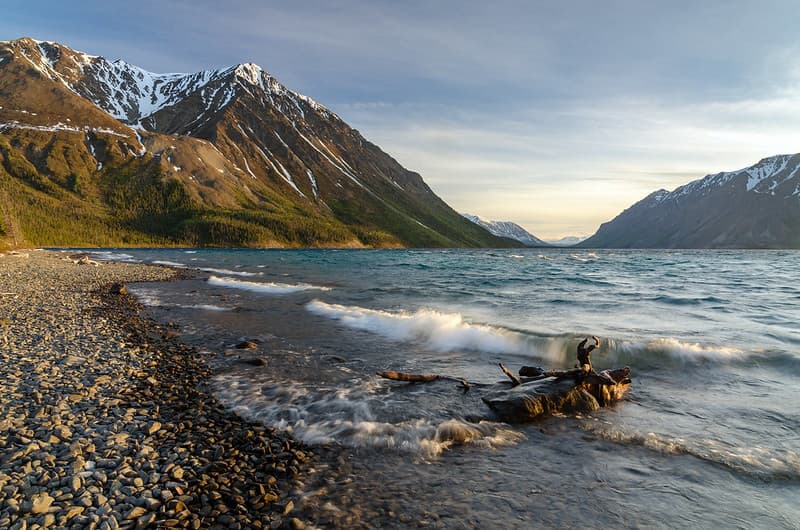
This breathtaking transnational site—Kluane / Wrangell-St. Elias / Glacier Bay / Tatshenshini-Alsek—is the largest internationally protected area on Earth, spanning nearly 10 million hectares across the border of Canada (Yukon and British Columbia) and the United States (Alaska).
The site is a colossal “mountain kingdom” comprised of four national and provincial parks. It contains the largest non-polar icefield in the world and features a dramatic transition from the high-altitude peaks of the St. Elias Mountains to the coastal fjords of the Pacific Ocean.
- Kluane (Yukon): Home to Mount Logan, Canada’s highest peak (5,959 meters), and massive interior glaciers.
- Wrangell-St. Elias (Alaska): The largest U.S. national park, featuring nine of the 16 highest peaks in North America.
- Glacier Bay (Alaska): Famous for its spectacular tidewater glaciers that “calve” (break off) into the sea.
- Tatshenshini-Alsek (B.C.): Known for its wild, glacial-fed rivers and the unique “blue” glacier bears.
Attraction
The site attracts adventurers, photographers, and nature lovers seeking a scale of wilderness found nowhere else.
- Glacier Flightseeing: Because much of the icefield is inaccessible by road, small-plane tours from Haines Junction or Silver City offer once-in-a-lifetime views of “rivers of ice” stretching for miles.
- The Alsek River Rafting: Considered one of the world’s premier wilderness river trips, taking explorers through iceberg-choked lakes and past massive glaciers.
- Wildlife Viewing: The area supports “self-regulating” populations of grizzly bears, caribou, Dall’s sheep, and mountain goats. In the coastal areas, visitors can see humpback whales and sea lions.

(Tobias Klenze, Wikimedia/CC BY-SA 4.0).
Heritage
UNESCO inscribed this site in 1979 (with extensions in 1992 and 1994) under four distinct criteria (vii, viii, ix, and x):
- Criterion (vii): It possesses superlative natural beauty, from the snow-capped summits to the deep, green river canyons and fjord-like inlets.
- Criterion (viii): It is an “outdoor laboratory” for ongoing geological processes, including massive glaciation and active mountain building at the boundary of the Pacific and North American plates.
- Criterion (ix): The site displays a full spectrum of ecological succession, showing how life returns to a landscape as glaciers retreat.
- Criterion (x): It protects critical habitats for a vast range of species, including the world’s largest concentration of grizzly bears.
Gateway
While the park boundaries are vast, Whitehorse is the essential gateway for international travelers visiting the Canadian side.
- Commercial Airport: Erik Nielsen Whitehorse International Airport (YXY). It is well-connected to Vancouver, Calgary, and even seasonal flights from Europe.
- Lodging: As the capital of the Yukon, Whitehorse has a high density of lodging, from the Raven Inn to established chains like the Edgewater Hotel, along with plenty of RV parks and B&Bs.
- Logistics: From Whitehorse, it is a scenic 2-hour drive (160 km) via the Alaska Highway to Haines Junction, the immediate entrance to Kluane National Park.
When
- Summer (Mid-June to August): This is the only time most hiking trails are snow-free and boat tours are operational. Expect 18 to 20 hours of daylight.
- Early Autumn (September): This is the best time for photography. The tundra turns vibrant shades of crimson and gold, and the Northern Lights (Aurora Borealis) begin to appear as the nights get darker.
- Avoid Winter: Unless you are an expert in extreme cold-weather expeditions, winter temperatures often drop below -40°C, and most tourist services are shuttered.

Consideration
- Self-Sufficiency: This is true wilderness. Outside of Whitehorse and Haines Junction, cell service is non-existent. You must carry emergency gear and know how to use a satellite communicator (e.g., Garmin inReach).
- Bear Safety: You are in “Bear Country.” Carrying bear spray is mandatory for hikers, and you must know how to store food in bear-resistant containers.
- Weather Volatility: The weather can change from sunny to a freezing rainstorm in minutes. Layered, waterproof clothing is essential regardless of the forecast.
- Permits: Most overnight backcountry trips require a permit and a mandatory orientation from Parks Canada or BC Parks.

Resources
- UNESCO World Heritage Centre – Detailed maps and scientific reports on the site’s global importance.
- Parks Canada – Kluane National Park – The official site for trail conditions, bear safety updates, and permit bookings.
- Travel Yukon – Excellent for planning road trip itineraries and finding local tour operators for flightseeing.
- BC Parks – Tatshenshini-Alsek – Essential info for those interested in rafting or exploring the British Columbia portion of the site.
- GetYourGuide – A commercial platform where you can book guided glacier tours and private transport.


Comments:
Leave a Reply