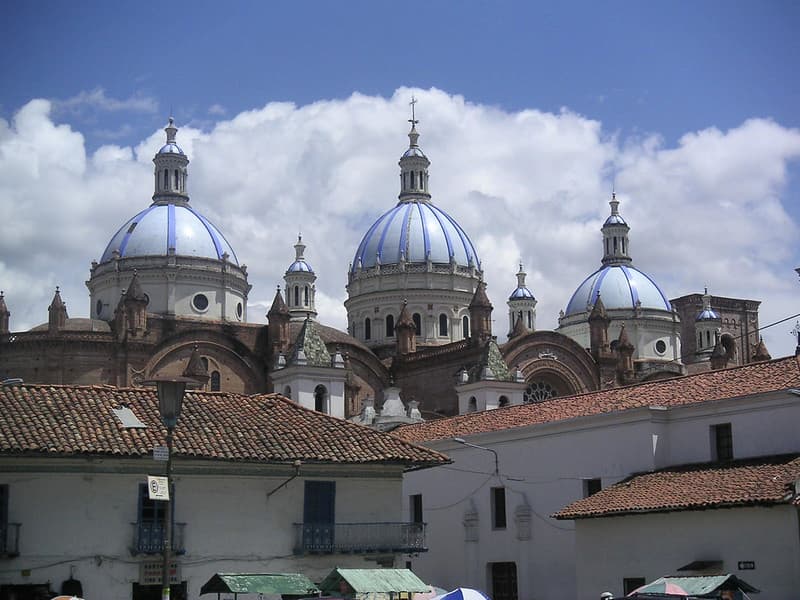
The Historic Centre of Santa Ana de los Ríos de Cuenca (commonly known as Cuenca) is located in an Andean valley in southern ECUADOR. Founded in 1557 on rigorous Renaissance urban guidelines issued by Spanish King Charles V, the city preserves a strict orthogonal grid layout. Traversed by four picturesque rivers (Tomebamba, Yanuncay, Tarqui, and Machángara), the historic core features cobblestone streets, Republican-era architecture, grand plazas, and the iconic blue-domed Cathedral of the Immaculate Conception.
Attraction
Tourists worldwide are drawn to Cuenca for its harmonious blend of natural beauty, safety, and rich cultural heritage:
- Architectural Splendor: Visitors marvel at the striking contrast between colonial structures and grand 19th-century republican mansions built during the golden age of quinine and Panama hat exports.
- Craft Culture: The city is the historic birthplace and global epicenter of authentic Toquilla straw hats (commonly misnamed “Panama hats”), alongside thriving local ceramics and silver smithing.
- Archaeological & Natural Proximity: Travelers can explore the central Inca ruins at Pumapungo or take short excursions to the breathtaking glacial lagoons of Cajas National Park.

World Heritage
Inscribed in 1999, Cuenca was recognized for its Outstanding Universal Value:
- Renaissance Town Planning Paradigm: It stands as a supreme, intact example of a planned inland Spanish colonial city (entroterra) in the Americas, strictly adhering to 16th-century grid principles.
- Cultural Fusion: The layout and architecture vividly manifest the successful historical fusion of indigenous (Cañari and Inca) societies and European colonial influences.
Gateway
Cuenca serves as its own direct gateway city.
- Airport: Travelers fly into Mariscal Lamar International Airport (CUE), located just minutes from the historic downtown core.
- Lodging: The city offers an exceptional range of accommodations, from beautifully restored colonial boutique hotels to luxury modern properties and cozy guesthouses.
When
- June to December: This constitutes the drier months of the year, offering pleasant, sunny daytime weather that is ideal for walking the historic center and trekking through nearby Andean natural parks.
Consideration
- High Altitude: Cuenca sits at an elevation of roughly 2,560 meters (8,400 feet) above sea level; give yourself a day to adjust and stay well-hydrated to avoid altitude fatigue.
- Sun Intensity: Because of its high-altitude Andean location, the UV rays are exceptionally strong year-round; sunscreen, sunglasses, and a hat are essential.

Resources
- UNESCO World Heritage Centre: Official documentation outlining the historical criteria, boundaries, and heritage justification for Cuenca.
- Turismo Cuenca: The primary municipal guide for local museum schedules, cultural events, and tram maps.
- Ecuador Tourism Board: National travel portal highlighting regional Andean itineraries and attractions.
- Lonely Planet – Cuenca Guide: Practical advice on local transit, dining highlights, and walking tours.
- World Heritage Travel: An independent planning guide offering detailed insights into local logistics and sightseeing.


Comments:
2 responses to “Historic Centre of Santa Ana de los Ríos de Cuenca”
-
Cuenca is rich with parks people really use, centuries-old churches, lots of restaurants and a seemingly endless supply of symphony, theater, dance and music offerings — often free. You can live right in the heart of the city center and it’s an easy place to get around without a car.
-
It’s a walkable city, it’s safe, it’s charming, it’s accessible and it’s got natural beauty.

Leave a Reply