Valparaíso: Discover the Jewel of the Pacific Coast
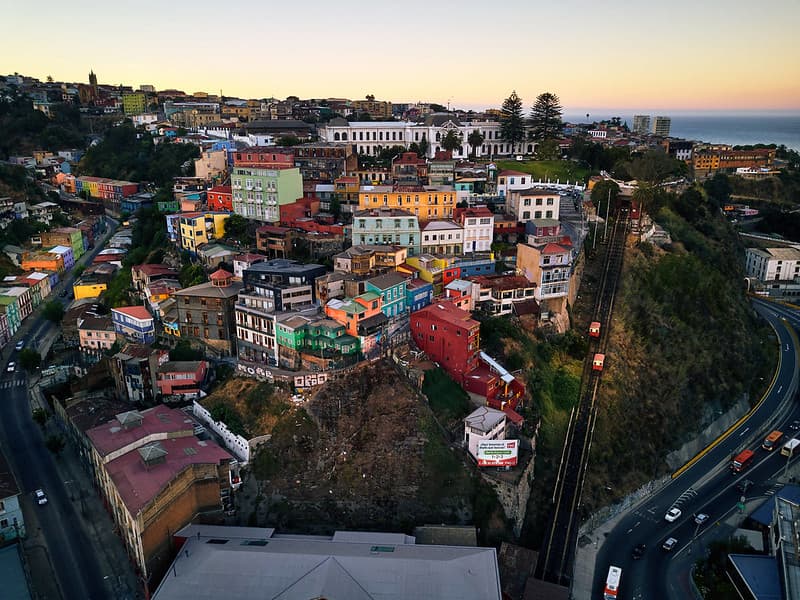
The UNESCO World Heritage site “Historic Quarter of the Seaport City of Valparaíso” is located along the central Pacific coast of CHILE, roughly 120 kilometers west of the national capital, Santiago. Inscribed on the World Heritage List in 2003, this historic maritime urban complex covers 23.2 hectares. The city is renowned for its dramatic natural topography, formed like a giant amphitheater facing the wide bay of the Pacific Ocean. The urban fabric is divided into two distinct zones: the flat coastal plain (El Plan), built largely on reclaimed land along the harbor, and the steep hills (Cerros) that rise sharply directly behind the shore.
Valparaíso grew from a modest colonial outpost into South America’s premier commercial port during the 19th century, serving as a primary stopover for ships navigating between the Atlantic and Pacific oceans via the Strait of Magellan prior to the opening of the Panama Canal in 1914. The historic quarter retains a remarkably intact late 19th-century urban environment. Key architectural and structural landmarks include:
- Historic Funicular Elevators (Ascensores): A collection of historic inclined cable railways built between 1883 and 1915—such as Ascensor Concepción, Ascensor El Peral, and Ascensor Artillería—designed to transport residents between the port and hilltop neighborhoods.
- Cerro Alegre and Cerro Concepción: Picturesque hilltop residential districts filled with Victorian-era houses, colorful corrugated iron facades, cobblestone walkways, and scenic lookouts.
- Plaza Sotomayor and Edificio Armada de Chile: The grand civic center near the port, anchored by the imposing headquarters of the Chilean Navy and the Monument to the Heroes of Iquique.
- Iglesia de La Matriz: The city’s oldest religious foundation, standing as an anchor of the historical core.
- La Sebastiana: The former hilltop residence of Nobel laureate poet Pablo Neruda, offering sweeping coastal views and whimsical interior collections.
Attraction
Valparaíso captivates international travelers because it offers a wildly creative, bohemian maritime atmosphere unlike any other South American coastal city. Often called the “Jewel of the Pacific,” the city’s labyrinthine hills resemble a massive open-air art gallery. Every alleyway, stairwell, and building facade across hills like Cerro Alegre and Cerro Concepción is adorned with world-class murals, street art, and vibrant paint combinations originally used by 19th-century sailors to protect tin siding from salty sea air.
Tourists flock to Valparaíso to ride the creaking funicular elevators, stroll along scenic clifftop promenades like Paseo Atkinson and Paseo Gervasoni, and take in panoramic views of cargo ships across the Pacific Bay. The city boasts a thriving artistic culture, packed with artisan boutique shops, independent galleries, craft beer pubs, and seafood restaurants serving fresh Pacific catches like paila marina and local wine. Furthermore, its literary heritage—immortalized by poet Pablo Neruda—adds a deeply romantic allure for cultural travelers.

World Heritage
In 2003, UNESCO inscribed the Historic Quarter of the Seaport City of Valparaíso on the World Heritage List under cultural Criterion (iii).
- Criterion (iii) – Exceptional Testimony to Early Globalization: Valparaíso provides an exceptional physical testimony to the early phase of global maritime trade and industrial expansion during the late 19th century. As the chief merchant port on South America’s Pacific coast, Valparaíso functioned as a major international melting pot where European immigrants (British, German, French, and Italian) mixed with indigenous and Creole traditions, generating a unique hybrid architectural vernacular, urban grid adaptations on steep slopes, and technological innovations like public funicular transportation networks.
Gateway
The primary gateway city serving the site is Santiago, the capital of Chile.
Santiago is directly served by Arturo Merino Benítez International Airport (IATA Code: SCL; ICAO Code: SCEL), Chile’s largest aviation hub. Located approximately 110 kilometers east of Valparaíso, Santiago handles extensive international and domestic flights. From Santiago, comfortable express buses depart continuously from terminals like Pajaritos and Universidad de Santiago, bringing travelers directly to Valparaíso in 1.5 hours via Highway 68.
(Note: Valparaíso also possesses a regional airfield, Valparaíso Rodelillo Airport [IATA Code: VAP], but Santiago remains the main commercial transit entry.)
Santiago offers thousands of lodging options across all categories, ranging from five-star luxury hotels and business chains to boutique bed-and-breakfasts and budget hostels. Valparaíso itself also offers extensive accommodations inside converted historic mansions.
When
The ideal time to visit the Historic Quarter of Valparaíso is during Southern Hemisphere Spring and Summer (November to March).
- Spring and Summer (November to March): These warm, dry months offer bright sunshine, blue skies, and comfortable daily temperatures averaging 18°C to 24°C (64°F to 75°F). December is especially festive, culminating in Valparaíso’s famous New Year’s Eve fireworks display over the bay.
- Autumn and Winter (April to October): Winters are cool and mild (8°C to 15°C / 46°F to 59°F) with increased chance of rain, ocean fog (camanchaca), and overcast days, though tourist crowds are smaller.
Considerations
- Physical Terrain and Footwear: Exploring Valparaíso involves climbing steep hills, navigating cobblestones, and walking hundreds of concrete steps. Sturdy, comfortable walking shoes are essential.
- Safety and Urban Vigilance: While hilltop tourist areas are generally safe during daylight, petty crime and pickpocketing occur. Avoid walking alone through unlit, secluded hills at night, and keep belongings secure.
- Funicular Fare Cash: Historic funiculars charge nominal cash fares in small Chilean peso coins. Keep small change on hand.
- Sun and Wind Protection: Coastal breezes mask intense UV radiation. Wearing high-SPF sunscreen, sunglasses, and a light jacket is highly recommended.

Resources
- UNESCO World Heritage Centre: Official UNESCO web portal offering complete property records, criteria, and heritage documentation.
- Chile Travel (Official Tourism Board): Official national travel guide providing regional itineraries, transit maps, and destination insights.
- Servicio Nacional del Patrimonio Cultural: Official Chilean government portal managing national monuments and historic preservation.
- Municipalidad de Valparaíso: Official municipal website providing local civic news, cultural events, and visitor info.
- Trip.com: Major global online travel marketplace offering guided walking tours, excursion passes, and booking options.


Comments:
Leave a Reply