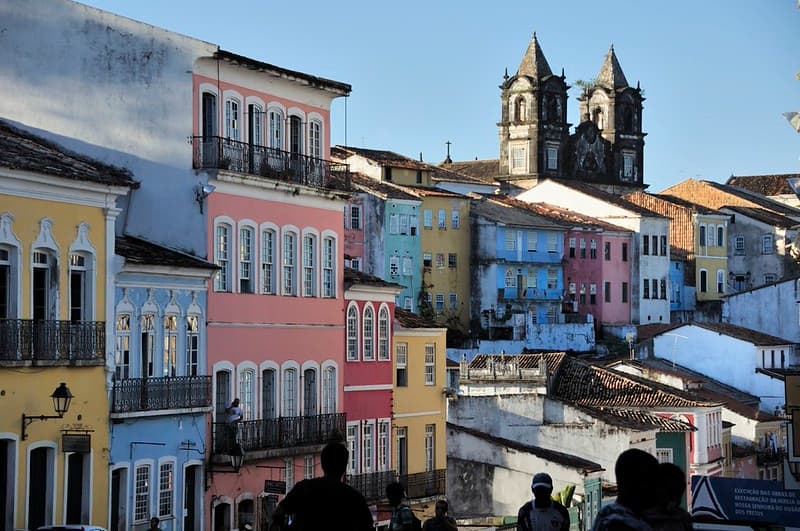
The Historic Centre of Salvador de Bahia (known locally as the Pelourinho) is located in the northeastern region of BRAZIL. Founded in 1549 as the first colonial capital of Brazil, the city is perched dramatically atop an 85-meter-high escarpment overlooking Todos os Santos Bay. It features an exceptional Renaissance urban layout adapted to a sloping coastal terrain, packed with dense configurations of religious, civil, and military colonial architecture dating primarily from the 17th through the 19th centuries.
Attraction
Tourists worldwide flock to Salvador for its vibrant sensory landscape and rich cultural heartbeat:
- Afro-Brazilian Epicenter: Widely celebrated as a major global hub of African diaspora culture, visitors experience pulsing street percussion, traditional capoeira performances, and authentic Bahian cuisine.
- Colonial Aesthetics: The neighborhood features winding cobblestone streets lined with brightly painted pastel townhouses adorned with intricate stucco work.
- Ornate Baroque Churches: Key architectural gems include the Church and Convent of São Francisco, famous for its jaw-dropping interior covered in gold leaf.

World Heritage
Inscribed in 1985, the historic center was recognized for its Outstanding Universal Value:
- Cross-Cultural Convergence: It stands as a paramount historical site mapping the major convergence of European, African, and Indigenous American cultures during the colonial era.
- Masterpiece of Urban Planning: The layout provides an outstanding example of Renaissance urban planning applied overseas, preserving high-density monuments and squares that document Brazil’s early administrative history.
Gateway
Salvador serves as its own direct gateway city.
- Airport: Travelers fly into Deputado Luís Eduardo Magalhães International Airport (SSA).
- Lodging: As a major metropolitan destination, Salvador offers a wide abundance of overnight options, ranging from restored historic mansions converted into boutique hotels to modern beach resorts.
When
- Spring and Summer (November to March): This warm, tropical window offers vibrant weather for exploring coastal views and experiencing major cultural events like the legendary Salvador Carnival (typically held in February).
Consideration
- Terrain and Footwear: The historic district is built on steep hillsides with uneven cobblestones; flat, sturdy walking shoes are a necessity.
- Personal Vigilance: Like many densely visited global tourist cores, parts of the area require standard urban caution regarding personal belongings and active street solicitation.

Resources
- UNESCO World Heritage Centre: Official documentation detailing the site’s architectural criteria and historical protection status.
- Salvador Official Tourism Portal: Municipal guides featuring local cultural itineraries, museum hours, and city events.
- Brazil Official Tourism Board: National travel resources highlighting regional attractions across Bahia.
- Lonely Planet – Salvador Guide: Practical advice on local dining, transit, and neighborhood safety.
- World Heritage Travel: An independent planning resource providing logistical advice and cultural background.


Comments:
Leave a Reply