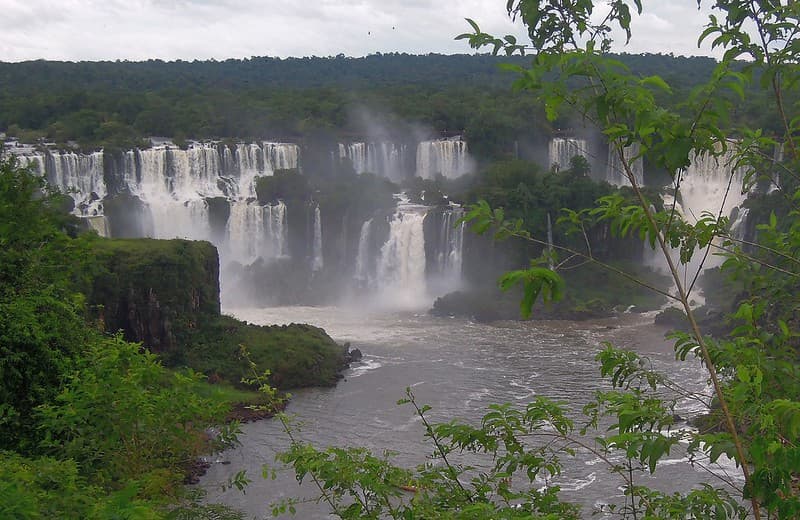
Explore Iguazu Falls, diverse wildlife, and spectacular subtropical scenery.
The UNESCO World Heritage property titled “Iguazu National Park” (Parque Nacional Iguazú) is an expansive protected nature reserve spanning approximately 67,700 hectares in Misiones Province, in the extreme northeast of ARGENTINA. Established in 1934 by federal law, the park safeguards a crucial section of the Paranaense rainforest within the highly threatened Atlantic Forest biome (Mata Atlántica). The northern boundary of the park is defined by the lower stretches of the Iguazú River, which forms a natural geographical border between Argentina and Brazil before emptying into the Paraná River downstream. Indigenous Guaraní mythology holds that a forest deity created the waterfalls by slashing the riverbed in anger to stop two fleeing lovers.
The park’s central natural feature is Iguazu Falls (Cataratas del Iguazú), a world-famous crescent-shaped waterfall complex stretching nearly 2.7 kilometers wide. Argentina contains roughly 80 percent of the total cascade network within its national park boundaries. The river cascades over basaltic geological ledges, creating between 150 and 300 individual waterfalls depending on seasonal water volume. The system drops dramatically into the Devil’s Throat (Garganta del Diablo), an 82-meter-deep U-shaped gorge where thundering waters generate permanent mist clouds and rainbows above lush subtropical rainforest.
Attraction
Iguazu National Park attracts global travelers by offering an intimate, highly accessible experience with one of Earth’s most powerful natural wonders. While the neighboring Brazilian side is celebrated for sweeping panoramic views, the Argentine park places visitors inside the waterfall system through an extensive, well-maintained network of eco-friendly metal catwalks and walking circuits.
The main highlight is the Devil’s Throat Walkway, an elevated pedestrian bridge stretching over one kilometer across the upper Iguazú River, taking visitors directly to an observation platform perched at the edge of the thundering chasm. The park’s Upper Circuit (Circuito Superior) provides flat, elevated vantage points across the upper crests of major falls like Bossetti, Adán y Eva, and San Martín, while the Lower Circuit (Circuito Inferior) leads downhill to the base of the cascades, surrounding trekkers with roaring water and spray. Adventure seekers can board the Gran Aventura boat excursion, which navigates river rapids to take passengers directly into the waterfall spray. The park also features the Ecological Jungle Train (Tren Ecológico de la Selva) and rich wildlife, including toucans, coatis, capuchin monkeys, and tropical butterflies.

World Heritage
Inscribed on the UNESCO World Heritage List in 1984, Iguazu National Park was designated as a Natural World Heritage Site fulfilling criteria (vii) and (x):
- Criterion (vii) – Exceptional Natural Beauty and Aesthetic Value: The park protects one of the world’s largest and most impressive waterfall complexes.The dramatic visual synthesis of hundreds of thundering cascades dropping 80 meters into a basaltic canyon, enveloped by rainbow-filled mist clouds and pristine subtropical rainforest, creates a natural landscape of extraordinary global aesthetic importance.
- Criterion (x) – Critical Habitat for In-Situ Biodiversity Conservation: The park preserves a vital sanctuary for the highly endangered Atlantic Forest biome.The protected habitat supports over 2,000 vascular plant species and provides a sanctuary for rare wildlife, including the jaguar (Panthera onca), ocelot, South American tapir, giant anteater, howler monkey, and the rare solitary tinamou bird (Macuco).
Gateway
The national park is served by an immediate, highly accessible gateway city located within Argentina:
- Puerto Iguazú (Primary Argentine Gateway):
- Airport: Cataratas del Iguazú International Airport (IATA Code: IGR; ICAO Code: SARI).
- Infrastructure and Distance: Situated in Misiones Province, Puerto Iguazú sits roughly 18 kilometers west of the national park entrance and 20 kilometers from the international airport. The town serves as Argentina’s primary base for visiting the falls, with its airport receiving frequent daily domestic flights from Buenos Aires, Córdoba, and other national hubs.
- Lodging and Transport: Puerto Iguazú features a wide variety of accommodations, including luxury eco-lodges set in the Iryapú Jungle, mid-range commercial hotels, and budget hostels. Public transit buses operate regularly between the town center and the park entrance, complemented by taxis, rideshares, and hotel shuttles. Local tourism agencies provide licensed English-speaking nature guides, private transfers, and cross-border excursions.
When
The optimal period to visit Iguazu National Park is during the shoulder seasons of Autumn (March to May) and Spring (September to November).
- Autumn and Spring: These transitional months feature pleasant weather with average daytime temperatures between 18°C and 28°C (64°F to 82°F). Water volume over the cascades remains strong, humidity levels are comfortable for outdoor hiking, and tourist density is significantly lower than during peak holiday periods.
- Summer (December to February): Brings high temperatures frequently exceeding 35°C (95°F), heavy rainfall, and high humidity. River levels are at their peak, but heat and large holiday crowds can make long circuit walks demanding.
- Winter (June to August): Delivers cooler, drier weather (12°C to 22°C / 54°F to 72°F). Sightseeing conditions are pleasant, though lower seasonal rainfall can occasionally diminish cascade volume.
Consideration
- Physical Walking and Footwear: Visiting the Argentine park involves extensive walking across multi-kilometer circuits and elevated metal catwalks. Sturdy, non-slip walking shoes are mandatory.
- Water Protection and Apparel: Wind-driven spray near the Devil’s Throat and lower walkways will thoroughly soak visitors. Waterproof dry bags for electronic devices, quick-drying clothing, and rain ponchos are essential.
- Coati Interactions: South American coatis frequent trailheads and dining plazas. Feeding or touching them is strictly prohibited, as they can aggressively snatch food and inflict bites.
- Advance Bookings and Train Passes: Park entrance tickets should be reserved online in advance. Upon arrival, visitors riding the Ecological Jungle Train must collect assigned train boarding passes at Central Station.
- Currency and Cross-Border Travel: Carrying cash in Argentine Pesos (ARS) or foreign currency is recommended for local transit. Visiting the neighboring Brazilian side requires passing through international border controls with a valid passport.

Resources
- UNESCO World Heritage Centre: Official property listing detailing inscription criteria, conservation status, and boundary maps.
- Iguazú Argentina (National Park Concessionaire): Official portal providing online ticket purchases, train schedules, circuit maps, and visitor updates.
- Administración de Parques Nacionales: Official Argentine federal agency governing national park management and environmental protection.
- Argentina.travel: Official national tourism portal providing destination guides, regional itineraries, and transit advice.
- GetYourGuide: Popular travel marketplace featuring booking options for guided park tours, boat rides, and airport transfers.


Comments:
Leave a Reply