Visiting Shropshire’s Ironbridge Gorge, Icon of the Industrial Revolution
The UNESCO World Heritage site titled “Ironbridge Gorge” is a deep, forested river valley carved out by the River Severn in Shropshire, England, UNITED KINGDOM. Universally recognized as the birthplace and cradle of the Industrial Revolution, this 5.5-square-kilometer cultural landscape encompasses a rich concentration of 18th- and 19th-century industrial monuments, mines, blast furnaces, factories, canals, railway infrastructure, and historic worker housing settlements. The unique geology of the gorge provided all four essential raw materials needed for early heavy industry in close physical proximity: iron ore, coal, limestone, and fireclay, with the River Severn serving as a natural transport highway. In 1709, the English industrialist Abraham Darby I pioneered the commercial technique of smelting iron ore with coke instead of traditional charcoal in Coalbrookdale. This revolutionary breakthrough drastically reduced production costs, transformed global metallurgy, and launched the modern industrial era across the globe.
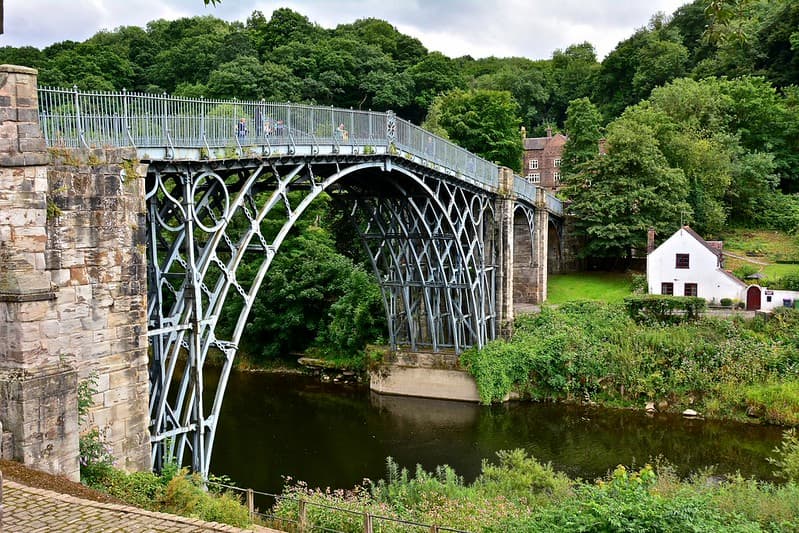
The physical centerpiece of the entire valley is The Iron Bridge, erected in 1779 by Abraham Darby III and designed by architect Thomas Farnolls Pritchard. Spanning 30 meters across the River Severn, it is renowned worldwide as the very first major bridge constructed entirely of cast iron, standing today as an enduring masterpiece of structural engineering. Surrounding the bridge are distinct historic settlements, including Coalbrookdale, Ironbridge, Jackfield, and Coalport. Today, ten distinct museum venues preserved by the Ironbridge Gorge Museum Trust interpret the region’s groundbreaking historical developments in iron smelting, decorative art tile production, fine porcelain china, steam power, and river canal transportation.
Attraction
Ironbridge Gorge attracts international travelers, engineering enthusiasts, students, and historians by offering an authentic living encounter with the origin of global industrialization. Visitors from around the world come to walk across the world’s first cast-iron bridge, admiring its graceful sweeping arch and pioneering joinery that cleverly adapted traditional timber carpentry joints to heavy cast-metal construction. The valley seamlessly pairs monumental industrial archaeology with scenic river landscapes and steep, densely wooded hillsides.
At Blists Hill Victorian Town, a sprawling 52-acre open-air living museum within the gorge, tourists step back into the vibrant atmosphere of the late 19th century. Costumed interpreters operate working print shops, traditional bakeries, sweet shops, blacksmith forge hearths, and iron foundries using historical token coinage. Visitors can also explore the Coalbrookdale Museum of Iron, housing Darby’s original historic Old Furnace, or visit the Coalport China Museum and Jackfield Tile Museum to admire magnificent Victorian decorative ceramic tiles and fine porcelain. Interactive galleries, hands-on workshops, historic steam locomotives, canal boat rides, and picturesque riverbank walking paths provide a rich educational and cultural experience for international travelers of all ages.

World Heritage
Inscribed on the UNESCO World Heritage List in 1986, Ironbridge Gorge fulfills UNESCO Cultural Criteria (i), (ii), (iv), and (vi):
- Criterion (i) – Masterpiece of Human Creative Genius: The Iron Bridge is an unprecedented triumph of engineering, aesthetics, and metallurgy, demonstrating the creative application of cast iron on a monumental structural scale for the first time in human history.
- Criterion (ii) – Interchange of Human Values: The technological breakthroughs pioneered in Coalbrookdale—specifically coke iron smelting and heavy structural cast-iron manufacturing—spread rapidly across Europe, North America, and Asia, fundamentally shaping modern industrial architecture and civil engineering worldwide.
- Criterion (iv) – Outstanding Industrial Landscape: The gorge retains an exceptionally complete, legible, and authentic ensemble of 18th- and 19th-century manufacturing facilities, raw material extraction sites, transport networks, and historical worker housing complexes.
- Criterion (vi) – Direct Association with Pivotal Historical Events: The site stands as a direct, physical witness to the onset of the Industrial Revolution, an epochal movement that radically transformed human society, labor dynamics, economic organization, and global trade.
Gateway
Travelers bound for Ironbridge Gorge can access the site via two practical gateway cities within the United Kingdom, both offering active IATA-coded airports, high-speed rail connections, diverse lodging options, and regional tour services:
- Birmingham (Primary Regional Gateway):
- Airport: Birmingham Airport (IATA Code: BHX; ICAO Code: EGBB).
- Infrastructure and Distance: Located 65 kilometers (40 miles) southeast of Ironbridge Gorge, BHX operates extensive international long-haul and European regional flights. Direct West Midlands Railway trains run frequently from Birmingham New Street station to Telford Central station in under 45 minutes, where local public buses and taxis connect directly to the gorge in 15 minutes. Birmingham provides an array of luxury hotels, historic boutique guesthouses, car rental hubs, and licensed tour operators organizing guided day trips into Shropshire.
- Manchester (Secondary Gateway):
- Airport: Manchester Airport (IATA Code: MAN; ICAO Code: EGCC).
- Infrastructure and Distance: Located 110 kilometers (70 miles) north of the site. Manchester Airport serves as a major intercontinental aviation hub. Frequent rail service via Crewe connects Manchester directly to Telford Central, or travelers can drive down the M6 motorway directly to the gorge in roughly 90 minutes.
When
The optimal period to visit Ironbridge Gorge is during Spring (April to June) and Autumn (September to October):
- Spring (April to June): Brings pleasant, mild weather with daily temperatures averaging between 12°C and 18°C (54°F to 64°F). Blooming flora across the river valley provides optimal conditions for outdoor sightseeing tours, walking paths, and scenic river cruises.
- Autumn (September to October): Offers crisp, clear days with temperatures between 10°C and 16°C (50°F to 61°F). Rich, colorful fall foliage frames the historic red-brick factories and cast-iron bridge, creating dramatic scenery for visitors.
- Summer (July to August): Features warm weather ranging from 20°C to 25°C (68°F to 77°F), though visitors should expect higher tourist density due to domestic school holiday crowds.
- Winter (November to March): Brings chilly conditions (3°C to 8°C / 37°F to 46°F) and shortened museum opening hours, though special festive winter events run at Blists Hill.
Consideration
- Multi-Museum Annual Passports: The Ironbridge Gorge Museum Trust offers multi-venue passports allowing entry to all ten museum attractions across multiple days, providing significant savings for family travelers.
- Spread-Out Geographic Layout: Venues span over six square kilometers along the river valley. Utilizing local shuttle buses or hiring a rental vehicle makes traveling between outlying sites like Blists Hill and Coalbrookdale much easier.
- Footwear and Terrain: Historic stone stairways, steep valley footpaths, and cobbled streets at Blists Hill necessitate sturdy, comfortable walking shoes for all excursions.
- Seasonal Museum Schedules: Operating hours vary by season, and select museums operate on reduced schedules or close on specific weekdays during off-peak winter months. Checking operating times in advance is crucial.
- Digital Cashless Payments: Credit cards, debit cards, and contactless mobile payment applications are universally accepted at all museum ticket counters, gift shops, and local cafes.
- Weather Preparedness: Weather in Shropshire can change rapidly throughout the day; bringing waterproof rain jackets and umbrella protection is strongly recommended year-round.

Resources
- UNESCO World Heritage Centre: Official site entry outlining site boundaries, inscription criteria, and ongoing heritage conservation reports.
- Ironbridge Gorge Museum Trust: Official portal providing ticketing, museum opening hours, venue maps, and special event schedules.
- English Heritage: Official management site for The Iron Bridge featuring detailed historical background and visiting guidance.
- Visit Shropshire: Official regional tourism website offering hotel listings, local dining recommendations, and travel itineraries.
- Trip.com: Travel booking platform offering options for guided walking tours, day trips, and local excursions to Ironbridge.


Comments:
Leave a Reply