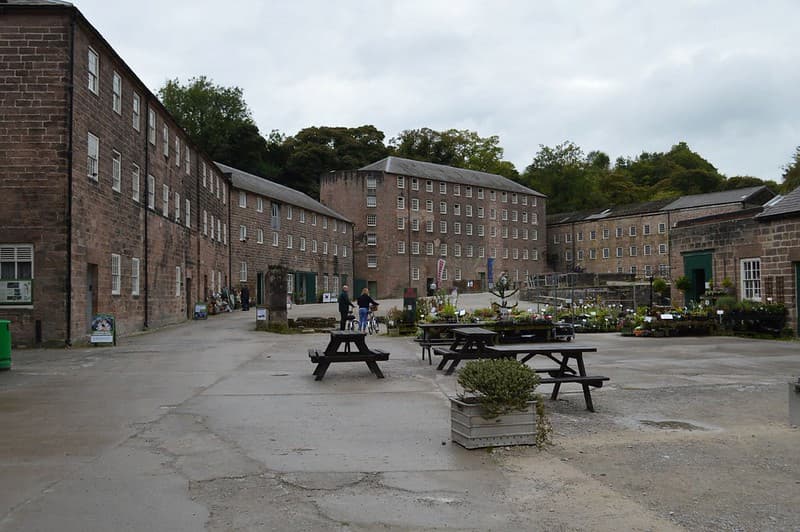
The Derwent Valley Mills in Derbyshire, England, is a 24-kilometer (15-mile) stretch of industrial heritage following the River Derwent from Matlock Bath in the north to the city of Derby in the south. It is celebrated as the cradle of the modern factory system.
The site encompasses a series of 18th and 19th-century cotton mills and the pioneering settlements built to support them. Unlike many industrial sites that have been swallowed by urban sprawl, the Derwent Valley Mills remain nestled in a remarkably intact rural landscape.
Key components include:
- Cromford Mills: Built by Richard Arkwright in 1771, this was the world’s first successful water-powered cotton spinning mill.
- Belper North Mill: A masterpiece of industrial architecture, it was one of the first fire-proof buildings in the world.
- Darley Abbey: A well-preserved industrial village featuring mills, workers’ cottages, and a church.
- Derby Silk Mill: Located at the southern end, it stands on the site of the first English factory (a silk throwing mill) and now houses the Museum of Making.
- Worker Housing: The site includes the first “modern” industrial housing, where employers provided high-quality stone cottages, schools, and markets for their workforce.
Attraction
The valley offers a unique blend of “hard” industrial history and soft English countryside beauty.
- The “Birthplace” Appeal: For history buffs, standing at the spot where the Industrial Revolution arguably began is a profound experience.
- Walking and Heritage Trails: The Derwent Valley Heritage Way allows visitors to hike the entire length of the site, moving between historic mills, wooded valleys, and riverside paths.
- The Arkwright Experience: At Cromford, immersive displays and tours explain how Richard Arkwright’s inventions changed the world’s economy forever.
- Shopping and Craft: Many mills have been repurposed. For example, Masson Mill houses a large retail center, and the village of Belper is famous for its award-winning independent high street.

Heritage
UNESCO inscribed the site in 2001 under Criteria (ii) and (iv):
- Technological Innovation: The valley saw the first successful use of water power for large-scale industrial production. Arkwright’s “water frame” and the organizational structure of his mills became the blueprint for factories worldwide.
- Socio-Economic Transformation: The site represents the birth of a new way of life. The transition from home-based “cottage industries” to centralized factory work created the first industrial communities, influencing urban planning and social structures globally.
- Architectural Integrity: The mills and their surrounding landscapes have survived with minimal modern intrusion, providing a clear visual record of the 18th-century industrial revolution.
Gateway
The city of Nottingham serves as the southern anchor and the most logical gateway for international travelers.
- Commercial Airport: East Midlands Airport (EMA) is just 24 km (15 miles) from Derby city center, with frequent bus links (the Skylink) and taxi services taking about 25 minutes.
- Lodging: Derby offers everything from upscale hotels like the Leonardo Hotel to boutique stays in the Cathedral Quarter. For a more “heritage” experience, many visitors stay in Belper or Matlock Bath within the valley.
- Access: The Derwent Valley Line is a scenic railway that stops at all major mill sites (Derby, Duffield, Belper, Ambergate, Whatstandwell, Cromford, Matlock Bath, and Matlock), making it incredibly easy to explore without a car.
When
- Autumn (October): This is the month of the Discovery Days Festival, where many sites that are usually closed to the public open for tours, talks, and special events.
- Spring (May to June): The valley is exceptionally green, and the riverside walks are at their most picturesque.
- Summer (July to August): Ideal for outdoor exploration and family events, though popular sites like Cromford can get busy on weekends.
- Winter: While the mills are atmospheric in the mist, some smaller museums may have reduced hours.

Consideration
- Footwear: If you plan to walk the Heritage Way or visit the “hidden” sites, bring sturdy walking shoes. The paths can be muddy, and many mills have uneven stone floors.
- The Railway Strategy: The train is often faster and more scenic than driving through the narrow valley roads. A “Wayfarer” ticket can often provide unlimited bus and train travel in the area.
- Pre-booking: For specialized tours (like the underground wheel pit tours at Cromford), pre-booking online is recommended, especially during school holidays.
- Combined Tickets: Check if a “Heritage Pass” is available during your visit, as it can save you money if you plan to visit three or more mill complexes.

Resources
- Derwent Valley Mills Official Site – The most comprehensive resource for maps, walking guides, and event listings.
- UNESCO UK – Derwent Valley – Detailed background on the site’s global significance and conservation.
- Visit Peak District & Derbyshire – Excellent for finding local lodging and combining your mill visit with a trip to the nearby Peak District National Park.
- Cromford Mills Official – Specific visitor info for the “flagship” site of the valley, including tour times and cafe menus.
- GetYourGuide – A commercial platform where you can book guided day tours or private transport from Derby or London.


Comments:
Leave a Reply