Monfragüe guards the world’s largest preserved Mediterranean scrubland
“Monfragüe” (Monfragüe Biosphere Reserve) is a 116,160-hectare terrestrial conservation and cultural landscape situated in the province of Cáceres in the Autonomous Community of Extremadura in western SPAIN. Encompassing Monfragüe National Park at its core alongside 14 surrounding municipalities—between the historic cities of Plasencia, Trujillo, and Cáceres—the reserve protects the largest and best-preserved expanse of Mediterranean forest and scrubland in the world.
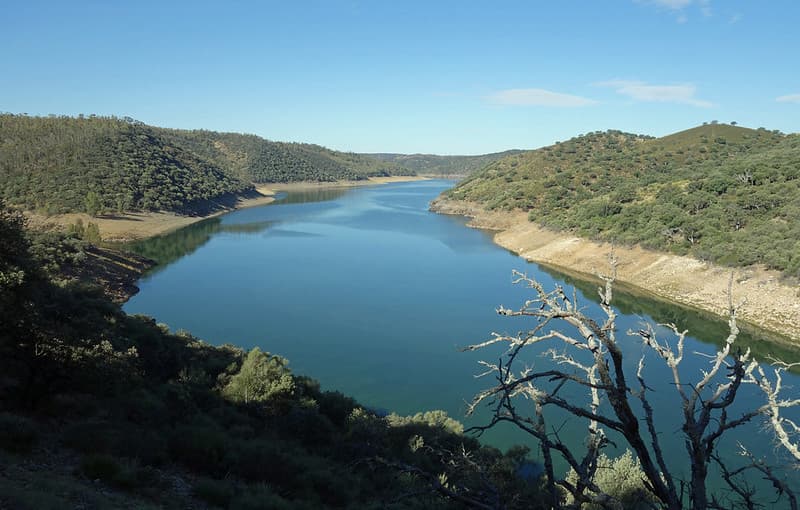
Carved by the Tagus (Tajo) and Tiétar rivers cutting through quartzite sierras rising around 500 meters, its terrain unites dramatic river cliffs, rocky outcrops, Holm and cork oak woodlands, riverside galleries, and rolling dehesa agrosylvopastoral plains. Supporting iconic Iberian wildlife alongside rural villages such as Villarreal de San Carlos and Torrejón el Rubio, Monfragüe blends wild Mediterranean ecology with centuries-old pastoral and prehistoric heritage.
Attraction
Monfragüe attracts birdwatchers, wildlife photographers, hikers, and cultural travelers globally as one of Europe’s premier destinations for observing soaring raptors and Iberian fauna in unspoiled Mediterranean habitats.
Visitors scan the sheer quartzite crags of Salto del Gitano (Peña Falcón) and Portilla del Tiétar for cinereous vultures, griffon vultures, Spanish imperial eagles, black storks, and eagle owls, hike waymarked trails to the medieval Monfragüe Castle, and view prehistoric Copper and Bronze Age cave paintings. Travelers also experience the autumn red-deer rut (berrea), stargaze under certified Starlight Destination night skies, and sample Extremaduran dehesa specialties including Iberian ham, artisanal cheeses, honey, and Pimentón de la Vera.
Biosphere Reserve
Designated in 2003 under UNESCO’s Man and the Biosphere (MAB) Programme—and overlapping with Monfragüe National Park and EU Natura 2000 Special Protection Areas—Monfragüe is recognized for uniting strict wildlife conservation with sustainable traditional land use:
- Mediterranean Forest and Raptor Sanctuary: Structured into a 13,300-hectare core area, a 15,356-hectare buffer zone, and an 87,503-hectare transition zone, the reserve protects globally significant breeding colonies of endangered raptors, black storks, and reintroduced Iberian lynx.
- Sustainable Dehesa Agrosylvopastoralism: Surrounding communities maintain traditional low-intensity oak-savannah grazing, cork harvesting, beekeeping, and certified ecotourism that preserve biodiversity while sustaining local rural livelihoods.
Gateway
Because Monfragüe lies in central Extremadura without a commercial airport inside the reserve, travelers enter via three proximate Spanish aviation hubs—each verified in IATA’s official directory and offering overnight lodging, highway or rail links, and specialist wildlife guides:
- Badajoz (Nearest Airport Hub in IATA Directory / Primary Extremadura Regional Gateway):
- Airport: Badajoz Airport (IATA Code: BJZ; ICAO Code: LEBZ).
- Infrastructure and Distance: Located at Talavera la Real east of Badajoz, roughly 175 to 195 kilometers (about 2 to 2.25 hours by road via the A-5 motorway and EX-208 highway through Trujillo or Cáceres) southwest of Monfragüe. BJZ is an active public airport indexed in IATA’s directory, while Badajoz, Cáceres, and Trujillo offer extensive hotels, car rentals, regional rail links, and accredited birding guides.
- Salamanca (Primary Northern Castile and León Gateway):
- Airport: Salamanca Airport (IATA Code: SLM; ICAO Code: LESA).
- Infrastructure and Distance: Located at Matacán east of Salamanca, roughly 175 to 195 kilometers (about 2 to 2.25 hours by road via the A-66 Autovía de la Plata motorway and EX-A1 through Plasencia) north of Monfragüe. SLM is an active public airport listed in IATA’s directory, backed by abundant city hotels, car rentals, highway and rail links, and regional nature excursion operators.
- Madrid (Primary Eastern Intercontinental & National Hub Gateway):
- Airport: Adolfo Suárez Madrid–Barajas Airport (IATA Code: MAD; ICAO Code: LEMD).
- Infrastructure and Distance: Located northeast of central Madrid, roughly 245 to 265 kilometers (about 2.5 to 3 hours by road via the A-5 motorway and EX-A1, or roughly 2.5 hours by Renfe train to Plasencia or Monfragüe station plus short road transfer) east of the reserve. MAD is Spain’s largest active public international hub indexed in IATA’s directory, offering extensive accommodation, car rentals, rail links, and specialist Extremadura birding tour operators.
When
The ideal window to visit Monfragüe is during Spring (March to May) and Autumn (September to November):
- Spring and Autumn (March to May & September to November): Recommended for raptor breeding activity, wildflower blooms, hiking, and the September–October red-deer rut (berrea), featuring pleasant daytime temperatures of 16°C to 25°C (61°F to 77°F).
- Summer and Winter (June to August & December to February): Summer brings intense Extremaduran heat often exceeding 35°C (95°F) suited mainly to dawn and dusk outings, while mild winters attract overwintering cranes, eagles, and raptors.

Consideration
- Rent a Car for Independent Viewpoint and Trail Access: Public transit into Villarreal de San Carlos and trailheads is very limited; renting a car or booking a guided birdwatching tour is essential for moving between Salto del Gitano, Portilla del Tiétar, and Monfragüe Castle.
- Bring Binoculars, Spotting Scopes, and Sun Protection: Many cliff-nesting vultures and eagles perch across wide river gorges; quality optics dramatically enhance wildlife viewing, alongside sun hats, sunscreen, and ample water.
- Respect Restricted Trails and Nesting Zones: Certain trails—such as the Purple Route (Ruta de Torrejón el Rubio)—require advance permits, and quiet zones strictly prohibit off-trail walking or drone use to protect nesting raptors.
- Book Spring Accommodation Early: Birdwatching lodges and rural casas rurales around Villarreal de San Carlos, Torrejón el Rubio, and Trujillo fill quickly during peak spring migration and the International Birdwatching Fair (FIO).
Resources
- UNESCO Man and the Biosphere Programme (Monfragüe Profile): Official UNESCO portal detailing boundaries, surface area, ecology, and socio-economic features.
- UNESCO Biosphere Reserves and Global Geoparks Portal (Monfragüe): Official statutory profile summarizing core conservation functions and periodic review documents.
- Turismo Extremadura (Monfragüe National Park & Biosphere Reserve): Official regional government tourism portal covering trails, viewpoints, starlight routes, and visitor centers.
- Spain Official Tourism Portal (Monfragüe Biosphere Reserve): National destination guide highlighting wildlife, itineraries, and seasonal advice.
- GetYourGuide: Online travel booking marketplace offering bookings for Monfragüe birdwatching tours, 4×4 safaris, and Extremadura excursions.
Featured Image
Monfrague National Park by the Tajo River (Christine Wagner, Flickr/CC BY 2.0).
News Feed
Advertisement


Comments:
Leave a Reply