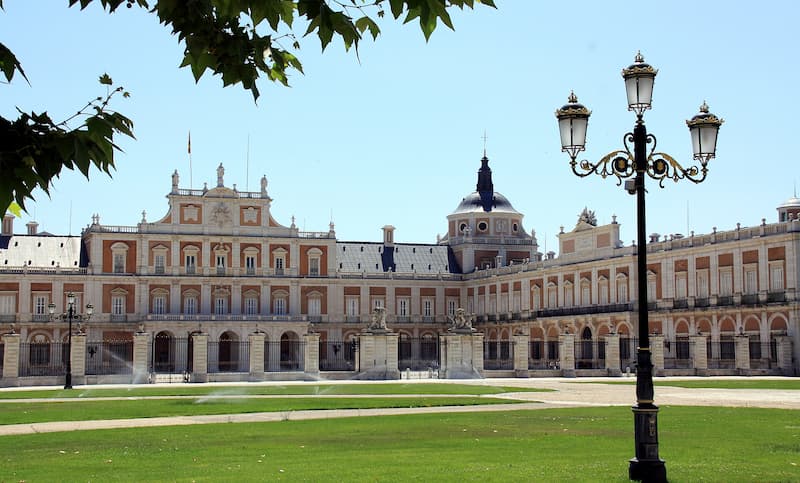
Bourbon monarchs crafted this monumental horticultural oasis near Madrid
The UNESCO World Heritage site titled “Aranjuez Cultural Landscape” is a masterfully designed cultural property located at the confluence of the Tagus and Jarama Rivers in the Autonomous Community of Madrid, central SPAIN. Spanning a protected core zone of over 2,000 hectares, the site represents a harmonious synthesis between complex human engineering, royal palatine architecture, and natural riverine landscapes cultivated over four centuries.
The complex centres on the Royal Palace of Aranjuez (Palacio Real), initially commissioned by King Philip II in the 16th century and expanded by subsequent Bourbon monarchs into an opulent Baroque and Neoclassical residence featuring the world-renowned Porcelain Cabinet and Arab Cabinet. Surrounding the palace are extensive historic gardens—including the Renaissance Jardín de la Isla, the French-style Jardín del Parterre, and the massive English-style Jardín del Príncipe—alongside the auxiliary royal retreat Casa del Labrador. Beyond the formal grounds, the landscape encompasses an intricate network of tree-lined geometric avenues, agricultural orchards (cortijos), hunting forests, and historic hydraulic canals that regulate the flow of the Tagus River to nourish the lush vegetation amidst the dry Castilian plains.
Attraction
The Aranjuez Cultural Landscape attracts art historians, botanists, cultural travelers, and photographers from around the world who come to explore one of Europe’s most complete and well-preserved royal country estates.
Visitors travel to walk through the lavish state apartments of the Royal Palace, admiring intricate frescoes, antique clock collections, and royal tapestries. Outside the palace walls, tourists stroll along miles of shaded avenues and manicured gardens filled with exotic plant species, ornamental fountains crafted from Carrara marble (such as the Fountains of Apollo and Hercules), and classical gazebos like the Chinese Pavilion. Visitors can explore the Museum of Royal Longboats to view gilded barges once used by Spanish monarchs for pleasure cruises along the Tagus. The site’s romantic atmosphere famously inspired Joaquín Rodrigo’s renowned classical guitar masterpiece, the Concierto de Aranjuez.

World Heritage
Inscribed on the UNESCO World Heritage List in 2001, the Aranjuez Cultural Landscape is recognized under Cultural Criteria (ii) and (iv):
- Criterion (ii) – Human Value Exchange and Influence: Aranjuez represents a technical and aesthetic synthesis between human landscape design and nature. It reflects an influential interchange of cultural ideas—incorporating Italian Renaissance garden concepts, French formal Baroque layouts, and English romantic park styles—that deeply impacted Enlightenment-era European landscape architecture.
- Criterion (iv) – Outstanding Landscape Ensemble: The site is an outstanding example of a royal country estate shaped by centuries of crown patronage. The complex integrates grand palatine architecture, geometric tree-lined grids, complex hydraulic systems, and agricultural production into a unified landscape that illustrates the evolution of European royal court culture.
Gateway
Travelers planning a visit to the Aranjuez Cultural Landscape can access the property via practical Spanish gateway locations featuring public IATA-listed airports searchable directly on IATA’s official directory (iata.org), complete lodging options, transit links, and tour services:
- Madrid (Primary Local Gateway / Nearest Airport Hub):
- Airport: Adolfo Suárez Madrid–Barajas Airport (IATA Code: MAD; ICAO Code: LEMD).
- Infrastructure and Distance: Located approximately 50 to 55 kilometers north of Aranjuez. MAD is an active public international aviation hub indexed in IATA’s directory. As Spain’s capital, Madrid offers luxury and budget hotels, car rentals, intercity buses, and frequent suburban commuter trains (Cercanías line C-3) connecting directly to Aranjuez station in under 45 minutes.
- Toledo (Practical Heritage Base Gateway):
- Airport: Adolfo Suárez Madrid–Barajas Airport (IATA Code: MAD; ICAO Code: LEMD) — primary regional aviation connection.
- Infrastructure and Distance: Located roughly 45 to 50 kilometers southwest of Aranjuez. Served by MAD airport, Toledo is a famous UNESCO World Heritage city offering extensive hotel lodging, rental vehicle services, regional bus connections, and specialized tour agencies running day trips directly to Aranjuez.
- Ciudad Real (Secondary Transit Base Gateway):
- Airport: Ciudad Real Central Airport (IATA Code: CQM; ICAO Code: LERL).
- Infrastructure and Distance: Located approximately 160 kilometers south of Aranjuez. CQM is a public airfield searchable in IATA’s directory. Ciudad Real provides regional hotel options, rental cars, and high-speed rail links (AVE and Avant trains) running north toward Madrid with stops serving the Aranjuez region.
When
The ideal windows to visit Aranjuez are during Spring (April to June) and Autumn (September to November):
- Spring (April to June): Highly recommended for garden walks. Temperatures are mild and pleasant (18°C to 24°C / 64°F to 75°F), the expansive gardens are in full bloom, and historic water fountains are actively operating.
- Autumn (September to November): Delivers crisp weather (15°C to 22°C / 59°F to 72°F), lower tourist crowds, and golden autumn foliage along the Tagus River plane trees.
- Summer (July to August): Extremely hot, with afternoon temperatures routinely exceeding 35°C to 40°C (95°F to 104°F), making long walks across open outdoor gardens exhausting.
Consideration
- Sprawling Site Dimensions: The historic gardens and outer forest trails cover hundreds of hectares. Visiting the main palace, Casa del Labrador, and all gardens requires several hours of walking. Comfortable walking shoes are essential.
- Timed Entry Tickets: Access to the inside of the Royal Palace and Casa del Labrador requires timed-entry tickets. Booking tickets online in advance through official administration channels prevents long waits at entry queues.
- Garden Maintenance Schedules: Access to individual garden areas or specific decorative fountains can vary depending on seasonal restoration work or river water management operations.
- Monuments Closed on Mondays: Like many national heritage sites across Spain, the inner palace rooms and secondary museum facilities are closed to the public on Mondays.
- Currency and Payments: The official currency is the Euro (EUR). Credit cards are widely accepted for tickets, dining, and shops, though carrying small cash is useful for local city buses and small cafes.

Resources
- UNESCO World Heritage Centre: Official inscription portal detailing site boundaries, criteria evaluations, and state of conservation reports.
- Patrimonio Nacional of Spain: Official state administrative portal for online palace ticket purchases, visiting hours, and historical archives.
- Turismo Comunidad de Madrid: Official regional travel site providing transit guides, cultural itineraries, and regional site details.
- Aranjuez Town Council Tourism: Official municipal tourism portal providing accommodation directories, local walking maps, and event schedules.
- Trip.com: Global online travel marketplace offering bookings for guided day trips, palace skip-the-line tickets, and private transit transfers from Madrid to Aranjuez.


Comments:
Leave a Reply