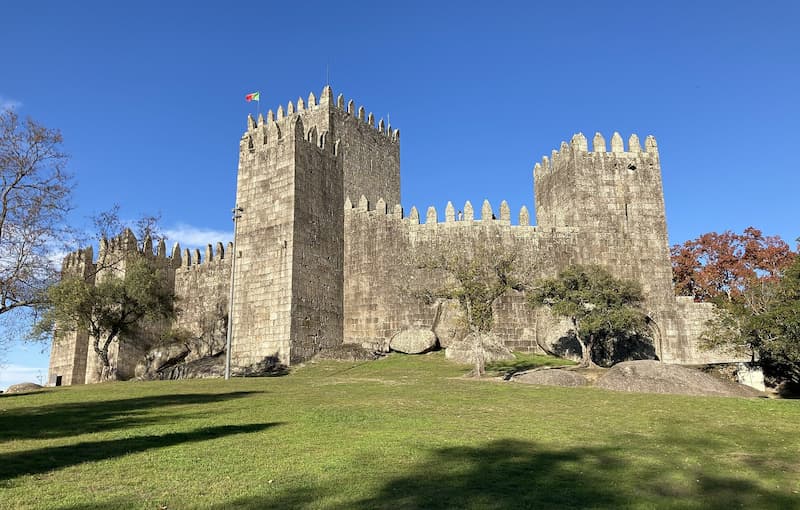
Where medieval castle walls cradle the birth of Portugal
The UNESCO World Heritage site titled “Historic Centre of Guimarães and Couros Zone” is a remarkably preserved medieval townscape located in the Minho region of northern PORTUGAL, approximately 50 kilometers northeast of Porto. Historically celebrated as the “Cradle of the Portuguese Nation” (Berço da Nação), Guimarães is directly linked to the 12th-century establishment of Portugal’s national identity and the birth of its first king, Afonso Henriques.
The site encompasses two distinct, harmonious urban zones. The northern section features the fortified medieval upper town, anchored by the 10th-century Guimarães Castle (Castelo de Guimarães) and the imposing 15th-century Palace of the Dukes of Braganza (Paço dos Duques de Bragança). This area flows into a maze of granite-paved streets, historic plazas like Largo da Oliveira and Praça de Tiago, and traditional 15th- to 19th-century timber-framed residential buildings. The southern expansion includes two monastic complexes and the Couros Zone (Zona de Couros), an authentic 19th- and early 20th-century industrial sector named after the historic craft of leather tanning. Here, open-air stone tanning vats, canals, and workers’ housing showcase the town’s industrial evolution.
Attraction
Guimarães attracts global travelers, historians, and architectural enthusiasts who come to experience the living birthplace of Portuguese history and identity. The town offers an authentic blend of medieval knightly atmosphere, preserved industrial heritage, and vibrant northern Portuguese culture.
Visitors flock to Guimarães to walk the stone battlements of Guimarães Castle, tour the art collections inside the Palace of the Dukes of Braganza, and stroll under the Gothic arcade of the Salado Memorial in Largo da Oliveira. Tourists marvel at the industrial archaeology of the Couros Zone, where stone-built tanning basins have been transformed into public heritage spaces. Beyond historic plazas, visitors take the Penha Cable Car (Teleférico da Penha) up to Mount Penha for sweeping panoramic views, relax in outdoor cafes, and enjoy traditional Minho gastronomy, including Caldo Verde and regional Vinho Verde wines.

World Heritage
Originally inscribed on the UNESCO World Heritage List in 2001 and expanded in 2023 to include the Couros Zone, the site is recognized under Cultural Criteria (ii), (iii), and (iv):
- Criterion (ii) – Interchange of Building Techniques: Guimarães illustrates a specialized evolution in Portuguese building techniques from the Middle Ages to the 19th century, particularly through its traditional timber-framed facades (taipa de fasquio) and granite masonry.
- Criterion (iii) – Exceptional Witness to National Identity: The site offers an exceptional physical record of a thousand years of Portuguese urban, architectural, and societal development, standing as the primary symbolic landmark of Portugal’s founding as an independent kingdom.
- Criterion (iv) – Outstanding Urban and Industrial Ensemble: The property represents an exceptionally well-preserved town illustrating the structural evolution of a medieval settlement into a modern city, seamlessly integrating monastic, civic, residential, and traditional leather-tanning industrial zones.
Gateway
Travelers planning a visit to Guimarães can access the site via the following practical northern Portuguese gateway city featuring a public IATA-listed airport searchable directly in IATA’s directory, overnight lodging options, transport infrastructure, and tour guide services:
- Porto (Primary Regional Gateway):
- Airport: Francisco Sá Carneiro Airport (IATA Code: OPO; ICAO Code: LPPR).
- Infrastructure and Distance: Located approximately 50 kilometers southwest of Guimarães. As Northern Portugal’s primary international aviation hub, OPO operates extensive direct flights across Europe and the Americas and is fully indexed on IATA’s public directory. Porto offers a complete range of accommodations, from five-star luxury hotels to boutique guesthouses. Frequent Comboios de Portugal (CP) urban trains run directly from Porto’s São Bento and Campanhã stations to Guimarães Railway Station in 1 hour. Express buses, car rentals, and certified guided tour operators run daily.
When
The ideal windows to visit Guimarães are during Spring (April to June) and Autumn (September to October):
- Spring (April to June): Delivers pleasant, mild weather with temperatures between 15°C and 22°C (59°F to 72°F). Blooming gardens and manageable crowds provide ideal conditions for outdoor walking tours.
- Autumn (September to October): Offers comfortable weather (16°C to 23°C / 61°F to 73°F) and vibrant fall foliage, aligning with the regional wine harvest season across the Minho province.
- Summer (July to August): Warm to hot (24°C to 30°C / 75°F to 86°F) with higher tourist numbers, though lively summer festivals animate the historic squares.
- Winter (November to March): Cool and damp (8°C to 14°C / 46°F to 57°F) with frequent rainfall across northern Portugal.
Consideration
- Cobblestone Terrain: The historic center features steep, narrow streets paved with traditional granite cobblestones (calçada). Sturdy, non-slip walking shoes are essential.
- Pedestrian-Only Zones: Most of the historic core and Couros Zone are closed to private vehicle traffic. Drivers should park in public garages outside the historic walls and explore on foot.
- Combination Entry Tickets: Municipal tourist offices sell combined entrance passes covering major monuments, including Guimarães Castle, the Palace of the Dukes, and the Alberto Sampaio Museum.
- Weather Variability: Northern Portugal can experience sudden rain showers even in shoulder seasons; carrying a compact umbrella or waterproof rain jacket is recommended.
- Currency and Payments: Transactions use the Euro (EUR). Credit cards are widely accepted at hotels, major sites, and restaurants, though cash is helpful for small cafes and local artisan shops.

Resources
- UNESCO World Heritage Centre: Official inscription portal detailing boundaries, criteria evaluations, and state of conservation reports.
- Visit Portugal Official Tourism Portal: Official national tourist office website providing northern Portugal travel guides and historic itineraries.
- Visit Porto and North Official Portal: Regional tourism board portal featuring travel routes, lodging directories, and monument details.
- Guimarães Municipal Tourism Portal: Official civic travel site offering monument opening hours, event calendars, and visitor center contacts.
- GetYourGuide: Booking marketplace offering day tours, guided walking excursions, and transit packages from Porto to Guimarães.


Comments:
Leave a Reply