Where 16th-century transatlantic fleets found safe volcanic harbor
The UNESCO World Heritage site titled “Central Zone of the Town of Angra do Heroísmo in the Azores” (Zona Central da Cidade de Angra do Heroísmo na Terceira) encompasses the historic port city center of Angra do Heroísmo, located on the southern coast of Terceira Island within PORTUGAL‘s autonomous Azorean archipelago in the North Atlantic Ocean. Founded in the 15th century, Angra served for over four centuries as an indispensable maritime crossroads connecting Europe, equatorial Africa, and the Americas during the Age of Discovery.
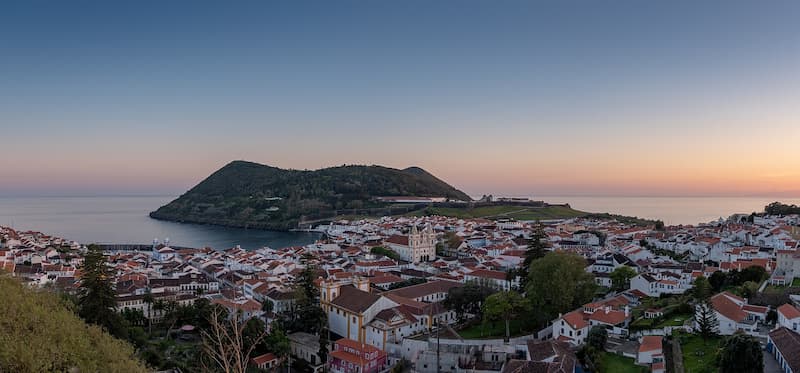
The urban fabric of the town reflects a Renaissance grid plan carefully adapted to its dramatic coastal topography. Set against the extinct volcanic crater of Mount Brasil (Monte Brasil), the central zone features colorful streetscapes lined with traditional Azorean manor houses (solares), whitewashed townhouses adorned with bright wrought-iron or carved-wood balconies, and red-tiled roofs. Key landmarks include the 16th-century Cathedral of Saint Salvador (Sé Catedral), the Church of the College of the Jesuits, the Municipal Garden, and the vast military fortresses of San Sebastião (Fortaleza de São Sebastião) and Saint John the Baptist (Fortaleza de São João Baptista) framing the harbor bay.
Attraction
Angra do Heroísmo attracts maritime historians, architectural lovers, and nature enthusiasts seeking a blend of Portuguese colonial history and mid-Atlantic ocean scenery. The city offers a living museum atmosphere, where visitors stroll along cobblestone streets, admire blue-and-white hand-painted tilework (azulejos), and explore lush public gardens overlooking deep ocean inlets.
Travelers flock to Angra to walk the massive stone ramparts of the Saint John the Baptist Fortress, hike up Mount Brasil for panoramic views across the city and Atlantic Ocean, and tour the Cathedral of Saint Salvador. Beyond cultural sights, Angra serves as an active hub for Azorean outdoor adventures, including whale and dolphin watching cruises, scuba diving at the Subaquatic Archaeological Park of Angra Bay, and traditional culinary tours featuring regional Azorean rump steak (alcatra) and local cheeses.

World Heritage
Inscribed on the UNESCO World Heritage List in 1983 under Cultural Criteria (iv) and (vi), Angra do Heroísmo is celebrated for its strategic maritime history and architectural preservation:
- Criterion (iv) – Masterpiece of Maritime Urban Planning: The city represents an outstanding example of a 15th- and 16th-century port town designed specifically to serve transatlantic navigation. Its street layout and military defenses, including the impressive twin fortresses guarding the bay, stand as an exceptional ensemble of European military and maritime architecture.
- Criterion (vi) – Direct Association with Global Exploration: Angra is directly associated with the Age of Discovery, functioning as an obligatory port of call for Spanish and Portuguese fleets carrying silver, spices, and exotic goods from the East and West Indies back to Europe. Following a severe earthquake on January 1, 1980, the community executed a precise, authentic reconstruction using traditional materials and methods to safeguard its urban heritage.
Gateway
Travelers visiting the site can conveniently access Angra do Heroísmo via two practical Portuguese gateway locations on Terceira Island and São Miguel Island featuring public IATA-listed commercial airports, lodging, transport infrastructure, and tour services:
- Terceira Island / Lajes (Primary Local Gateway):
- Airport: Lajes Airport (IATA Code: TER; ICAO Code: LPLA).
- Infrastructure and Distance: Situated in Praia da Vitória, approximately 20 kilometers northeast of central Angra do Heroísmo. TER is an active international commercial and dual-use airport operating direct flights from mainland Portugal (Lisbon, Porto), North America (Boston, Toronto), and inter-island Azorean routes. Angra provides diverse accommodations ranging from restored 16th-century fortress hotels to modern oceanfront resorts. Taxis, public regional buses, rental cars, and local tour guides connect the airport to the historic center in 20 minutes.
- Ponta Delgada / São Miguel (Secondary Regional Gateway):
- Airport: João Paulo II Airport (IATA Code: PDL; ICAO Code: LPPD).
- Infrastructure and Distance: Located on nearby São Miguel Island, roughly 160 kilometers southeast of Terceira. As the primary international airport in the Azores, PDL operates transatlantic and European flights. Inter-island flights connect PDL to TER in 40 minutes via SATA Air Açores.
When
The ideal window to visit Angra do Heroísmo is during Summer and Early Autumn (June to September), when oceanic weather is stable and warm:
- Summer / Peak Season (June to August): Brings dry, pleasant days with average temperatures between 20°C and 25°C (68°F to 77°F). Perfect for walking historical streets, outdoor dining, whale watching, and attending the traditional Sanjoaninas summer street festivals in late June.
- Early Autumn (September to October): Delivers warm ocean waters, comfortable walking conditions (18°C to 23°C / 64°F to 73°F), and lower tourist numbers across the island.
- Winter and Spring (November to April): Mild temperatures (14°C to 18°C / 57°F to 64°F) accompanied by high humidity, overcast skies, frequent rain showers, and windy Atlantic conditions.
Consideration
- Variable Atlantic Microclimates: Weather across the Azores changes rapidly within hours (“four seasons in one day”). Packing waterproof rain jackets, windbreakers, and layered clothing is essential even during summer months.
- Steep Cobblestone Terrain: The historic center features steep streets paved with traditional basalt cobblestones (calçada portuguesa). Sturdy, comfortable walking shoes with good grip are required.
- Inter-Island Transit Planning: While flights operate daily, high winds or sea swells can occasionally delay inter-island flights or regional ferries. Building buffer time into multi-island itineraries is recommended.
- Local Vehicle Usage: Driving inside Angra’s narrow historic center can be challenging with limited parking. The central zone is best explored on foot, using taxis or rental cars primarily for exploring Mount Brasil and island interior sites.
- Currency and Financial Services: Transactions use the Euro (EUR). Credit cards are widely accepted at hotels, restaurants, and museum desks, though carrying cash is helpful for small cafes and local artisan shops.

Resources
- UNESCO World Heritage Centre:Official inscription portal detailing site boundaries, criteria evaluations, and state of conservation reports.
- Visit Azores Official Tourism Portal: Official regional tourism board site providing island guides, inter-island transport advice, and accommodation directories.
- Visit Portugal Official Portal: Official national tourist office website detailing Azorean itineraries and historic town guides.
- Angra do Heroísmo City Council Portal: Official municipal government site offering cultural event listings, local museum details, and visitor center contacts.
- GetYourGuide: Popular online travel booking marketplace offering walking tours, island excursions, and airport transfer services in Angra do Heroísmo.
Featured Image
Angra do Heroismo, with Monte Brasil at the background (JulesVernex2. Wikimedia/CC BY-SA 4.0).
News Feed
Advertisement


Comments:
Leave a Reply