Bieszczady’s Ancient Forests: Primeval Woodland and Wildlife Haven
The UNESCO World Heritage site “Ancient and Primeval Beech Forests of the Carpathians and Other Regions of Europe” is a serial natural property spanning 18 European countries. In POLAND, the component parts were added during the 2021 UNESCO extension and are situated entirely within Bieszczady National Park (Bieszczadzki Park Narodowy) in the Subcarpathian Voivodeship (Podkarpackie) of southeastern Poland, near the borders with Slovakia and Ukraine. The park protects rugged mountain ranges within the Eastern Carpathians.
The Polish protected zones encompass four primary old-growth forest components within the park: the Border Ridge and Solinka Valley (Graniczny Grzbiet i Dolina Solinki), the Terebowiec Stream Valley (Dolina Terebowca), the Wołosatka Stream Valley (Dolina Wołosatki), and the Połonina Wetlińska and Smerek area. These untouched montane forests feature primeval European beech trees (Fagus sylvatica) growing across steep slopes and deep stream valleys. Developing naturally without commercial timber harvesting or artificial management since the last Ice Age, these primeval forest reserves exhibit complete structural development cycles, massive ancient trees, abundant decaying deadwood, and rich humus soils that foster intricate mycorrhizal networks.
Attraction
The primeval beech forests of Polish Bieszczady draw nature lovers, ecotourists, hikers, and photographers worldwide seeking an authentic European wilderness experience. The site offers a rare opportunity to trek through undisturbed old-growth woodlands featuring towering moss-draped canopies, dappled sunlight, crystalline mountain streams, and rich forest floor ecosystems.
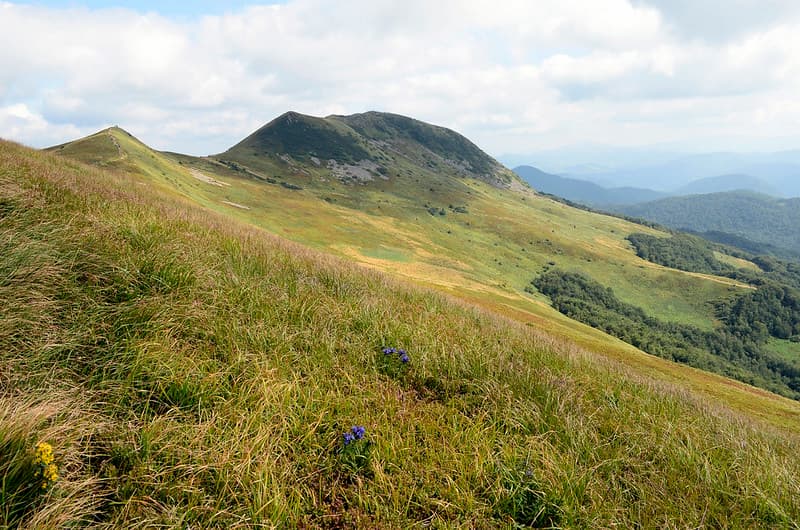
A defining attraction is the striking landscape transition between the dark, ancient beech forest belt along the lower mountain slopes and the sweeping, open alpine meadows—known locally as połoniny—that crown the ridges above the treeline, such as Połonina Wetlińska. The park provides vital refuge for Europe’s most emblematic large mammals, including brown bears, grey wolves, Eurasian lynx, wildcats, wild boars, red deer, and herds of European bison (żubr). Birdwatchers can spot rare species such as the Ural owl, white-backed woodpecker, and golden eagle. In autumn, the forest foliage transforms into vibrant golden and crimson hues across the slopes.

World Heritage
Inscribed under UNESCO Natural Criterion (ix), the site exhibits outstanding universal value for ongoing ecological and biological processes in terrestrial ecosystem evolution:
- Post-Glacial Ecological Expansion: Following the end of the last Ice Age approximately 12,000 years ago, European beech trees (Fagus sylvatica) expanded from small, isolated glacial refugia in Southern Europe to dominate vast swathes of the continent. The Polish forest components represent an irreplaceable, undisturbed example of this ongoing post-glacial recolonization across Carpathian montane environments.
- Ecological Integrity and Complete Life Cycles: The protected Polish sectors preserve entire, uninterrupted forest dynamics. These dynamics include natural regeneration, canopy gap disturbances, tree decay, and deadwood habitats that support thousands of specialized fungi, insect, and bird species under strict national park protection.
Gateway
Travelers planning an expedition to the Polish beech forests rely on regional and national gateway cities providing IATA-coded airports, transit infrastructure, and lodging:
Rzeszów (Primary Regional Gateway):
- Airport: Rzeszów-Jasionka Airport (IATA Code: RZE; ICAO Code: EPRZ).
- Distance and Transport: Located approximately 160 kilometers north of Bieszczady National Park. RZE handles domestic and international European flights. From Rzeszów, travelers can utilize regional bus routes, rental cars, or trains south toward Sanok and Ustrzyki Górne. Rzeszów features diverse hotel options, boutique guesthouses, vehicle hire services, and licensed mountain trekking guides offering organized transport into the Bieszczady range.
Kraków (Secondary National Gateway):
- Airport: John Paul II Kraków Balice International Airport (IATA Code: KRK; ICAO Code: EPKK).
- Distance and Transport: Situated roughly 280 kilometers northwest of the site. Kraków offers extensive international flights, historic and modern lodging options, car rentals, and regional tour operators organizing customized, multi-day guided wilderness excursions into the Subcarpathian mountains.
When
The optimal period to visit the Polish primeval beech forests is from late Spring through Autumn (May to October).
- Autumn (September to October): Widely considered the absolute best time. Comfortable temperatures (10°C to 18°C / 50°F to 64°F) and clear autumn skies accompany the brilliant golden-red foliage transformations of the beech canopy across the mountainsides.
- Late Spring and Summer (May to August): Features lush green foliage, warm weather (18°C to 25°C / 64°F to 77°F), blooming alpine meadows, and maximum daylight hours for long backcountry hikes.
- Winter (November to April): Cold and snowy with freezing temperatures; recommended only for experienced winter trekkers or ski touring enthusiasts.
Consideration
- Strict Trail Rules: Bieszczady National Park requires visitors to stay on marked trails to protect old-growth flora and wildlife. Camping and off-trail hiking are strictly prohibited.
- Wildlife Precautions: The forests house wild brown bears, European bison, and wolves. Hikers should carry bear spray, remain vocal on trail stretches with low visibility, and never leave food remnants behind.
- Footwear and Gear: Mountain paths can become extremely muddy and slippery after rain. Sturdy, waterproof hiking boots with solid ankle support are essential.
- Transportation Logistics: Public transit between small mountain villages in Bieszczady is infrequent. Renting a vehicle in Rzeszów or Kraków provides maximum flexibility for reaching remote trailheads.
- Weather Preparedness: Alpine ridge conditions can shift quickly to heavy rain, dense fog, or strong winds. Pack layered technical clothing, rain protection, and offline navigation maps.

(Przemyslaw Kozuch, Flickr/CC BY-SA 2.0).
Resources
- UNESCO World Heritage Centre: Official site entry outlining serial inscription details, maps, and ecological criteria.
- Bieszczady National Park Official Site: Official park administration portal offering trail maps, entry fees, and safety notices.
- Poland Official Travel Portal: National tourism website providing travel guides, regional transit info, and accommodation lists.
- European Beech Forests Network: Dedicated portal detailing the transnational network of protected primeval beech reserves.
- GetYourGuide: Popular travel booking marketplace featuring guided excursions, transport passes, and outdoor activities in Poland.
Featured Image
Bieszczady National Park (Przemyslaw Kozuch, Flickr/CC BY-SA 2.0).
News Feed
Advertisement


Comments:
Leave a Reply