Discover Luxembourg: The City of Fortifications and Scenic Valleys
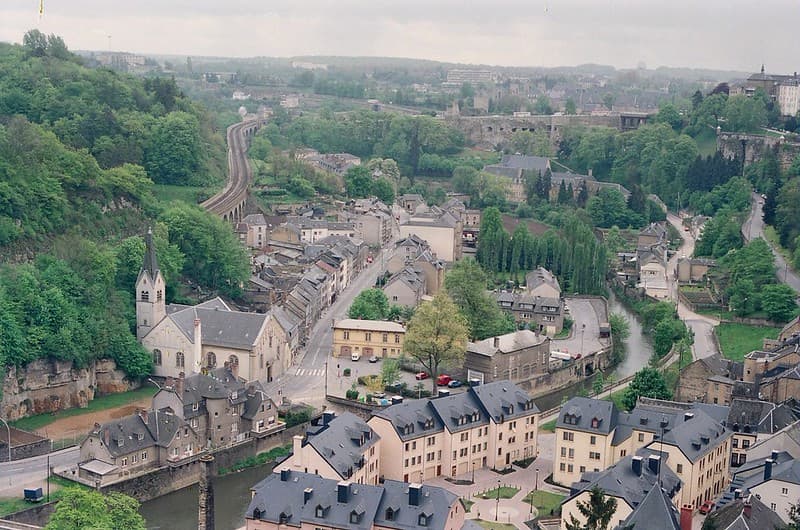
The UNESCO World Heritage property titled “City of Luxembourg: its Old Quarters and Fortifications” encompasses the historic urban core of Luxembourg City, the capital of the Grand Duchy of LUXEMBOURG. Inscribed on the World Heritage List in 1994, this cultural site occupies an extraordinary natural landscape defined by steep sandstone cliffs, deep river gorges, and the confluence of the Alzette and Pétrusse rivers. The urban terrain features a striking dual-elevation layout: the Upper Town (Ville Haute), constructed atop a high rocky promontory, and the Lower Town districts (Grund, Clausen, and Pfaffenthal), situated in the scenic valley bottoms directly below.
Founded in 963 CE when Count Siegfried acquired the Bock promontory and built a small castle, the strategic site evolved over nine centuries into one of Europe’s most formidable strongholds. Although outer ramparts were demolished following the 1867 Treaty of London to guarantee Luxembourg’s neutrality, the preserved site retains an impressive array of historic architecture. Imposing bastions, ancient gates, towers, stone bridges, and underground military tunnels are seamlessly integrated alongside historic townhouses, cobblestone alleyways, grand squares, and ducal residences.
Attraction
The site attracts global travelers due to its dramatic vertical geography, multi-layered military history, and picturesque urban landscape. Historically nicknamed the “Gibraltar of the North” owing to its reputation as an impregnable natural fortress, the city offers visitors breathtaking visual contrasts between elevated cliffside fortifications and peaceful, lush river valleys.
A primary highlight is the Bock Casemates (Casemates du Bock), an extraordinary subterranean tunnel system carved directly out of solid sandstone cliffs. Constructed under Spanish and French rule, these underground galleries once sheltered thousands of soldiers, artillery positions, and workshops during historic sieges. Above ground, tourists walk along the famous Chemin de la Corniche, a pedestrian promenade hailed as “Europe’s most beautiful balcony,” offering sweeping views over the timbered houses of the Grund quarter. Other renowned attractions include the 16th-century Grand Ducal Palace (Palais Grand-Ducal), Notre-Dame Cathedral, the soaring Adolphe Bridge, and the glass-walled Pfaffenthal Panoramic Elevator, which transports visitors vertically down a 71-meter cliff face.

World Heritage
Inscribed on the UNESCO World Heritage List in 1994, the site possesses Outstanding Universal Value under cultural criterion (iv):
- Criterion (iv) – Outstanding Military Architecture and Historic Ensemble: The City of Luxembourg is an exceptional illustration of a fortified European city that played a central strategic role in European history for several centuries. Situated at a crucial geographical crossroads between Western European powers, the fortress was repeatedly captured, rebuilt, and fortified by major empires—including the Holy Roman Empire, the House of Burgundy, the Habsburgs, the French and Spanish monarchies, and Prussia. Renowned military engineers, such as France’s Marquis de Vauban, continuously upgraded defenses to incorporate cutting-edge siege technology into the natural cliff landscape. The preserved site provides unmatched physical evidence of European fortification history from the Middle Ages to the 19th century, while demonstrating how an urban civilian center developed harmoniously within a military framework.
Gateway
The site serves as its own direct gateway, with the historic UNESCO area situated within Luxembourg City itself:
- Luxembourg City (Primary Gateway):
- Airport: Luxembourg Airport / Luxembourg-Findel Airport (IATA Code: LUX; ICAO Code: ELLX).
- Infrastructure & Distance: Located just 6 kilometers (3.7 miles) east of the historic city center, Luxembourg Airport is the country’s sole international air gateway, offering direct flight connections across Europe. Luxembourg City provides extensive lodging options for overnight travelers, ranging from luxury hotels to boutique properties and budget hostels. Transport infrastructure is exceptional: direct municipal buses (Lines 16 and 29) and tram services connect the airport directly to the historic upper town and the central railway station (Gare Centrale). The Luxembourg City Tourist Office (LCTO) provides expert tour guides, organized group walks, self-guided audio tours, and visitor passes for major historic landmarks.
When
The optimal period to visit the City of Luxembourg and explore its outdoor fortifications is from Late Spring to Early Autumn (May to October).
- Late Spring (May to June): Brings pleasant daylight hours, blooming flora, and mild temperatures (14°C to 22°C / 57°F to 72°F). Walking conditions through the Pétrusse and Alzette valleys are exceptionally comfortable before summer crowds arrive.
- Summer (July to August): Offers warm weather (18°C to 25°C / 64°F to 77°F) alongside vibrant outdoor dining and cultural festivals across town squares like Place d’Armes. All historical attractions and guided tours operate at maximum capacity.
- Early Autumn (September to October): Delivers crisp air and mild temperatures (10°C to 18°C / 50°F to 64°F). Foliage across the river valley forests turns golden, providing ideal conditions for photography along the ramparts.
- Winter Festive Season (December): Cold conditions prevail (0°C to 6°C / 32°F to 43°F), but the old quarters feature festive Christmas markets.
Consideration
- Topography and Footwear: Navigating between the Upper Town and valley districts (Grund, Pfaffenthal) involves steep cobblestone inclines, stone stairs, and uneven pathways. Wearing sturdy walking shoes is necessary. Free public elevators, including the panoramic Pfaffenthal Lift and St. Esprit Elevator, offer fast, accessible transit between elevation levels.
- Free Nationwide Public Transit: Luxembourg is the first country in the world to introduce completely free public transportation nationwide. All municipal buses, trams, and regional trains are free for all visitors and residents without needing a ticket.
- Advance Booking for Casemates: Underground sites like the Bock Casemates enforce daily visitor limits for safety. Purchasing timed-entry tickets online in advance during summer months is strongly recommended.
- Multilingual Environment: Luxembourgish, French, and German are official languages, though English is universally spoken across hospitality and tourism centers.
- Unpredictable Weather: European oceanic climate brings quick weather changes; carrying an umbrella or rain jacket is advised.

Resources
- UNESCO World Heritage Centre: Official property overview detailing inscription criteria, boundary maps, and conservation records.
- Luxembourg City Tourist Office (LCTO): Official municipal tourism portal providing guided tour reservations, casemate tickets, and event schedules.
- Visit Luxembourg: Official national tourism authority offering travel itineraries, transit maps, and destination highlights across the Grand Duchy.
- Ville de Luxembourg: Official municipal administration site providing local transit updates, cultural news, and accessibility guides.
- GetYourGuide: Popular online travel booking engine offering guided walking tours, private excursions, and city passes for Luxembourg attractions.


Comments:
3 responses to “City of Luxembourg: its Old Quarters and Fortifications”
-
Even for a diminutive destination, a day tour wasn’t nearly enough time to explore.
-
Our tour took us through the old quarters including this commanding view of the city. It was easy to see why the fortress stood for centuries on that promontary. We loved this view of the Petrusse Valley from the Grund. The Grund neighborhood was located in the lower part of the fortification along the Petrusse River. It still has a village like atmosphere with cobblestoned streets. It is now a district filled with pubs and restaurants and great for nightlife. As we made our way outside of the old city, it was easy to see why Luxembourg city was also called a “City of Contrasts”. The remnants of the old city, its historic sites and the modern buildings all seemed to stand side by side seamlessly. Much like its architecture coexisting, the city is a melting pot of many cultures and people – 170 various nationalities and counting.
-
The ‘most beautiful balcony in Europe’ is in Luxembourg City. It’s called Corniche and if you haven’t been yet, it’s not a balcony quite like the one you have at home though the idea is fairly similar. The balcony have a brilliant view of the old part of the city and is a must-see when you’re in the city.

Leave a Reply