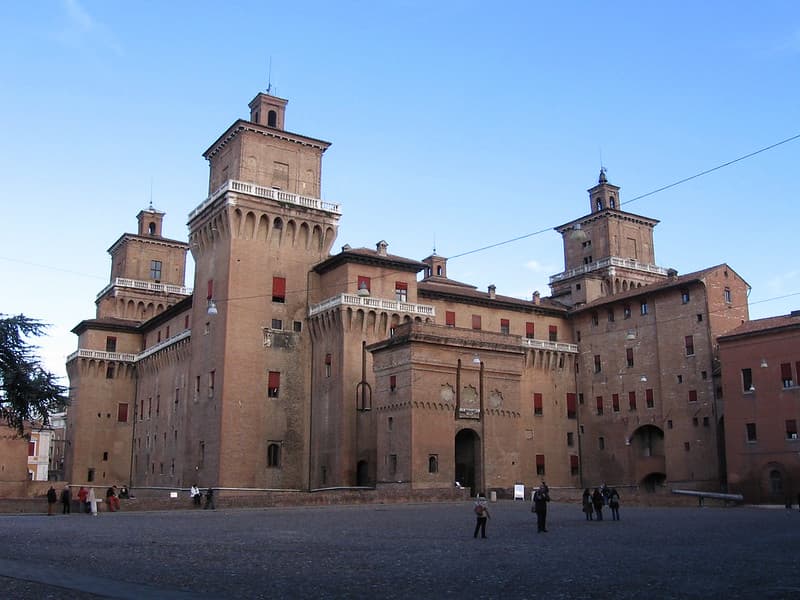
The Beauty of Ferrara and the Po Delta: A Renaissance Experience
The UNESCO World Heritage property “Ferrara, City of the Renaissance, and its Po Delta” is a cultural landscape located in the Emilia-Romagna region of northeastern ITALY. Originally inscribed in 1995 for Ferrara’s historic city center, the property was expanded in 1999 to incorporate the rural estates of the ruling House of Este and the vast wetland environment of the surrounding Po River Delta.
The property illustrates the urban planning, artistic patronages, and environmental engineering of the Este dynasty between the 14th and 16th centuries:
- Historic Center of Ferrara: Dominated by the moat-encircled Castello Estense and the Romanesque-Gothic Ferrara Cathedral, the city is globally famous for the Addizione Erculea (Herculean Addition). Commissioned by Duke Ercole I in 1492 and designed by architect Biagio Rossetti, this urban expansion made Ferrara Europe’s first planned modern Renaissance city.
- The Delizie Estensi: A network of countryside estates and pleasure palaces built by the Este dukes, such as the Delizia di Belriguardo and Delizia del Verginese, reflecting courtly culture.
- The Po Delta: A dynamic wetland landscape where Italy’s longest river meets the Adriatic Sea. It encompasses lagoon networks, brackish marshes, pine forests, and historic reclaimed agricultural tracts shaped by human drainage interventions since the 16th century.
Attraction
The site draws travelers from around the world because it offers a rare combination of refined Renaissance culture and raw natural beauty. Visitors explore an intact urban core lined with wide, straight avenues, magnificent palaces, and preserved red-brick defensive walls that stretch for nine kilometers, creating a peaceful environment popular for bicycle touring.
Beyond the city walls, tourists can experience the vast waterways and biodiversity of the Po Delta Park. Boat excursions through the coastal lagoons allow travelers to observe over 300 bird species, including major breeding colonies of greater flamingos, herons, and rare sea birds. Visitors can also explore traditional fishing villages like Comacchio—often called “Little Venice” due to its stone bridges and canals—and indulge in authentic regional culinary traditions, including Ferrara’s famous cappellacci di zucca (pumpkin stuffed pasta) and wood-fire roasted eel.

World Heritage
In 1995 and 1999, UNESCO inscribed the site on the World Heritage List under five cultural criteria: (ii), (iii), (iv), (v), and (vi).
- Criterion (ii) – Interchange of Human Values: The revolutionary urban layout of the Addizione Erculea and the works of the Ferrarese architectural school profoundly influenced urban planning practices throughout Europe for centuries.
- Criterion (iii) – Exceptional Cultural Testimony: The Delizie Estensi (ducal residences scattered across the Po Delta) illustrate the influence of Renaissance culture on the natural landscape in an exceptional manner.
- Criterion (iv) – Outstanding Architectural Ensemble: Ferrara represents an outstanding example of a planned Renaissance city that has retained its urban fabric virtually intact, showcasing the transition from medieval structures to Renaissance perspectives.
- Criterion (v) – Human Interaction with the Environment: The Po Delta is an outstanding planned cultural landscape where human land reclamation (bonifica), lagoon canalization, and hydraulic works interacted harmoniously with a delicate natural ecosystem over centuries.
- Criterion (vi) – Direct Association with Intellectual Movements: The court of the House of Este in Ferrara was a premier center of Humanism, directly attracting and nurturing a constellation of artists, poets (such as Ludovico Ariosto and Torquato Tasso), and philosophers during the 15th and 16th centuries.
Gateway
Travelers can access the site via three practical Italian gateway cities equipped with active IATA-coded airports, lodging options, and transit links:
- Bologna (Primary Regional Gateway):
- Airport: Bologna Guglielmo Marconi Airport (IATA Code: BLQ; ICAO Code: LIPE).
- Infrastructure: Located 45 kilometers southwest. Direct regional trains connect Bologna Centrale to Ferrara in 20 to 30 minutes. Bologna provides extensive lodging, car rentals, and tour guide services.
- Venice (Northeastern International Gateway):
- Airport: Venice Marco Polo Airport (IATA Code: VCE; ICAO Code: LIPZ).
- Infrastructure: Located 85 kilometers northeast. Direct trains link Venice to Ferrara in approximately one hour, providing an international entry point with abundant accommodations and tour connections.
- Ferrara (Municipal Gateway):
- Airport: Ferrara Airport / San Luca (IATA Code: LIPF; ICAO Code: LIPF).
- Infrastructure: Located within Ferrara’s boundary. The city serves as an immediate base for exploring the urban center and Po Delta, featuring hotels, regional buses, bike rentals, and tour guides.
When
The ideal time to visit Ferrara and the Po Delta is during Spring (April to June) and Autumn (September to October).
- Spring and Autumn: These shoulder seasons offer comfortable weather conditions, with temperatures ranging from 15°C to 24°C (59°F to 75°F). Spring brings pleasant cycling conditions along the city ramparts and prime birdwatching opportunities in the delta wetlands during seasonal migrations. Autumn features clear skies, harvest food festivals, and comfortable walking temperatures.
- Summer (July to August): Summers can be hot and humid, with temperatures exceeding 32°C (90°F). Mosquitoes can also be challenging in the delta marshlands during warm summer evenings.
- Winter (November to March): Winters are cool and foggy (1°C to 9°C / 34°F to 48°F), though the misty atmosphere lends a quiet charm to the city’s medieval streets.
Considerations
- Transportation for the Delta Area: While Ferrara’s historic city center is easily navigated on foot or bicycle, exploring the dispersed Po Delta wetlands, Comacchio lagoons, and outlying Este villas requires renting a vehicle or booking guided boat and bus tours.
- Active Cycling Culture: Ferrara is known as the “City of Bicycles.” Renting a bicycle is the most efficient and authentic way to explore the historic avenues, city walls, and rural trails.
- Insect Protection for Wetland Tours: Travelers planning outdoor excursions, boat rides, or birdwatching trips in the Po Delta should bring insect repellent, sun protection, and lightweight long sleeves.
- Museum Closures: Many municipal museums and historic palaces in Ferrara operate on specific schedules and may close on Mondays. Checking opening hours in advance is recommended.

Resources
- UNESCO World Heritage Centre: Official UNESCO web portal containing detailed technical records, boundary maps, and inscription criteria.
- Ferrara Terra e Acqua (Official Tourism Portal): Official tourism office website providing city guides, hotel listings, and delta excursion details.
- Parco del Po Delta Emilia-Romagna: Official regional park authority website offering trail maps, boat tour schedules, and wildlife guides.
- Emilia-Romagna Tourism Board: Official regional portal with cultural itineraries, culinary guides, and transit options across the region.
- Trip.com: Major travel platform featuring traveler reviews, community forums, lodging options, and tour bookings.


Comments:
Leave a Reply