Visit Cerveteri and Tarquinia: Ancient Etruscan Sites
The UNESCO World Heritage site “Etruscan Necropolises of Cerveteri and Tarquinia” comprises two monumental ancient burial grounds located in the Lazio region of central ITALY, approximately 40 to 80 kilometers northwest of Rome. Constructed by the Etruscans—a highly sophisticated pre-Roman civilization that dominated central Italy between the 9th and 1st centuries BC—these expansive necropolises (“cities of the dead”) serve as extraordinary architectural, artistic, and historical representations of Etruscan society, domestic life, and spiritual concepts of the afterlife.
The World Heritage property encompasses two main archaeological locations:
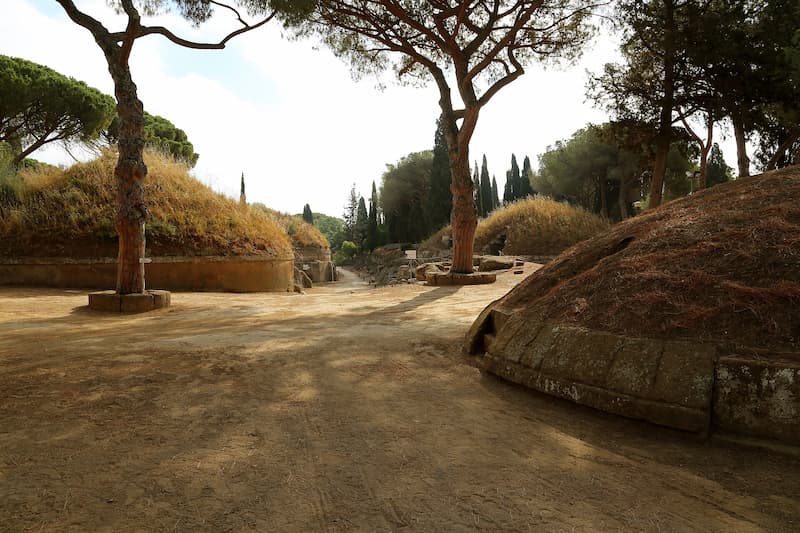
- Banditaccia Necropolis (Cerveteri): Spanning over 20 hectares, Banditaccia is renowned for its urban design that directly replicates an ancient city of the living. Organised along paved main avenues, side streets, and public squares, it features thousands of rock-cut tombs and circular earth-mound tumuli constructed upon volcanic tufa rock bases. The subterranean interiors replicate traditional Etruscan residences, featuring carved stone roof beams, support columns, stone beds, and detailed household furnishings. A famous example is the Tomba dei Rilievi (Tomb of the Reliefs), decorated with bright polychrome plaster reliefs depicting weapons, kitchen utensils, tools, and domestic pets.
- Monterozzi Necropolis (Tarquinia): Spanning 130 hectares, Monterozzi contains around 6,000 subterranean rock-cut tombs. It is globally famous for its 200 painted tomb chambers featuring vibrant fresco murals created between the 7th and 2nd centuries BC. These brilliant wall paintings illustrate lively scenes of banquets, musicians, dancers, athletic competitions, hunting, fishing, and mythological themes, offering an unparalleled record of pre-Roman Mediterranean artwork.
Attraction
The site captivates international tourists because it provides an authentic, tangible portal into the enigmatic Etruscan civilization—the pre-Roman culture that profoundly shaped early Roman religion, engineering, art, and urban planning. Because virtually no Etruscan above-ground domestic buildings or literature survived Roman conquest, these necropolises represent the ultimate primary physical evidence of their world.
Visitors are fascinated by the distinct character of each location: Cerveteri allows tourists to physically walk along ancient stone-paved streets between grassy burial mounds, entering rock-hewn tombs that feel like fully furnished, thousands-of-years-old homes. Tarquinia operates as an underground art gallery where visitors descend below ground into vaulted chambers to admire brightly painted frescoes preserved for over two millennia. Additionally, both towns house exceptional archaeological museums—the National Archaeological Museum of Tarquinia (housed in the Renaissance Palazzo Vitelleschi) and the Cerite National Museum in Cerveteri—exhibiting world-renowned terracotta sarcophagi, bronze armor, Greek-inspired ceramics, and exquisite gold jewelry.

World Heritage
In 2004, UNESCO inscribed the Etruscan Necropolises of Cerveteri and Tarquinia on the World Heritage List under cultural criteria (i), (iii), and (iv).
- Masterpiece of Human Creative Genius (Criterion i): Tarquinia’s large-scale wall frescoes are exceptional pre-Roman artistic masterpieces celebrated for their aesthetic quality, vivid colors, and detailed depiction of ancient religious beliefs and social life. Simultaneously, Cerveteri demonstrates remarkable architectural genius by sculpting complex urban layouts and home interiors directly into natural tufa bedrock.
- Exceptional Testimony to a Vanished Civilization (Criterion iii): The two necropolises offer a unique, unrivaled historical record of the vanished Etruscan culture—the only urban civilization in pre-Roman central Italy. The frescoes and house-like tomb interiors serve as the single most important source for understanding Etruscan domestic architecture, customs, and social structure.
- Outstanding Architectural Ensemble (Criterion iv): Together, these burial complexes represent an outstanding architectural ensemble illustrating nine centuries of evolving ancient funerary design from the early Villanovan period to the Hellenistic era.
Gateway
Travelers bound for Cerveteri and Tarquinia can utilize three practical Italian gateway cities equipped with IATA-coded airports, comprehensive lodging, public transit infrastructure, and professional tour operators:
- Rome (Primary Capital & Regional Gateway):
- Airports: Rome Leonardo da Vinci–Fiumicino Airport (IATA Code: FCO; ICAO Code: LIRF) and Rome Ciampino Airport (IATA Code: CIA; ICAO Code: LIRA).
- Infrastructure: Located 35 kilometers south of Cerveteri and 85 kilometers south of Tarquinia. Direct FL5 regional trains run regularly from Rome Termini and Trastevere stations to Marina di Cerveteri and Tarquinia stations. Rome provides extensive hotel options, car rental services, and licensed tour guide excursions to both necropolises.
- Grosseto (Northern Maremma Gateway):
- Airport: Grosseto Baccarini Airport (IATA Code: GRS; ICAO Code: LIRS).
- Infrastructure: Located approximately 90 kilometers north of Tarquinia. Served by regional rail along the Tyrrhenian line and the E80 highway, Grosseto offers established lodging options, rental cars, and regional tour agencies accessing northern Etruria.
- Perugia (Eastern Inland Gateway):
- Airport: Perugia San Francesco d’Assisi – Umbria International Airport (IATA Code: PEG; ICAO Code: LIRZ).
- Infrastructure: Situated roughly 140 kilometers northeast of Tarquinia. Connected via the SS675 trunk road through Viterbo, Perugia offers diverse accommodations, car rentals, and regional guide services across Etruscan territory.
When
The ideal time to visit the Etruscan Necropolises is during the Spring (April to June) and Autumn (September to October).
- Spring and Autumn: These shoulder seasons offer optimal weather conditions for outdoor archaeological exploration, with mild daytime temperatures ranging from 16°C to 24°C (61°F to 75°F). Spring brings lush vegetation and wildflowers across Cerveteri’s countryside, while autumn offers clear skies, lower humidity, and comfortable walking conditions.
- Summer (July to August): Summers in Lazio are hot and sunny, with temperatures frequently exceeding 32°C (90°F). Outdoor walking paths across unshaded tufa plateaus can be strenuous during peak afternoon heat.
- Winter (November to March): Winters are cool (6°C to 14°C / 43°F to 57°F) with increased rainfall, though visitors benefit from peaceful, uncrowded access to the tomb sites and museums.
Considerations
- Transportation and Connections: Cerveteri’s Banditaccia site sits 4 kilometers inland from its train station, requiring local shuttle buses, taxis, or a rental car. Tarquinia’s necropolis is 2 kilometers from its station. Renting a vehicle provides maximum flexibility to visit both necropolises and both town museums in a single day.
- Mobility and Footwear: Exploring the burial grounds involves walking across uneven ground, gravel tracks, ancient stone roads, and stairways. Accessing Tarquinia’s painted tombs requires descending steep, narrow stairs into subterranean vaults. Comfortable, sturdy walking shoes are mandatory.
- Tomb Viewing Setup: To preserve delicate ancient tomb wall paintings in Tarquinia, chambers are sealed behind glass barriers with automated push-button lights that illuminate frescoes for short intervals.
- Combined Tickets: Visitors should buy a combined entry ticket covering both the outdoor archaeological parks and the corresponding town museums for complete context.

Resources
- UNESCO World Heritage Centre: Official UNESCO web portal containing detailed inscription files, site boundary maps, and conservation records.
- Parco Archeologico di Cerveteri e Tarquinia: Official Italian Ministry of Culture website for opening hours, ticket prices, and site news.
- Italia.it: Official national tourism board portal offering travel itineraries and regional culture overviews.
- Visit Lazio Tourism Portal: Official regional portal providing regional travel advice, transport tips, and seaside attraction details.
- Trip.com: Major travel platform featuring user reviews, community forums, hotel options, and tour bookings.


Comments:
Leave a Reply