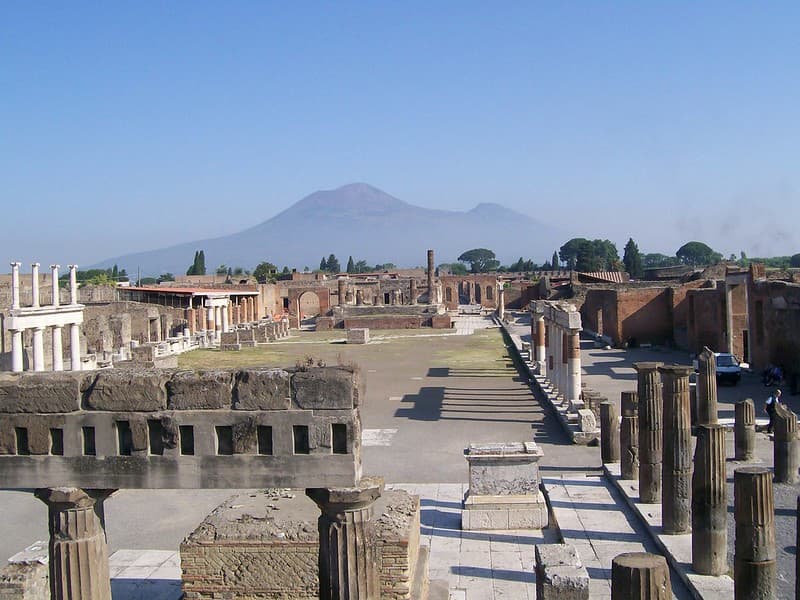
A Guide to the Ruins of Pompeii and Herculaneum
The UNESCO World Heritage property titled “Archaeological Areas of Pompei, Herculaneum and Torre Annunziata” consists of three major archaeological zones located in the Campania region of southern ITALY, directly under the shadow of Mount Vesuvius. The site encapsulates the devastating eruption of Mount Vesuvius in AD 79, which abruptly buried flourishing Roman communities under immense layers of volcanic debris.
The property includes:
- Pompeii: A massive, commercial Roman city covering 44 excavated hectares. It features a grand forum, temples, basilicas, bath complexes, an amphitheater, brothels, taverns, and private residences like the House of the Faun and the nearby Villa of the Mysteries.
- Herculaneum: A smaller, wealthier coastal resort town. Entombed beneath superheated pyroclastic surges, Herculaneum exhibits incredible structural preservation, including carbonized wooden furniture, structural timber, upper floors, and organic artifacts.
- Torre Annunziata: Contains the luxurious suburban Roman residential complexes of Oplontis, specifically Villa A (the lavish Villa of Poppaea, attributed to Emperor Nero’s second wife, renowned for its architectural grandeur and brilliant frescoes) and Villa B (Villa of Lucius Crassius Tertius, a commercial distribution hub).
Attraction
This archaeological ensemble captivates global tourists by offering an intimate connection to everyday life in the early Roman Empire. Unlike isolated ruins or museum exhibits, these sites allow travelers to walk down original stone streets, explore intact residential villas, and view vibrantly colored frescoes, detailed mosaic floors, and ancient street taverns (thermopolia) with marble counters that served hot food to Roman citizens two millennia ago.
A profound aspect of the visitor experience comes from seeing the plaster casts of Vesuvius’s victims. Created by pouring plaster into hollow voids left in volcanic ash by decomposed bodies, these casts preserve the tragic final poses, facial expressions, and clothing folds of ancient residents. Additionally, the contrasting atmosphere between the bustling urban grid of Pompeii, the compact coastal elegance of Herculaneum, and the opulent imperial rooms of Villa Poppaea provides an emotionally moving journey through history.

World Heritage
In 1997, UNESCO inscribed the Archaeological Areas of Pompei, Herculaneum and Torre Annunziata on the World Heritage List under cultural criteria (iii), (iv), and (v).
- Exceptional Historical Testimony (Criterion iii): The three archaeological areas offer an unrivaled physical record of society, culture, and daily life in the ancient Roman world. The suddenness of the Vesuvius eruption encapsulated an entire urban and suburban landscape, preserving social structures, commercial networks, religious practices, and domestic habits without modern redevelopment overwriting the ancient footprint.
- Outstanding Architectural Ensemble (Criterion iv): Pompeii and Herculaneum provide intact examples of Roman town planning, architecture, and engineering. Pompeii exemplifies a provincial trading city, Herculaneum demonstrates an aristocratic maritime retreat with preserved wooden architectural details, and Villa A at Torre Annunziata stands as an exceptional manifestation of suburban luxury villa architecture (villa maritima).
- Human-Environmental Interaction (Criterion v): The ensemble illustrates the complex, vulnerable interaction between human settlement and a volatile volcanic landscape across centuries.
Gateway
Travelers accessing the archaeological parks can utilize several practical Italian gateway cities equipped with active IATA-coded airports, robust lodging inventory, transport links, and professional tour guides:
- Naples (Primary Direct Gateway):
- Airport: Naples International Airport (IATA Code: NAP; ICAO Code: LIRN).
- Infrastructure: Located just 25 kilometers northwest of Pompeii. Naples offers extensive hotels, hostals, and rental cars. High-frequency commuter trains like the Circumvesuviana and Campania Express connect Naples Central Station directly to the Pompei Scavi-Villa dei Misteri and Ercolano Scavi stations in 20 to 30 minutes.
- Rome (Capital Gateway):
- Airports: Rome Leonardo da Vinci–Fiumicino Airport (IATA Code: FCO) and Rome Ciampino Airport (IATA Code: CIA).
- Infrastructure: Located approximately 240 kilometers north. High-speed trains (Frecciarossa and Italo) run constantly from Rome Termini to Naples in 70 minutes, where travelers seamlessly connect to local rail or book direct day-trip excursion buses to Pompeii and Herculaneum.
- Salerno (Southern Gateway):
- Airport: Salerno Costa d’Amalfi Airport (IATA Code: QSR; ICAO Code: LIRI).
- Infrastructure: Located 30 kilometers southeast of Pompeii. Salerno provides a coastal rail connection, ample seaside lodging, car rental services, and licensed local tour operators guiding visitors into the Vesuvius archaeological zone.
When
The best time to visit the Vesuvian archaeological areas is during Spring (April to June) and Autumn (September to October).
- Spring and Autumn: These shoulder seasons offer pleasant, comfortable temperatures averaging 18°C to 24°C (64°F to 75°F), moderate sunshine, and manageable tourist crowds, providing ideal conditions for spending long hours walking across unshaded stone ruins.
- Summer (July to August): Temperatures frequently exceed 35°C (95°F) with intense sun exposure and dense tourist crowds, making extended outdoor walking physically demanding.
- Winter (November to March): Mild but cooler weather prevails with higher rainfall and shorter daylight hours, though visitor numbers drop significantly, permitting quiet exploration.
Considerations
- Physical Demands and Footwear: Exploring Pompeii and Herculaneum requires miles of walking over uneven ancient stone paving, high basalt curbs, and gravel paths. Wearing sturdy, supportive walking shoes is essential.
- Sun Protection and Hydration: Shade is non-existent across the expansive open streets of Pompeii. Visitors must bring refillable water bottles (fillable at ancient public fountains), broad-brimmed hats, high-SPF sunscreen, and sunglasses.
- Site Distance and Ticketing: Pompeii, Herculaneum, and Torre Annunziata are distinct archaeological sites separated along the railway line. Exploring all three thoroughly requires at least two full days. Purchasing combination tickets or booking time slots online in advance is strongly recommended during peak seasons.
- Site Etiquette: Visitors must refrain from touching frescoes, climbing on delicate stone walls, or bringing large backpacks, which are banned inside the sites for preservation reasons.

Resources
- UNESCO World Heritage Centre: The official UNESCO portal detailing technical site criteria, property boundaries, and conservation reports.
- Parco Archeologico di Pompei: Official administrative authority site for ticket sales, opening hours, and visitor itineraries for Pompeii and Torre Annunziata.
- Parco Archeologico di Ercolano: Official website providing operational updates, tour schedules, and history for the Herculaneum site.
- Italia.it: Official Italian national tourism platform offering regional travel advice, transport maps, and cultural itineraries across Campania.
- Trip.com: Major global travel platform offering user reviews, hotel reservations, guided tour bookings, and practical visitor feedback.


Comments:
Leave a Reply