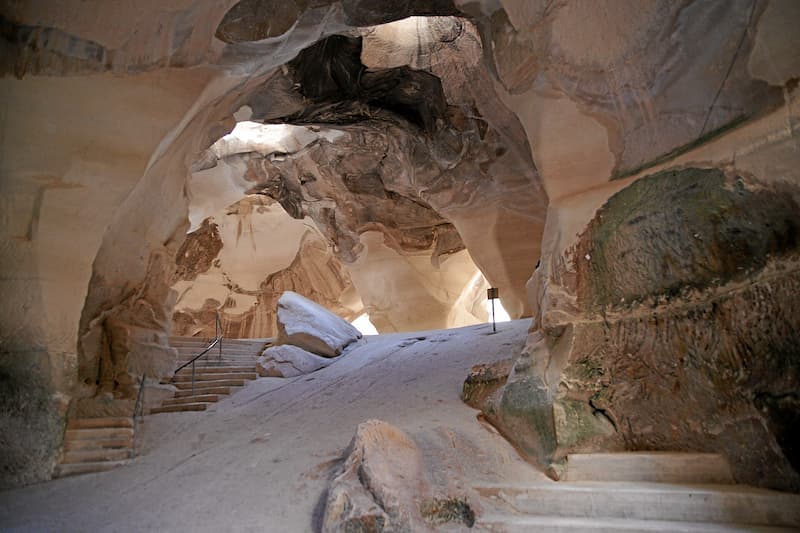
The Caves of Maresha and Bet-Guvrin in the Judean Lowlands as a Microcosm of the Land of the Caves is an extraordinary archaeological landscape located in central ISRAEL‘s Shephelah region, roughly halfway between Jerusalem and Ashkelon. Preserved within the Beit Guvrin-Maresha National Park, this property encompasses a vast, subterranean “city under a city” carved entirely by human hands out of the soft, homogeneous chalk bedrock beneath a thin layer of hard limestone crust.
The site comprises two distinct historical towns and their surrounding cave networks, spanning over two millennia of continuous human use from the Iron Age through the Hellenistic, Roman, Byzantine, Crusader, and Early Islamic periods. The southern portion centered around Tel Maresha served as a major Judean and Idumean center, while the northern area of Bet-Guvrin (later elevated to the Roman city of Eleutheropolis) flourished during Roman and Byzantine rule. Beneath these surface settlements lie thousands of interconnected chambers serving diverse functions: massive bell-shaped quarries (the Bell Caves), elaborate columbaria (pigeon-raising niches), subterranean olive oil presses, water cisterns, bathhouses, hiding complexes, and ornate burial chambers such as the Sidonian Tombs with restored Hellenistic murals.
Attraction
This site fascinates global travelers by providing a rare, tangible window into subterranean urban engineering and ancient daily life. The sheer scale and variety of the hand-carved caverns offer an immersive journey beneath the earth’s surface. Visitors can walk through the colossal Bell Caves, where ancient quarrymen hewn chalk through small ceiling openings to create cathedral-like halls with dramatic natural light beams filtering from above.
Beyond sight-seeing, the site offers one of the world’s most accessible hands-on archaeological experiences. Through organized programs like “Dig for a Day,” tourists can active participate in excavating real Hellenistic cave systems, sifting through unstratified ancient garbage deposits to uncover pottery, coins, and artifacts thousands of years old. Combined with magnificent above-ground monuments like a preserved Roman amphitheater and Crusader church, the park delivers a rich blend of adventure, history, and interactive discovery.

World Heritage
In 2014, UNESCO inscribed the property on the World Heritage List under cultural criterion (v).
- Microcosm of Subterranean Land Use (Criterion v): The site represents an outstanding, complete example of human adaptation to a specific geological environment. Over two thousand years, inhabitants adapted the soft chalk sub-strata to craft a dense, multi-functional subterranean landscape. The vast density and variety of subterranean chambers—spanning industrial olive pressing, livestock raising, quarrying, water storage, burial, and ritual assembly—demonstrate exceptional human ingenuity in utilizing underground space to sustain surface urban life through shifting empires.
Gateway
The primary gateway city to the site within Israel is Tel Aviv (including the broader Gush Dan metropolitan center and adjacent city of Lod). Located approximately 60 kilometers northwest of Beit Guvrin-Maresha National Park, Tel Aviv provides seamless highway connections via Route 6 and Route 35, making the national park reachable in under an hour by car or tour coach.
Tel Aviv is served by Ben Gurion International Airport (IATA Code: TLV), located in nearby Lod. As Israel’s primary international aviation gateway, TLV handles extensive global passenger traffic across major international carriers. Tel Aviv and its surrounding metropolitan area offer comprehensive lodging options, ranging from luxury seaside resorts and boutique hotels to holiday apartments and budget hostels.
When
The ideal time to visit the Caves of Maresha and Bet-Guvrin is during Spring (March to May) and Autumn (September to November).
- Spring: Spring brings comfortable outdoor temperatures, pleasant weather for hiking between cave clusters, and vibrant wildflower displays across the Judean Lowlands rolling hills.
- Autumn: Autumn offers warm, clear days and lower humidity, ideal for exploring surface archaeological ruins like the Roman amphitheater.
- Summer (June to August): While the underground caves remain naturally cool and pleasant year-round, surface temperatures in summer can exceed 35°C (95°F), making walking between cave networks hot and strenuous.
- Winter (December to February): Winters are mild, though rain showers can occasionally make exterior earth trails muddy.
Considerations
- Physical Navigation and Footwear: Exploring the cave complexes involves descending and ascending uneven stone staircases, low archways, and unpaved subterranean paths. Comfortable, closed-toe walking shoes with non-slip soles are essential.
- Hydration and Sun Protection: Although the subterranean caves offer cool shade, significant walking is required outdoors across exposed terrain between parking areas and cave entry points. Visitors should carry ample drinking water and sun protection.
- National Park Timed Reservations: Entry is managed by the Israel Nature and Parks Authority. Visitors should check opening times online and reserve entry slots in advance during holiday periods.
- Archaeological Dig Bookings: Travelers interested in joining the interactive “Dig for a Day” program must reserve slots in advance through the official operating organization.

Resources
- UNESCO World Heritage Centre: The official portal providing formal inscription details, maps, and conservation assessments.
- Israel Nature and Parks Authority: The official government site managing Beit Guvrin-Maresha National Park, providing ticket bookings, trail guides, and hours.
- Trip.com: A major global travel marketplace featuring user reviews, hotel listings, price comparisons, and regional tour packages.
- Tourist Israel: A travel information guide detailing transportation options, day tours, and visitor highlights for the Judean Lowlands.
- Archaeological Seminars Institute (Dig for a Day): The official organizer of public archaeological excavations within the caves of Maresha.


Comments:
Leave a Reply