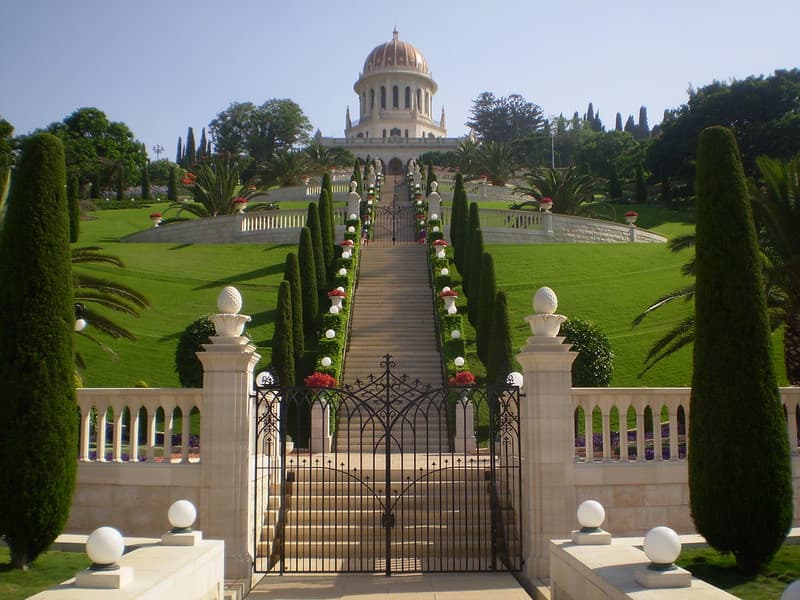
The Bahá’i Holy Places in Haifa and the Western Galilee comprise twenty-six individual monuments, shrines, buildings, and garden complexes distributed across seven distinct sites in northern ISRAEL. Spanning the coastal city of Haifa, the historic town of Acre (Akko), and surrounding rural locations in the Western Galilee, these properties represent the spiritual heart and administrative epicenter of the international Bahá’i Faith.
The landscape is defined by extraordinary botanical design, monumental architecture, and immaculate stone terraces. In Haifa, the site is dominated by the iconic Shrine of the Báb, situated midway up the northern slope of Mount Carmel. The shrine features a distinctive gilded dome and nineteen cascading terraced gardens stretching over a kilometer from the top of the mountain down toward the Mediterranean Sea. In the Western Galilee near Acre lies the Shrine of Bahá’u’lláh at Bahjí, surrounded by lush formal gardens. This peaceful sanctuary serves as the resting place of the founder of the Bahá’i Faith and represents the Qiblih—the point toward which Bahá’is across the globe turn in daily prayer.
Attraction
The Bahá’i Holy Places draw hundreds of thousands of international tourists, architectural enthusiasts, and religious pilgrims annually due to their breathtaking visual beauty, meticulous landscape design, and tranquil spiritual atmosphere. The nineteen terraces of the Bahá’i Gardens in Haifa are widely celebrated as one of the modern wonders of the world. The gardens seamlessly combine formal European garden traditions with indigenous Middle Eastern flora, featuring symmetrical lawns, stone balustrades, fountains, exotic flowering plants, and manicured hedges, all set against panoramic views of Haifa Bay.
Beyond visual grandeur, the sites offer visitors a unique environment of quiet reflection amidst urban surroundings. Tourists travel from every corner of the earth to experience the peaceful atmosphere within the Shrine of the Báb and the Mansion of Bahjí. The site also attracts those fascinated by modern religious history, world religions, and urban planning, as the terraces form a magnificent central axis around which the modern city layout of Haifa revolves.

World Heritage
In 2008, UNESCO inscribed the Bahá’i Holy Places in Haifa and the Western Galilee on the World Heritage List under cultural criteria (iii) and (vi).
- Testimony to a Global Pilgrimage Tradition (Criterion iii): The property bears exceptional testimony to the strong tradition of pilgrimage in the Bahá’i Faith. The shrines and associated structures represent the tangible physical focal points of a modern world religion that has grown to millions of adherents across more than two hundred countries and territories.
- Association with Universal Spiritual Values (Criterion vi): The inscribed sites are directly and tangibly associated with the lives, teachings, and resting places of the two founders of the Bahá’i Faith: the Báb (1819–1850) and Bahá’u’lláh (1817–1892). The architectural design and harmonious gardens express core Bahá’i principles, including universal peace, unity of humanity, and spiritual harmony between nature and human civilization.
Gateway
The primary gateway city to the site within Israel is Haifa. Situated along the Mediterranean coast in northern Israel, Haifa serves as the direct home to the central Bahá’i administrative complex and the Shrine of the Báb.
Haifa is served by Haifa International Airport (Uri Michaeli Airport; IATA Code: HFA), located within the city limits approximately 5 kilometers east of the city center. HFA handles domestic flights, charter connections, and regional commercial services to Mediterranean destinations. As Israel’s third-largest city, Haifa provides extensive overnight lodging options for travelers of all preferences, ranging from luxury boutique hotels along the Carmel Center ridge to historic guesthouses in the German Colony and budget hostels near the port district. Alternatively, Tel Aviv—served by Ben Gurion International Airport (IATA Code: TLV)—acts as the main national entry point, situated roughly a one-hour train ride south of Haifa.
When
The best time to visit the Bahá’i Holy Places is during Spring (March to May) and Autumn (September to November).
- Spring: Spring brings optimal weather conditions, with comfortable temperatures and bright sunny skies. The gardens are in full vibrant bloom, making walking down the Mount Carmel terraces a delight.
- Autumn: Autumn offers warm days, low humidity, and pleasant evening sea breezes, making it ideal for outdoor sightseeing and historical exploration.
- Summer (June to August): Summers can be hot and humid, requiring early morning visits before midday heat sets in.
- Winter (December to February): Winters bring cooler weather and occasional rainy periods, which may temporarily close upper garden terraces for visitor safety.
Considerations
- Modest Dress Code: Because these sites are active holy places, strict modesty rules apply. Shoulders and knees must be fully covered, and sleeveless tops, short skirts, or gym clothes are prohibited.
- Terrace Access Restrictions: Walk-through access across the full nineteen terraces of the Haifa gardens is only available via official guided walking tours, which must be booked online in advance. Public drop-in visitors can only access viewing platforms at the top, middle, and bottom plazas.
- Steep Incline Walking: Navigating the complete terrace tour requires descending hundreds of stone steps down Mount Carmel. Sturdy walking shoes are required, and visitors with knee or mobility concerns should opt for flat plaza areas.
- Bahá’i Holy Days: All shrines and gardens close to the public on designated Bahá’i holy days and during certain religious observances. Travelers should verify closure calendars prior to arrival.

(US Embassy Jerusalem, Flickr/CC BY-SA 2.0).
Resources
- UNESCO World Heritage Centre: The official UNESCO portal providing formal inscription documentation, boundary maps, and conservation reports.
- Official Bahá’i Gardens Portal: The official administration website offering visitor schedules, tour booking systems, dress code guidelines, and closures.
- Trip.com: A major global travel marketplace featuring user reviews, hotel listings, price comparisons, and regional tour bookings.
- Israel Ministry of Tourism: The official national tourism authority website providing regional travel guides, transport routes, and cultural context.
- Bahá’i World Centre Portal: The official international religious information portal detailing the history, architecture, and significance of the holy places.


Comments:
Leave a Reply