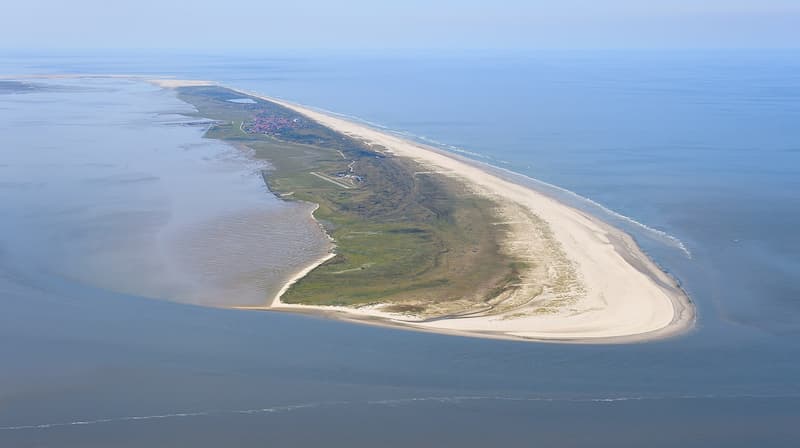
East Frisian Islands anchor continuous tidal sand and mudflats
“Waddensea of Lower Saxony” is a vast coastal and marine biosphere reserve spanning roughly 240,000 hectares—comprising 213,000 hectares of marine waters and 27,000 hectares of terrestrial land—along the North Sea coast of Lower Saxony in northwestern GERMANY. Stretching between the Ems and Elbe river estuaries and encompassing the East Frisian Islands, it forms a central pillar of the world’s largest continuous intertidal sand and mudflat ecosystem.
Shaped by twice-daily North Sea tides, the coastline features expansive tidal mudflats, sandbanks, salt marshes, coastal dunes, estuaries, and barrier islands. Supporting over 10,000 plant and animal species—including harbor and grey seals, lugworms, shellfish, and millions of migratory waterbirds—the reserve also encompasses coastal municipalities and island communities along the Frisian coast.
Attraction
Waddensea of Lower Saxony attracts nature lovers, birdwatchers, cyclists, and coastal travelers globally who want to walk across an exposed seabed and explore tranquil North Sea islands.
Visitors join guided mudflat hikes (Wattwandern) at low tide to observe lugworms, shore crabs, and cockles up close, take boat excursions to observe seals resting on offshore sandbanks, and visit car-free East Frisian Islands such as Juist, Langeoog, and Spiekeroog. Travelers also explore National Park visitor centers, cycle along coastal dikes, and spot massive flocks of migratory shorebirds, geese, and ducks along the East Atlantic Flyway.
Biosphere Reserve
Designated in 1992 under UNESCO’s Man and the Biosphere (MAB) Programme—and overlapping with the Lower Saxon Wadden Sea National Park and the trilateral Wadden Sea UNESCO World Heritage Site—the reserve is recognized for balancing coastal conservation with sustainable regional development:
- Critical Migratory Flyway and Intertidal Productivity: As one of the world’s most productive coastal ecosystems, the Wadden Sea provides essential feeding, resting, and moulting grounds for 10 to 12 million migratory birds annually.
- Participatory Coastal Stewardship: Managed through strict conservation zones alongside voluntary municipal transition areas landward of the dikes, the reserve promotes environmental education, regional identity, sustainable coastal tourism, and local agricultural and culinary partnerships.
Gateway
Because the Lower Saxon Wadden Sea stretches across the East Frisian coast and islands, travelers can enter via three proximate northern German gateway hubs equipped with public IATA-listed airports, extensive overnight lodging, rail and ferry connections, and accredited mudflat and island guides:
- Norden / Norddeich (Nearest Airport Hub / Primary East Frisian Coastal Gateway):
- Airport: Norden-Norddeich Airfield (IATA Code: NOD; ICAO Code: EDWS).
- Infrastructure and Distance: Located directly along the East Frisian coast, roughly 4 kilometers north of Norden town and minutes from the Norddeich Mole ferry terminal serving Juist and Norderney. NOD is an airfield listed in IATA’s directory, while Norden and Norddeich provide coastal hotels, guesthouses, regional rail connections, island ferries, and licensed Wattwandern guides.
- Bremen (Primary Regional International Gateway):
- Airport: Bremen Airport (IATA Code: BRE; ICAO Code: EDDW).
- Infrastructure and Distance: Located approximately 70 to 125 kilometers (about 1 to 1.5 hours by road or regional rail depending on the coastal port or island ferry terminal) southeast of the Lower Saxon Wadden Sea coast. BRE is an active public international airport indexed in IATA’s directory, backed by abundant city hotels, car rentals, Deutsche Bahn rail links to Norddeich Mole and Cuxhaven, and regional tour operators.
- Hamburg (Primary Northern & Elbe Estuary International Gateway):
- Airport: Hamburg Airport (IATA Code: HAM; ICAO Code: EDDH).
- Infrastructure and Distance: Located roughly 130 to 185 kilometers (about 1.5 to 2.5 hours by road or regional train to Cuxhaven and the eastern Lower Saxon Wadden Sea coast) northeast of the reserve. HAM is a major active public international airport listed in IATA’s directory, offering extensive accommodation, car rentals, direct rail connections to Cuxhaven, and coastal excursion providers.
When
The ideal window to visit Waddensea of Lower Saxony is from Late Spring to Early Autumn (May to October):
- Late Spring to Early Autumn (May to October): Recommended for mudflat hiking, ferry island-hopping, cycling, and seal-watching boat trips, offering milder North Sea temperatures, long daylight hours, and peak autumn bird migration in September and October.
- Late Autumn and Winter (November to April): Brings brisk North Sea winds, chilly temperatures, and occasional storm surges, though crisp winter walks, thalassotherapy spas, and indoor National Park centers remain rewarding.
Consideration
- Never Walk the Mudflats Without a Certified Guide: Incoming North Sea tides rise rapidly and fill deep tidal channels (Priele), easily trapping unguided walkers; always join an accredited Wadden Sea guide and check local tide tables.
- Respect Seasonal Bird-Breeding Closures: Strictly protected quiet zones and salt marshes restrict off-trail entry during the main bird breeding and rearing season from April 1 to July 31.
- Pack for Wind, Water, and Sun: North Sea weather shifts quickly; bring a windproof/waterproof jacket, layered clothing, sun protection, and neoprene mudflat booties or old snug-fitting sneakers for walking over sharp shells.
- Plan Car-Free Island Logistics: Several East Frisian Islands prohibit private cars; leave vehicles in mainland port garages at Norddeich, Bensersiel, or Neßmersiel and book ferry tickets ahead during summer holidays.

Resources
- UNESCO Man and the Biosphere Programme (Waddensea of Lower Saxony Profile): Official UNESCO portal detailing reserve boundaries, surface area, ecology, and designation data.
- Lower Saxon Wadden Sea National Park & Biosphere Reserve Portal: Official managing authority website covering mudflat tours, protection zones, visitor centers, and tidal safety.
- Wadden Sea World Heritage Official Portal: Trilateral destination and conservation site highlighting wildlife, islands, and sustainable tourism experiences across the Wadden Sea.
- Lower Saxony Tourism (Reiseland Niedersachsen): Official state travel portal offering East Frisian coast itineraries, island guides, and transport details.
- GetYourGuide: Online travel booking marketplace offering affiliate-supported bookings for northern Germany coastal excursions, harbor tours, and day trips from Bremen and Hamburg.


Comments:
Leave a Reply