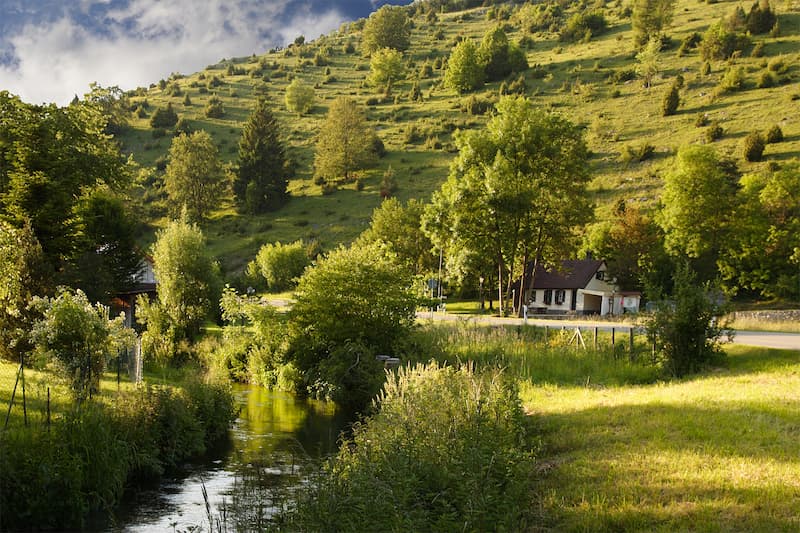
Swabian Alb links traditional Swabian farming with ecological stewardship
“Swabian Alb” (Biosphärengebiet Schwäbische Alb) is an 85,269-hectare terrestrial conservation and community landscape located in Baden-Württemberg in southwestern GERMANY, southeast of Stuttgart. Stretching across the limestone plateau of the central Swabian Jura and its dramatic northern escarpment (Albtrauf), elevations range from 328 to 872 meters above sea level.
Its karst topography features steep wooded slopes, juniper heaths, calcareous grasslands, ravine forests, meadow orchards (Streuobstwiesen), caves, and river valleys—including parts of the former Münsingen military training area, which now protects vast unfragmented habitats. Home to roughly 146,000 residents across 29 municipalities, the reserve pairs rich biodiversity with Swabian rural heritage.
Attraction
Swabian Alb attracts hikers, cyclists, geotourists, and cultural travelers globally who seek scenic limestone escarpments, traditional orchard landscapes, and peaceful Central European villages.
Visitors hike along the Albtrauf ridge and certified Hochgehberge trails, explore the car-free meadows and beech woodlands of the former Münsingen training ground around the Albgut visitor complex, and tour dramatic karst caverns and waterfalls such as Bad Urach Waterfall. Travelers also visit medieval hilltop castles like Hohenneuffen and Lichtenstein, browse biosphere partner farm shops, and sample regional specialties including Alblinsen (Swabian lentils), Maultaschen, and heritage orchard ciders.
Biosphere Reserve
Designated in 2009 under UNESCO’s Man and the Biosphere (MAB) Programme—and overlapping with the Swabian Alb UNESCO Global Geopark—the reserve is recognized for modeling sustainable regional development within a densely populated, industrial European state:
- Mosaic of Semi-Natural and Cultural Landscapes: Through core conservation zones, buffer zones, and community transition areas, the reserve safeguards rare calcareous grasslands, ravine forests, juniper heaths, and traditional Streuobstwiesen meadow orchards.
- Regional Sustainability and Green Innovation: Coordinated through biosphere partner networks, organic farming initiatives, sustainable forestry, and eco-mobility programs, the region connects rural producers directly with urban consumers around Stuttgart.
Gateway
Travelers planning a visit to the Swabian Alb Biosphere Reserve can enter via three proximate southwestern German aviation hubs, each verified in IATA’s public directory, supported by overnight lodging, rail and road links, and local tour guides:
- Stuttgart (Primary Northern International Gateway / Nearest Major Airport Hub):
- Airport: Stuttgart Airport (IATA Code: STR; ICAO Code: EDDS).
- Infrastructure and Distance: Located on the southern edge of Stuttgart in Leinfelden-Echterdingen, roughly 30 to 55 kilometers (about 30 to 50 minutes by road via the A8 and B27/B28 highways, or roughly 45 to 75 minutes by regional rail and bus to Reutlingen, Metzingen, and Bad Urach) northwest of the reserve. STR is a major active public international airport indexed in IATA’s directory, backed by abundant city and airport hotels, car rentals, Deutsche Bahn rail links, and accredited biosphere guides.
- Memmingen (Primary Southeastern Regional Gateway):
- Airport: Memmingen Airport (IATA Code: FMM; ICAO Code: EDJA).
- Infrastructure and Distance: Located in Bavarian Swabia just across the Baden-Württemberg border, roughly 85 to 110 kilometers (about 1 to 1.5 hours by road via the A7 and A8 motorways toward Ulm and Münsingen) southeast of the biosphere reserve. FMM is an active public international airport listed in IATA’s directory, supported by town hotels, car rentals, and express bus connections to Ulm and Stuttgart.
- Friedrichshafen (Primary Southern Lake Constance Gateway):
- Airport: Friedrichshafen Airport (IATA Code: FDH; ICAO Code: EDNY).
- Infrastructure and Distance: Located near Lake Constance in southern Baden-Württemberg, roughly 95 to 120 kilometers (about 1.5 hours by road or regional rail via Ulm and the Danube valley) south of the Swabian Alb. FDH is an active public airport indexed in IATA’s directory, offering lakeside and city accommodations, car rentals, and regional rail links.
When
The ideal window to visit Swabian Alb is from Late Spring to Autumn (May to October):
- Late Spring to Autumn (May to October): Recommended for ridge hiking, cycling, orchard walks, and outdoor cultural festivals, featuring blooming meadow orchards in May, warm summer temperatures of 18°C to 26°C (64°F to 79°F), and golden beech forests in October.
- Winter and Early Spring (November to April): Brings brisk plateau winds, frost, and occasional snowfall suited to cross-country skiing, thermal baths in Bad Urach and Beuren, and quiet winter walks.
Consideration
- Respect Restricted Zones in the Former Münsingen Training Area: Unexploded ordnance remains outside cleared paths in parts of the former military zone; stay strictly on marked roads and trails and obey warning signs.
- Use Regional Guest Cards for Public Transit: Overnight guests staying in participating municipalities receive the AlbCard, offering free regional buses and trains plus complimentary admission to numerous castles, caves, and thermal spas.
- Pack Sturdy Footwear and Weather Layers: Limestone trails along the Albtrauf can be steep and slippery after rain, and plateau temperatures are cooler and windier than in Stuttgart; bring grippy hiking shoes and a windproof/rain jacket.
- Check Cave and Castle Seasonal Hours: Many karst caves and historic hill castles operate reduced schedules or close for bat hibernation between November and March.

Resources
- UNESCO Man and the Biosphere Programme (Swabian Alb Profile): Official UNESCO portal detailing reserve boundaries, surface area, elevations, and sustainability initiatives.
- Biosphärengebiet Schwäbische Alb Official Portal: Dedicated Baden-Württemberg management portal covering partner businesses, visitor centers, trail maps, and conservation projects.
- Swabian Alb Tourism (Schwäbische Alb Tourismusverband): Official regional destination portal offering AlbCard details, hiking routes, accommodation listings, and excursion ideas.
- Baden-Württemberg Tourism Official Portal: State travel resource featuring Swabian Alb highlights, culinary guides, and regional transport tips.
- GetYourGuide: Online travel booking marketplace offering bookings for Stuttgart and Swabian Alb castle tours, day excursions, and regional experiences.


Comments:
Leave a Reply