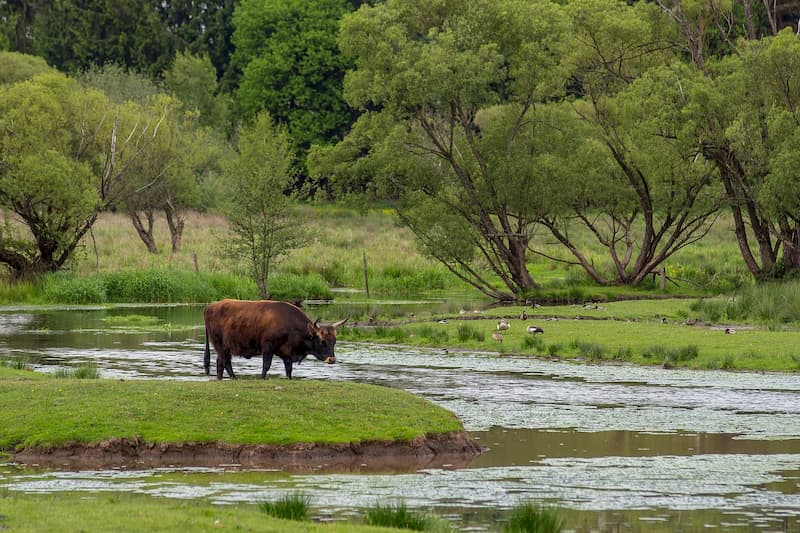
Blies River valleys unite Franco-German heritage with wild grasslands
“Bliesgau” (Biosphärenreservat Bliesgau) is a 36,152-hectare terrestrial conservation and cultural landscape situated in southeastern Saarland in southwestern GERMANY, bordering France along the Blies River. Encompassing seven municipalities across the Saarpfalz district and Saarbrücken regional association—including Blieskastel, Gersheim, Mandelbachtal, Kirkel, St. Ingbert, Kleinblittersdorf, and parts of Homburg—it covers roughly 14 percent of Saarland’s total territory.
Its varied geology divides the reserve into two distinct zones: rolling open Muschelkalk (shell-limestone) hills in the south featuring semi-arid calcareous grasslands and traditional meadow orchards (Streuobstwiesen), and forested Buntsandstein (red sandstone) ridges in the north. Supporting around 101,223 residents, the region uniquely bridges densely populated industrial towns in the north with tranquil rural valleys in the south.
Attraction
Bliesgau attracts hikers, cyclists, botanists, and cultural travelers globally who seek wildflower-rich limestone hills, baroque towns, and Franco-German culinary heritage.
Visitors hike the Bliesgau-Tafeltouren premium circular trails through beech forests and limestone slopes, spot rare wild orchids—including nearly half of all orchid species native to Germany—around Gersheim, and cycle along the cross-border Blies Valley path. Travelers also explore the baroque old town of Blieskastel, the medieval Kirkel Castle ruins, the European Culture Park Bliesbruck-Reinheim’s Gallo-Roman excavations, and regional farm shops producing Bliesgau apple juice, organic cheeses, and orchard spirits.
Biosphere Reserve
Designated in 2009 under UNESCO’s Man and the Biosphere (MAB) Programme, Bliesgau is recognized as a model region demonstrating how urban-industrial communities and rural landscapes can cooperate on sustainability:
- High Habitat Density and Cultural Meadows: Through strictly protected core zones, buffer zones, and transition areas, the reserve safeguards Saarland’s highest density of nationally and internationally important habitats—including orchid- and woodruff-beech forests, semi-arid grasslands, and traditional orchard meadows.
- Urban-Rural Linkages and Sustainable Economy: Coordinated by the Bliesgau Biosphere Association, local farmers, artisans, municipalities, and schools advance sustainable agriculture, regional product marketing, wood value chains, and environmental education.
Gateway
Because Bliesgau sits immediately east of Saarland’s state capital along the Rhineland-Palatinate border, travelers can enter via three proximate German aviation hubs—each verified in IATA’s official directory and offering overnight lodging, rail or highway links, and local tour guides:
- Saarbrücken (Primary Local Gateway / Nearest Commercial Airport Hub):
- Airport: Saarbrücken Airport (IATA Code: SCN; ICAO Code: EDDR).
- Infrastructure and Distance: Located at Ensheim directly beside the northwestern border of the Bliesgau Biosphere Reserve, roughly 9 kilometers east of central Saarbrücken and within 10 to 30 minutes by road of Kleinblittersdorf, Mandelbachtal, St. Ingbert, and Blieskastel. SCN is an active public international airport indexed in IATA’s directory, while Saarbrücken and surrounding towns offer extensive hotels, car rentals, regional rail and bus links, and accredited nature guides.
- Zweibrücken (Primary Eastern Local Airport Gateway):
- Airport: Zweibrücken Airport (IATA Code: ZQW; ICAO Code: EDRZ).
- Infrastructure and Distance: Located just across the Rhineland-Palatinate state border, roughly 10 to 25 kilometers (about 15 to 30 minutes by road via the A8 and B423 highways) east of Homburg, Kirkel, and Blieskastel. ZQW is a regional general aviation airport indexed in IATA’s directory, backed by town hotels in Zweibrücken and Homburg, regional rail connections, and direct road access into the reserve.
- Frankfurt am Main (Primary Major International Gateway):
- Airport: Frankfurt Airport (IATA Code: FRA; ICAO Code: EDDF).
- Infrastructure and Distance: Located roughly 165 to 185 kilometers (about 1.75 to 2 hours by road via the A63 and A6 motorways, or roughly 2 to 2.5 hours by ICE/regional rail via Mannheim to Homburg, St. Ingbert, and Saarbrücken) northeast of Bliesgau. FRA is Germany’s largest active public international hub listed in IATA’s directory, offering extensive airport and city hotels, car rentals, direct rail connections, and regional tour operators.
When
The ideal window to visit Bliesgau is from Late Spring to Early Autumn (May to October):
- Late Spring to Early Autumn (May to October): Recommended for orchid spotting, hiking, cycling, and cultural festivals, featuring blooming wild orchids and meadow orchards in May and June, warm summer temperatures of 18°C to 26°C (64°F to 79°F), and autumn apple harvests alongside regional market days in September and October.
- Late Autumn and Winter (November to April): Brings brisk, quiet woodland walks, misty river valleys, and festive Advent markets in historic towns like Blieskastel and St. Ingbert.
Consideration
- Protect Wild Orchids and Semi-Arid Grasslands: Never pick wildflowers or step off marked trails across calcareous grasslands, as soil compaction damages fragile orchid root systems and rare ground-nesting insects.
- Use the Saarland Card for Free Transit and Attractions: Many participating hotels and guesthouses provide the Saarland Card, granting free bus and regional train travel across Saarland plus complimentary entry to museums, castles, and archaeological sites.
- Carry Cash for Farm Shops and Rural Cafés: While city hotels and supermarkets accept cards, smaller biosphere farm stalls, orchard wineries, and village bakeries often prefer cash euros.
- Pack Sturdy Footwear and Weather Layers: Limestone hills and sandstone forest trails can be uneven or muddy after rain; bring grippy walking shoes, sun protection for open hillsides, and a light rain jacket.


Resources
- UNESCO Man and the Biosphere Programme (Bliesgau Profile): Official UNESCO portal detailing boundaries, surface area, population, and ecological characteristics.
- Biosphärenreservat Bliesgau Official Portal: Dedicated Saarland management portal covering hiking routes, biosphere partner businesses, events, and conservation projects.
- Saarpfalz-Touristik Official Portal: Regional destination website offering Bliesgau cycling and walking guides, accommodation bookings, and cultural highlights.
- Saarland Tourism Official Portal: State travel resource featuring Saarland Card details, culinary guides, and regional itineraries across southwestern Germany.
- GetYourGuide: Online travel booking marketplace offering affiliate-supported bookings for southwestern Germany day excursions, walking tours, and regional experiences.
Featured Image
Heck cattle standing on the river bank in Bliesgau (Schleifchenqueen, Wikimedia/CC BY-SA 4.0),

News Feed
Advertisement


Comments:
Leave a Reply