Explore Lyon’s Architectural Marvels: From Roman to Renaissance
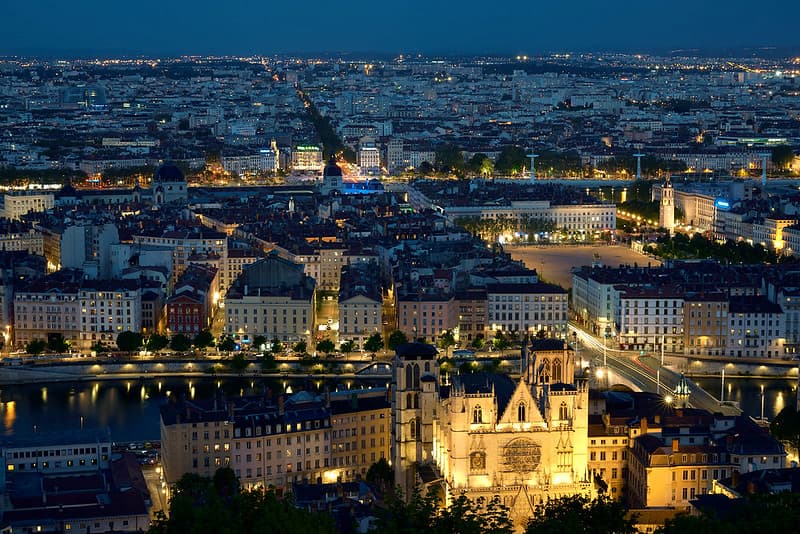
The UNESCO World Heritage site “Historic Site of Lyon” is located in the Auvergne-Rhône-Alpes region of southeastern FRANCE, positioned strategically at the historic confluence of the Rhône and Saône rivers. Inscribed on the World Heritage List in 1998, the protected area covers 427 hectares—representing roughly 10 percent of the modern municipality—and encompasses over 2,000 years of continuous urban history across four distinct, interconnected historical districts:
- Fourvière Hill: Known as the “praying hill,” this high ridge marks the birthplace of Roman Lugdunum, founded in 43 BC as the capital of the Three Gauls. It contains well-preserved ancient Roman ruins, including the Grand Theatre (built in 15 BC) and the Odeon, alongside the 19th-century, hilltop Basilica of Notre-Dame de Fourvière.
- Vieux Lyon (Old Lyon): Nestled along the west bank of the Saône, Vieux Lyon is one of Europe’s largest surviving Renaissance quarters. Divided into the Saint-Jean, Saint-Paul, and Saint-Georges districts, it features narrow cobblestone streets, Gothic-Renaissance mansions, Saint-Jean Cathedral, and secret covered passageways known as traboules.
- Presqu’île (Peninsula): A narrow strip of land situated between the two rivers, representing the city’s commercial and civic development from the Renaissance through the 19th century. Key landmarks include Place Bellecour, Place des Terreaux, the Hôtel de Ville, the Musée des Beaux-Arts, and the restored 18th-century Grand Hôtel-Dieu.
- Croix-Rousse Hill: Dubbed the “working hill,” this district became the epicenter of Europe’s silk-weaving industry in the 19th century. It features unique multi-story tenement buildings specifically designed with high ceilings to accommodate industrial Jacquard looms.
Attraction
The Historic Site of Lyon attracts travelers around the globe because it offers an exceptionally authentic journey through European architectural evolution, seamlessly blending living history with modern urban vitality.
Visitors are drawn by Lyon’s world-famous status as the “Gastronomic Capital of France”. Tourists explore traditional, cozy Lyonnais bistros (bouchons) serving regional culinary specialties, sample gourmet products at the legendary Les Halles de Lyon Paul Bocuse covered market, and experience Michelin-starred dining.
Cultural travelers flock to explore the city’s unique network of traboules—hidden interior corridors that wind through private residential courtyards and apartment blocks, originally used by silk merchants to move delicate fabrics safely and later utilized by French Resistance fighters during World War II. Additionally, Lyon hosts world-renowned cultural events, including the ancient performance arts festival Les Nuits de Fourvière held inside the Roman theaters, and the annual Fête des Lumières (Festival of Lights) every December, which illuminates historic facades with stunning light projections.

World Heritage
In 1998, UNESCO inscribed the Historic Site of Lyon on the World Heritage List under cultural criteria (ii) and (iv).
- Criterion (ii) – Interchange of Cultural Values: Lyon illustrates in an exceptional way the continuous physical, political, and cultural evolution of a major European settlement over more than two millennia. As an ancient Roman administrative capital, a medieval trade fair hub, a Renaissance banking center, and an industrial silk-manufacturing powerhouse, Lyon played a pioneering role in European urban development and cultural exchange.
- Criterion (iv) – Outstanding Architectural Ensemble: The city provides an outstanding example of uninterrupted urban stratification. Because Lyon expanded eastward across its rivers over centuries rather than destroying its older quarters, it preserved intact architectural ensembles from every major historical era—Roman, medieval, Renaissance, and 19th-century industrial—within a remarkably cohesive urban landscape.
Gateway
Travelers accessing the site can conveniently utilize two primary gateway cities in France:
- Lyon (Primary Local Gateway):
- Airport: Lyon–Saint-Exupéry Airport (IATA Code: LYS; ICAO Code: LFLL).
- Infrastructure: Located 25 kilometers east of the city center, LYS connects to Lyon Part-Dieu central railway station via the fast Rhônexpress tram-train in 30 minutes. Lyon possesses an extensive urban transit network (TCL) featuring metros, trams, buses, and historic funicular railways leading directly up Fourvière hill.
- Services: Lyon offers extensive lodging across all categories—from luxury historic hotels to boutique guesthouses—along with licensed local tour guide services.
- Paris (Secondary National Gateway):
- Airports: Paris Charles de Gaulle Airport (IATA Code: CDG) and Paris Orly Airport (IATA Code: ORY).
- Infrastructure: Paris serves as France’s main international entry hub. Direct high-speed TGV trains run continuously from Paris Gare de Lyon or CDG Airport to Lyon Part-Dieu in just two hours, providing a seamless domestic connection for international visitors.
When
The ideal time to visit the Historic Site of Lyon is during Spring (April to June) and Autumn (September to October).
- Spring and Autumn: Daytime temperatures average between 15°C and 23°C (59°F to 73°F), providing comfortable weather for walking up the city’s steep hills and exploring outdoor historic districts without extreme heat or heavy summer crowds.
- Early December (Festival Season): Visiting during early December allows travelers to experience the world-famous Fête des Lumières. Though temperatures are cool (2°C to 8°C / 36°F to 46°F), the city comes alive with magical light installations.
- Summer (July to August): Summers can be hot (exceeding 32°C / 90°F) and crowded, though the season features lively outdoor dining along the riverbanks and the Nuits de Fourvière festival.
Considerations
- Hilly Terrain and Walking Shoes: Navigating Lyon’s historic districts requires walking up steep slopes on Fourvière and Croix-Rousse, as well as navigating uneven cobblestone streets in Vieux Lyon. Sturdy, comfortable walking shoes are essential. Visitors can also utilize the two funicular railway lines (Funiculaire) to reach the top of Fourvière hill.
- Traboule Courtesies: Many traboules are located inside active private residential buildings. Visitors must maintain quiet, keep to designated public corridors, and strictly respect residents’ privacy.
- Bouchon Dining Etiquette: Authentic Lyonnais bistros fill up rapidly. Look for the official “Authentique Bouchon Lyonnais” label for traditional quality, and book meal reservations in advance, as local kitchens strictly adhere to traditional French lunch and dinner hours.
- Lyon City Card: Purchasing the official Lyon City Card grants unlimited access to public transit (including funiculars) and free admission to major historic museums.

Resources
- UNESCO World Heritage Centre: Official UNESCO web portal featuring complete technical inscriptions, criteria summaries, and site details.
- ONLYLYON (Official Lyon Tourism Board): Official local tourism portal offering city guides, traboule maps, and event schedules.
- France.fr (Official French Tourism Portal): National tourism website providing travel advice, regional culture guides, and transit options across France.
- Centre des Monuments Nationaux: Official French government portal overseeing protected cultural heritage monuments and historic sites.
- GetYourGuide: Global online travel marketplace offering guided walking tours of Vieux Lyon, traboule access tours, river cruises, and booking options.


Comments:
Leave a Reply