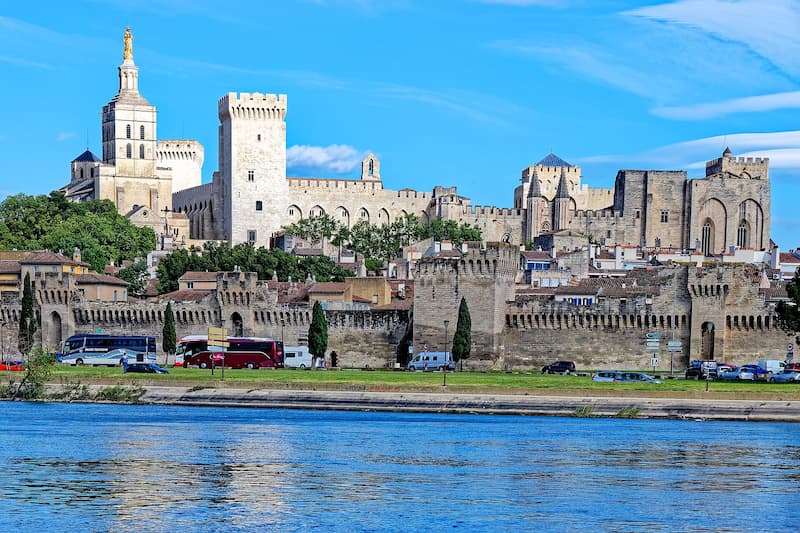
The Historic Centre of Avignon: Papal Palace, Episcopal Ensemble and Avignon Bridge is located in southeastern FRANCE, along the banks of the Rhône River in the Vaucluse department. This exceptional urban ensemble reflects the extraordinary period in the 14th century when Avignon served as the seat of the Catholic papacy. The site features a dense concentration of monumental medieval architecture, anchored by the colossal Palais des Papes (Palace of the Popes), the Cathedral of Notre-Dame des Doms, the Petit Palais museum, the medieval ramparts, and the famous half-ruined Pont Saint-Bénézet.
Attraction
Tourists are drawn to Avignon for its rich tapestry of medieval history and vibrant cultural atmosphere:
- Architectural Grandeur: Visitors can explore the Palais des Papes, the largest Gothic palace in Europe, which spans over 15,000 square meters and features imposing defensive walls, lavish state rooms, and private apartments adorned with priceless period frescoes.
- Legendary Landmarks: A stroll across the historic Pont d’Avignon (Pont Saint-Bénézet)—immortalized by the famous French folk song—offers picturesque views of the Rhône River and the surrounding fortified city.
- Cultural Vibrancy: Beyond its monuments, the city functions as a lively cultural hub, famously hosting the annual Festival d’Avignon every July, which turns the historic streets and public squares into an open-air theater.

World Heritage
Inscribed on the UNESCO World Heritage List in 1995, the historic center was recognized for its Outstanding Universal Value:
- Papal Capital Legacy: The monuments collectively stand as a unique testimony to the monumental power, architectural innovation, and spiritual reach of Western Christianity during the 14th century.
- Exemplary Gothic Architecture: The Palais des Papes and its associated episcopal buildings represent the pinnacle of medieval Gothic design and engineering, combining defensive military structure with sumptuous palatial art.
- Urban Integrity: The site preserves an intact medieval layout enclosed entirely by 14th-century ramparts, illustrating a harmonious historical relationship between religious authority, urban defense, and river trade.
Gateway
Avignon serves as the primary gateway to the site.
- Transport: While Avignon has a local aerodrome (AVN), international and domestic travelers commonly fly into nearby major hubs like Marseille Provence Airport (MRS) or Nîmes-Alès-Camargue-Cévennes Airport (FNI), or take the high-speed TGV train directly to Avignon’s TGV station, which connects to the city center via local rail or shuttle buses.
- Lodging: Avignon offers a wide array of accommodation options, ranging from charming boutique hotels housed in historic stone townhouses within the city walls to modern hotels and guesthouses suited for every traveler.
When
- Spring (May–June) and Autumn (September–October): These shoulder months offer mild, pleasant weather ideal for walking the cobblestone streets and exploring the outdoor gardens without peak summer crowds.
- July: Ideal for theater enthusiasts wanting to experience the world-famous Festival d’Avignon, though you should expect heavy crowds and book lodging well in advance.
Consideration
- Walking Footwear: The historic center is pedestrian-heavy with cobblestone pathways, and exploring the palace involves climbing numerous stone staircases; comfortable shoes are essential.
- Crowd Management: Major sites like the Palais des Papes can get very busy during mid-day; arriving early in the morning helps ensure a more relaxed visit.
- Summer Heat: Temperatures in Provence can rise significantly during July and August, so plan outdoor sightseeing for the cooler morning or evening hours.

Resources
- Avignon Tourisme: The official destination portal for local events, accommodation guides, and ticketing information.
- Palais des Papes Official Website: Essential for checking opening times, exhibition schedules, and reserving entry tickets with multimedia guides.
- UNESCO World Heritage Centre: Official documentation detailing the historical criteria and preservation status of Avignon’s monuments.
- Grand Avignon Tourism: Provides comprehensive regional itineraries, transport logistics, and cultural highlights.
- GetYourGuide: A travel platform offering bookable walking tours, skip-the-line palace tickets, and regional excursions.
Featured Image
Palais des Papes (Holger Uwe Schmitt, Wikimedia/CC BY-SA 4.0).
News Feed
Advertisement


Comments:
One response to “Historic Centre of Avignon: Papal Palace, Episcopal Ensemble and Avignon Bridge”
-
Shift down a gear and browse the arty walled town, take a cruise on the river, and see if you can come for the Theatre Festival in July when the city becomes one giant stage.

Leave a Reply