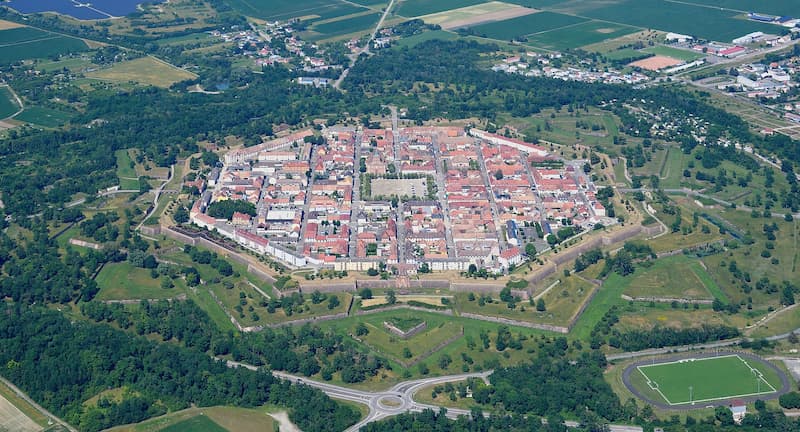
The Fortifications of Vauban consist of 12 iconic groups of fortified sites located along the borders of FRANCE. They are the masterworks of Sébastien Le Prestre de Vauban (1633–1707), the renowned military engineer who served King Louis XIV. These sites range from fortified towns built from scratch to citadels, urban bastion walls, and seaside towers, collectively forming what was known as the “iron belt” protecting the kingdom.
The property is a “serial” UNESCO site, meaning it is not a single location but a collection of 12 distinct sites across France. These include locations like Neuf-Brisach (a perfectly preserved “ideal city”), the mountain fort of Mont-Louis in the Pyrenees, the island fortifications of Saint-Martin-de-Ré, and the towers of Tatihou. They showcase Vauban’s ability to adapt military architecture to diverse terrains, utilizing local resources and ingenious design to create what were considered “impregnable” defenses.
Attraction
- Engineering Marvels: Visitors are drawn to the sheer scale and mathematical perfection of the “star-shaped” bastions, which revolutionized military strategy.
- Living History: Many of these sites, such as Villefranche-de-Conflent and Saint-Martin-de-Ré, are not just museums; they are functioning towns where visitors can walk along the original ramparts, explore ancient citadels, and experience 17th-century life.
- Scenic Locations: Because Vauban built where strategic needs dictated, his fortifications are often located in breathtakingly beautiful spots—from high mountain passes in the Pyrenees to the dramatic coastlines of Normandy and the Vendée.

World Heritage
Inscribed in 2008, the network is recognized for its Outstanding Universal Value:
- Innovation: Vauban crystallized previous strategic theories into a rational, systematic form of military architecture that influenced defenses globally until the mid-19th century.
- Authenticity: The 12 selected sites are the most representative and best-preserved examples of his work, illustrating a significant period in human history.
- Relationship with Territory: The fortifications are celebrated for their “concrete relationship with the territory,” demonstrating how military needs were harmonized with the natural landscape.
Gateway
Because the sites are spread across France, there is no single gateway. However, for international travelers, Paris (CDG) serves as the best general entry point, as it provides easy access to the rail and domestic flight networks needed to reach different regions (such as Normandy, the Alps, or the Pyrenees). If you are targeting a specific cluster, regional hubs like Bordeaux (BOD-for the Atlantic coast) or Perpignan (PGF-for the Pyrenees sites) are excellent alternatives.
When
- Spring and Summer (April–September): This is the ideal time, especially for sites in mountainous areas like Mont-Louis or Fort du Château, where roads and trails are clear of snow. Mornings are often recommended to avoid the midday heat, particularly at the Neuf-Brisach ramparts.
Consideration
- Choose Your Focus: Since these sites are geographically dispersed, it is impossible to visit all 12 in one trip. Research specific clusters—such as the Pyrenees sites or the Normandy towers—to plan a cohesive itinerary.
- Accessibility: Some fortifications involve significant walking on uneven, historic cobblestones or steep ramparts; wear comfortable, sturdy shoes.
- Check Accessibility: Some forts, like the Hougue Fort on Tatihou Island, may have limited public access or require transport by boat/tide-dependent paths. Always check the official Network of Major Vauban Sites before traveling.

Resources
- Network of Major Vauban Sites – The official network portal for all 12 sites, providing historical context and links to individual visitor centers.
- UNESCO World Heritage Centre – The official documentation regarding the sites’ historical significance.
- Visit Occitanie (Vauban Fortifications) – A detailed regional guide specifically for the Pyrenees clusters.
- ParisCityVision – Provides practical information for visiting northern sites like Tatihou Island.
- Booking.com – A reliable platform for securing accommodations near any of your chosen gateway cities.
Featured Image
Fortified town of Neuf-Brisach (Carsten Steger, Wikimedia/CC BY-SA 4.0).
News Feed
Advertisement


Comments:
Leave a Reply