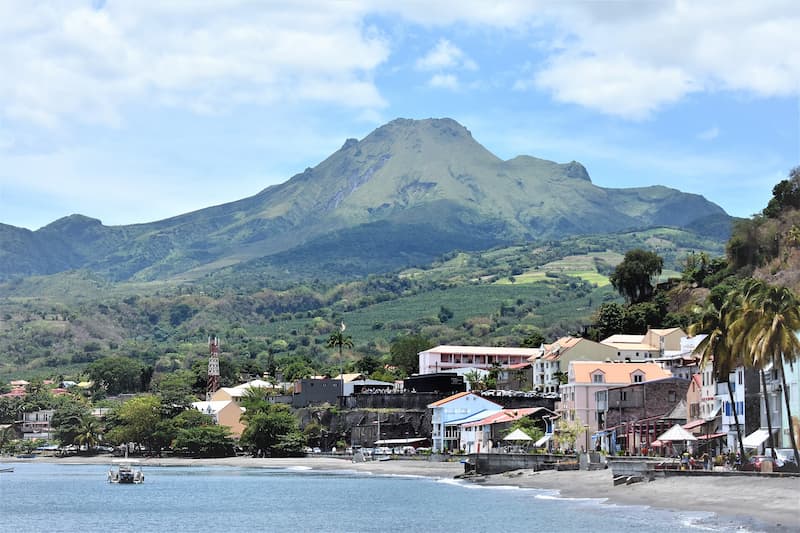
Martinique pairs rare endemic wildlife with island-wide Creole stewardship
“Martinique” (Martinique Biosphere Reserve) is an island-wide terrestrial and marine conservation landscape spanning 4,924,768 hectares—comprising 120,502 hectares of terrestrial territory and 4,804,267 hectares of surrounding maritime waters—in the Lesser Antilles of the eastern Caribbean Sea. Covering the entire FRENCH overseas department and region of Martinique alongside its exclusive economic marine zone, the reserve stretches from the volcanic peaks of Mount Pelée and the Pitons du Carbet in the north down across lush tropical rainforests, mangrove bays, coastal dry forests, coral reefs, and white- and black-sand beaches in the south.
Known poetically as the “Island of Flowers,” Martinique supports around 380,877 residents alongside rich endemic flora and fauna, vibrant Afro-Caribbean Creole culture, and maritime traditions such as the traditional yole ronde wooden sailboat.
Attraction
Martinique attracts hikers, sailors, divers, and cultural travelers globally who seek dramatic volcanic mountains, turquoise Caribbean bays, and a blend of French and Creole gastronomy and heritage.
Visitors hike the volcanic slopes of Mount Pelée and the Pitons du Carbet, explore the historic ruins of Saint-Pierre, kayak through mangrove forests in Baie de Génipa, and snorkel or dive along coral reefs and sea-turtle habitats. Travelers also relax on southern beaches such as Les Salines, sail from Le Marin marina, tour historic agricultural rum (rhum agricole) distilleries, and experience Creole markets, music, and coastal boat races.
Biosphere Reserve
Designated in September 2021 under UNESCO’s Man and the Biosphere (MAB) Programme—complementing Martinique’s UNESCO World Heritage status for the Volcanoes and Forests of Mount Pelée and the Pitons of Northern Martinique and UNESCO Intangible Cultural Heritage recognition for the yole ronde—the reserve is celebrated for island-wide ecological and community stewardship:
- Complete Ridge-to-Reef Island Ecosystems: Structured into strictly protected core zones, buffer zones, and transition areas, the reserve safeguards cloud forests, seasonal tropical forests, mangroves, seagrass beds, and marine mammal sanctuaries home to strict endemics like the Martinique volcano frog and Martinique oriole.
- Sustainable Production and Local Stewardship: Coordinated through the Martinique World Biosphere Reserve Association, regional natural parks, and community groups, the reserve promotes sustainable agriculture, responsible tourism, renewable energy transitions, and environmental education.
Gateway
Because Martinique is an insular French territory whose entire landmass and surrounding waters form the biosphere reserve, travelers arrive directly via the island’s primary aviation hub in Le Lamentin / Fort-de-France, verified in IATA’s official directory and offering full overnight lodging, transport links, and accredited guides:
- Fort-de-France / Le Lamentin (Primary Island & International Gateway / Nearest IATA-Listed Airport Hub):
- Airport: Martinique Aimé Césaire International Airport (IATA Code: FDF; ICAO Code: TFFF).
- Infrastructure and Distance: Located at Le Lamentin inside the biosphere reserve, roughly 12 kilometers (about 15 to 20 minutes by road via the A1 motorway or Line A bus rapid transit) southeast of central Fort-de-France, and within 30 to 90 minutes by road of virtually every coastal town, marina, and mountain trailhead across the island. FDF is an active public international airport indexed in IATA’s directory with direct flights from mainland France, North America, and neighboring Caribbean islands, backed by extensive hotels and resorts in Fort-de-France, Les Trois-Îlets, and Le Marin, car rentals, taxis, regional buses, and licensed nature and marine guides.
When
The ideal window to visit Martinique is during the Dry Season (Carême, December to May):
- Dry Season (December to May): Recommended for volcanic ridge hikes, sailing, snorkeling, and cultural festivals such as Carnival, offering lower humidity, refreshing trade winds, abundant sunshine, and warm temperatures averaging 24°C to 29°C (75°F to 84°F).
- Wet Season (Hivernage, June to November): Brings higher humidity, lush green rainforests, and brief tropical rain showers—with peak tropical storm and hurricane risk between August and October.
Consideration
- Rent a Car for Island-Wide Exploration: Public bus routes radiate mainly around Fort-de-France and nearby towns; renting a car gives far easier access to northern rainforest trailheads, distilleries, and southern beaches.
- Prepare for Mountain Microclimates on Mount Pelée: While coastal beaches are hot and sunny year-round, northern volcanic summits are frequently shrouded in cool mist and rain; bring sturdy hiking footwear, a waterproof jacket, and plenty of water.
- Practice Reef-Safe and Marine Conservation: Wear mineral reef-safe sunscreen when snorkeling, maintain respectful distances from sea turtles and dolphins, and follow marked trails in protected forests and islets such as Îlet Chancel.
- Language and Currency: French is the official language alongside Martinican Creole, and the Euro (EUR) is the local currency. Credit cards are widely accepted at hotels and restaurants, though carrying small euro notes helps at rural markets and food stands.


Resources
- UNESCO Man and the Biosphere Programme (Martinique Profile): Official UNESCO portal detailing boundaries, marine and terrestrial area, population, and management priorities.
- Martinique Biosphere Reserve Association (Association Martinique Réserve de Biosphère): Official local managing organization portal covering biosphere initiatives, community partners, and sustainability programs.
- Martinique Tourism Authority (Comité Martiniquais du Tourisme): Official destination portal offering accommodation listings, hiking guides, cultural events, and sustainable itineraries.
- Parc Naturel Régional de la Martinique (PNRM): Regional park authority portal detailing protected natural zones, trails, and conservation regulations.
- GetYourGuide: Online travel booking marketplace offering bookings for Martinique catamaran cruises, rainforest tours, and island excursions.
Featured Image
Town of Saint-Pierre, with Mount Pelee in the background (Rehcral, Wikimedia/CC BY-SA 4.0).

News Feed
Advertisement


Comments:
Leave a Reply