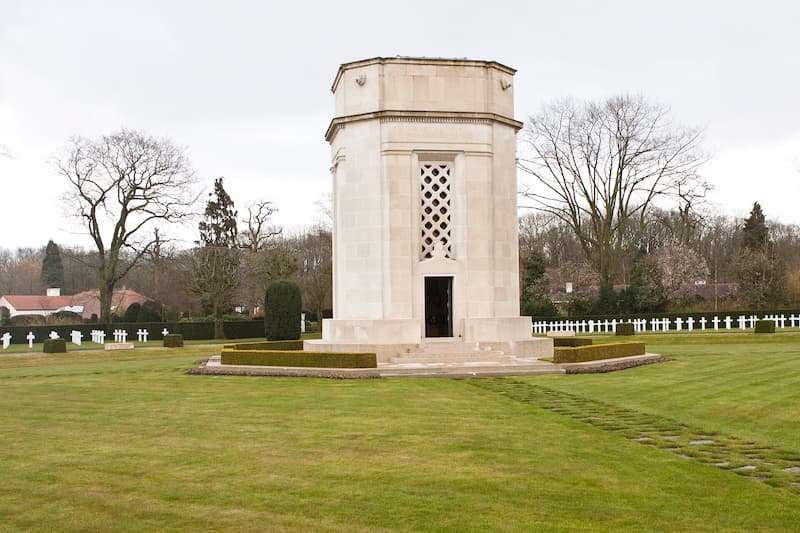
The Funerary and Memory Sites of the First World War (Western Front) is a transnational UNESCO World Heritage site consisting of 139 individual locations across BELGIUM and France. These sites serve as a solemn, collective testament to the devastating human cost of the Great War (1914–1918).
The property includes a diverse array of cemeteries, memorials, and ossuaries that honor the millions of soldiers from many nations who fought and died along the Western Front—a 700-kilometer stretch from the North Sea to the Franco-Swiss border. In Belgium, many of these sites are concentrated in the “Flanders Fields” region, encompassing Commonwealth military cemeteries, German war graves, and iconic landmarks like the Menin Gate in Ypres.
Attraction
- Historical Pilgrimage: Millions visit to pay respects, often seeking the graves of ancestors or connecting with family history.
- Symbolism and Art: The sites are renowned for their exceptional design, featuring noble materials and landscaping by world-class architects and artists. They are places of profound meditation, silence, and architectural beauty.
- The “Last Post” Ceremony: In Ypres, the nightly bugle ceremony at the Menin Gate is one of the most moving and iconic acts of remembrance in the world, drawing visitors every evening.
- Educational Significance: The region features high-quality museums, such as the In Flanders Fields Museum, which provide deep insight into the conditions of trench warfare and the global impact of the conflict.

World Heritage
Inscribed in 2023, these sites were recognized for their Outstanding Universal Value:
- Shared Humanity: They reflect the common desire of former belligerent nations—whether victors or vanquished—to honor their “fallen children” through dignified, permanent burial and memorialization.
- Architectural and Landscape Quality: UNESCO recognizes the exceptional effort to create sites that are “worthy of the sacrifice made,” highlighting the integration of architecture, botanic design, and sculpture to foster contemplation.
- Ongoing Relevance: These sites are not merely historical relics; they remain active places of commemoration and reconciliation, serving as a permanent message of peace to the modern world.
Gateway
Ypres (Ieper) is the heart of the memorial sites in Belgium.
- Logistics: Ypres is easily reachable by train from Brussels (often with a connection in Kortrijk).
- Airport: While there is no airport in Ypres, Brussels International Airport (BRU) serves as the main international gateway for travelers entering Belgium.
- Lodging: Ypres offers a variety of hotels, boutique guesthouses, and B&Bs, many with a strong focus on the historical context of the area.
When
- Late Spring to Early Autumn (May–September): The weather is most conducive to exploring the flat, rural landscapes of Flanders by bicycle or car.
- November: While colder, November is a period of intense reflection, culminating in Remembrance Day (November 11). Expect larger crowds and more organized commemorative events during this period.
Consideration
- Respectful Conduct: These are active cemeteries. Keep noise to a minimum, follow designated pathways, and do not leave permanent items on headstones.
- Transportation: The sites are spread across a quiet, rural area. While you can cycle between some, renting a car is highly recommended to reach more remote cemeteries or battlefields.
- Weather: Flanders Fields is prone to rain and mud; sturdy, water-resistant footwear is essential for walking through cemeteries and battlefield trails.
- Planning: Always check the weather forecast and potential site closures before visiting, as some remote cemeteries may be harder to access during heavy rain.

Resources
- UNESCO World Heritage Centre – The official record and justification for the site’s world heritage status.
- Commonwealth War Graves Commission (CWGC) – An essential search database for locating specific graves and cemeteries.
- Visit Flanders (Great War Remembrance) – A comprehensive guide to museums, itineraries, and the history of the region.
- In Flanders Fields Museum – The primary museum in Ypres for understanding the broader history of the front.
- Booking.com – Ypres Accommodations – A reliable platform to secure your stay in Ypres.


Comments:
Leave a Reply