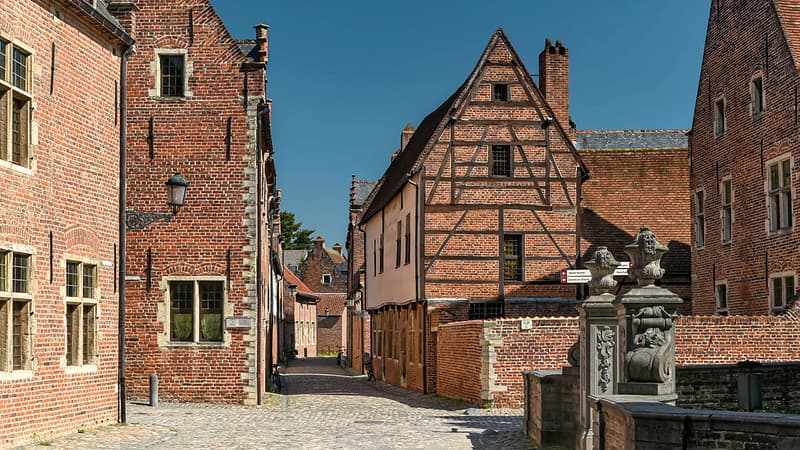
The Flemish Béguinages are a collection of unique architectural enclaves in BELGIUM, originally established in the 13th century as communities for béguines—women who lived a religious, semi-monastic life while remaining independent from the church’s rigid hierarchy. These sites are essentially “cities within cities,” consisting of charming cottages, churches, and green spaces, often arranged around tranquil courtyards.
Attraction
Tourists are drawn to these sites for their profound sense of peace and architectural beauty. Unlike typical convents, these were gated communities where women could support one another without living under the absolute rule of priests. Today, they remain pockets of silence and history amidst the bustle of modern Belgian cities, offering a rare, “time-capsule” experience. The uniform white-walled houses with cozy windows and the quiet, cobbled streets provide a serene contrast to more chaotic tourist destinations.

World Heritage
Inscribed in 1998, 13 specific Flemish Béguinages were recognized for their “outstanding universal value.” UNESCO honors them because they are an exceptional testimony to a cultural and religious tradition unique to the Low Countries. They represent a significant development in the social and spiritual history of the medieval period, showcasing a rare form of urban planning that prioritized collective living and independence for women.
Gateway
Brussels is the primary gateway to Belgium.
- Commercial Airport: Brussels International Airport (BRU) serves as the main international hub.
- Lodging: Brussels offers an endless range of accommodations, from luxury hotels to budget-friendly guesthouses. From Brussels, most of the major béguinages (like those in Leuven, Ghent, or Bruges) are easily accessible via the Belgian rail network, often in under an hour.
When
The shoulder seasons—late spring (May–June) and early autumn (September–October)—are ideal. During these months, the weather is mild, the gardens are lush or beautifully colored, and you avoid the massive summer crowds that can overwhelm popular spots like Bruges. Winters are quiet but cold, which can actually enhance the peaceful, contemplative atmosphere of these enclaves.
Consideration
- Respect the Silence: While many béguinages are now open to the public, they are often residential areas. Keep noise to a minimum and respect the privacy of those who live there.
- Accessibility: Most béguinages are pedestrian-only, characterized by uneven cobblestone streets. Sturdy, comfortable walking shoes are essential.
- Timing: While they are “open,” they do not have traditional “opening hours” like a museum. It is best to visit during daylight hours to fully appreciate the architecture and gardens.
- Do not treat them as museums: Keep in mind that students, professors, or local residents may live in these houses, especially in large ones like the Grand Beguinage in Leuven.

Resources
- UNESCO World Heritage Centre – The official historical and cultural documentation.
- Visit Leuven: Great Beguinage – An excellent resource for planning a visit to one of the largest sites.
- Visit Gent: Beguinages – Information for exploring the unique sites within Ghent.
- Time Travel Turtle – A great travel blog with personal insights into visiting multiple sites.
- Booking.com – Use this platform to book your base in Brussels or other major Belgian cities.


Comments:
Leave a Reply