
The Gobustan Rock Art Cultural Landscape is a globally significant archaeological site located in the semi-arid, rocky mountains of central AZERBAIJAN, approximately 70 kilometers southwest of the capital, Baku.
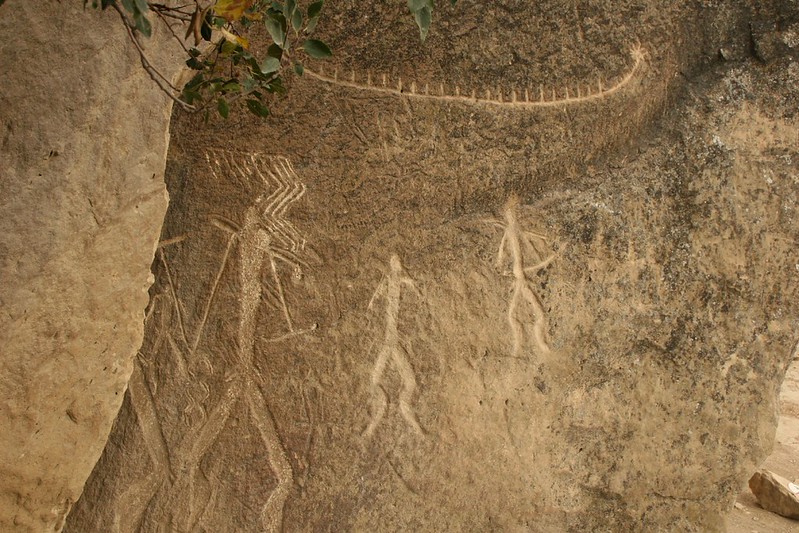
The site is a vast open-air museum encompassing over 6,000 petroglyphs (rock carvings) etched into more than 1,000 rock surfaces. These carvings date back as far as 40,000 years, spanning from the Upper Paleolithic era to the Middle Ages. The petroglyphs provide a detailed record of prehistoric life, depicting hunting scenes, ritualistic dances, human figures, animals (such as deer, goats, and lions), and ancient maritime vessels. Beyond the rock art, the reserve features ancient caves, burial mounds, megalithic structures, and unique geological oddities like the gaval dash (musical “tambourine stones”) and mud volcanoes.
Attraction
- A Journey Through Time: It offers a visceral, tangible connection to the dawn of human civilization, allowing visitors to walk through landscapes where early humans lived, hunted, and expressed their spiritual beliefs.
- Unique Natural Wonders: The site is often visited in conjunction with the region’s famous mud volcanoes, which create a surreal, lunar-like landscape that is a major draw for adventure seekers.
- Cultural Intrigue: The “singing rocks” (gaval dash), which produce a resonant, tambourine-like sound when struck, provide a rare interactive historical experience.
- Interactive Museum: The modern on-site museum uses digital displays and reconstructions to provide crucial context, making the ancient carvings accessible and engaging for all ages.

World Heritage
Inscribed in 2007, the site represents Outstanding Universal Value due to:
- Historical Continuity: It provides an exceptional and unbroken record of human development over 40,000 years within the same geographic area.
- Artistic Legacy: It is considered one of the world’s most significant collections of prehistoric rock art, serving as a primary source for understanding the social structures, religious rituals, and environmental adaptations of early Eurasian societies.
- Cultural Significance: The carvings are not merely decorative; they are documented evidence of early communication, spirituality, and artistic expression that shaped early human culture.
Gateway
Baku serves as the primary gateway.
- Airport: Heydar Aliyev International Airport (GYD) is the major international hub serving Azerbaijan.
- Lodging: As a major capital, Baku offers an extensive range of accommodations, from ultra-luxury hotels to budget-friendly guesthouses. Most travelers stay in Baku and undertake a day trip to the reserve, as it is only about a 60–90 minute drive away.
When
- Spring (April–June) and Autumn (September–October): These are the optimal times. The weather is mild and comfortable for outdoor hiking and exploring the exposed rocky terrain.
- Avoid: Summer (July–August) can be extremely hot and dry in the semi-arid landscape, while winter (December–February) is cold and windy, making outdoor activities less pleasant.
Consideration
- Transportation: While you can reach the area via guided tours from Baku, renting a car or hiring a private driver is highly recommended if you wish to explore the wider reserve and nearby mud volcanoes at your own pace.
- Sun Protection: The site is largely exposed with very little natural shade. Bring a wide-brimmed hat, high-SPF sunscreen, and plenty of water.
- Footwear: Wear sturdy walking shoes with good grip, as the terrain is rocky and can be uneven.
- Planning: Combine your visit with a trip to the nearby mud volcanoes, as they are a signature feature of the Gobustan landscape.
Resources
- UNESCO World Heritage – Gobustan – The official documentation of the site’s historical criteria.
- Azerbaijan Travel (Official) – The national portal with comprehensive tips for visitors.
- Ministry of Culture – Gobustan Reserve – The official site for information on the reserve’s research and preservation.
- Komoot – Gobustan Routes – Great for maps and local hiking tips.
- Booking.com – Baku Hotels – Use this platform to secure your accommodation in Baku.
Featured Image
Petroglyphs in Gobustan State Historical and Cultural Reserve (Azeri, Wikimedia/CC BY-SA 3.0).

News Feed
Advertisement


Comments:
Leave a Reply