The Historic Centre of the City of Salzburg, known as the Altstadt, is a well-preserved medieval and Baroque urban ensemble in central AUSTRIA along the Salzach River. Flanked by prominent alpine hills—the Mönchsberg, Kapuzinerberg, and Festungsberg—the historic core occupies a compact, picturesque valley. For centuries, Salzburg functioned as an independent ecclesiastical city-state ruled by prince-archbishops who accumulated wealth through salt trade, creating a grand seat of religious power.
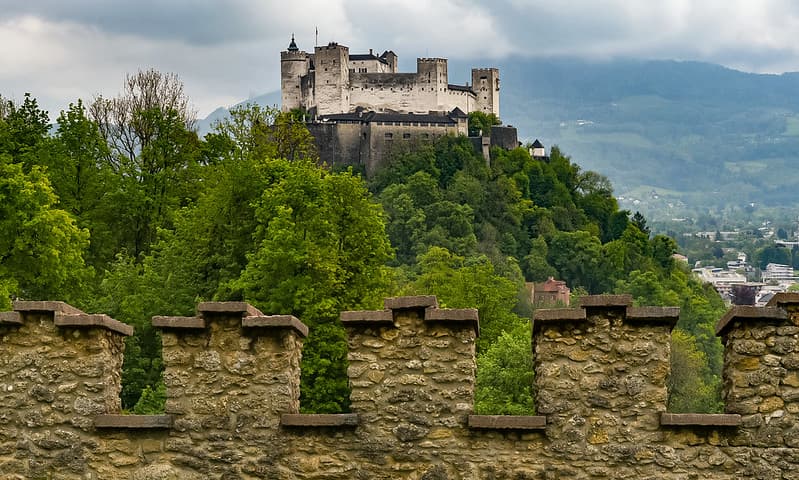
Architecturally, the historic centre is defined by a striking synthesis of late medieval Gothic structures and sweeping Baroque urban design. Rising above the skyline atop the Festungsberg is Hohensalzburg Fortress (Festung Hohensalzburg), one of the largest intact medieval castles in Europe. Below the fortress lies the Cathedral District (DomQuartier), anchored by Salzburg Cathedral (Salzburger Dom), Residenzplatz, St. Peter’s Abbey, and Nonnberg Abbey. Across the Salzach River stands Mirabell Palace (Schloss Mirabell) with its famous manicured geometric Baroque gardens, while narrow medieval shopping streets like Getreidegasse feature centuries-old wrought-iron guild signs, hidden courtyards, and historic townhouses.
Attraction
Salzburg draws millions of global travelers every year through its unique combination of musical heritage, architectural grandeur, and dramatic Alpine scenery. As the birthplace of Wolfgang Amadeus Mozart (born in 1756), the city is a pilgrimage destination for music lovers. Visitors can tour Mozart’s Birthplace (Mozarts Geburtshaus) on Getreidegasse and his family residence (Mozart-Wohnhaus). This musical legacy culminates annually in the prestigious Salzburg Festival (Salzburger Festspiele), one of the world’s premier summer classical music and drama events.
Additionally, Salzburg holds immense international popularity as the primary filming location for the legendary 1965 movie musical The Sound of Music. International visitors travel from far and wide to tour iconic film sites, including Mirabell Gardens, Leopoldskron Palace, and Nonnberg Abbey. Beyond its artistic fame, the historic centre captivates tourists with its romantic medieval alleyways, world-class museums, traditional Austrian coffeehouses, vibrant Christmas markets during winter, and proximity to the surrounding Austrian Alps.

World Heritage
In 1996, UNESCO inscribed the Historic Centre of the City of Salzburg on the World Heritage List under cultural criteria (ii), (iv), and (vi).
- Cultural Interchange between North and South (Criterion ii): Salzburg played an essential role in facilitating an artistic and architectural dialogue between Italian and German cultures. Prince-archbishops commissioned prominent Italian architects, such as Vincenzo Scamozzi and Santini Solari, to redesign the medieval townscape in the grand Baroque style, creating a harmonious blend of southern European elegance and northern European building traditions.
- Outstanding Ecclesiastical City-State (Criterion iv): The city stands as an exceptionally preserved example of a European ecclesiastical city-state. Its surviving architectural fabric—spanning from the late Middle Ages through the 20th century—illustrates the immense authority, wealth, and civic administration exercised by prince-archbishops over centuries of European history.
- Association with Music and Arts (Criterion vi): Salzburg possesses extraordinary global associations with the performing arts, most notably through the musical genius of Wolfgang Amadeus Mozart, whose creative legacy continues to shape international musical culture and living performance traditions to this day.
Gateway
The primary gateway city for exploring the site is Salzburg itself. Situated immediately adjacent to the historic core, the city features its own airport, Salzburg Airport W. A. Mozart (IATA Code: SZG). Located approximately 3 kilometers west of the city center, SZG is Austria’s second-largest airport, catering to domestic and international commercial flights, seasonal ski charters, and general aviation.
Salzburg offers abundant lodging for all budgets, ranging from luxury historic hotels in the Altstadt to modern boutique inns, apartments, and hostels. Alternatively, Vienna—served by Vienna International Airport (IATA Code: VIE)—acts as a major national gateway, offering direct high-speed train connections to Salzburg in roughly two hours.
When
The best time to visit the Historic Centre of Salzburg depends on individual travel goals:
- Late Spring and Early Autumn (May to June & September to October): These months offer ideal travel conditions, featuring pleasant weather, blooming gardens, and manageable tourist crowds, making it perfect for walking tours and sightseeing.
- Summer (July to August): Summer brings warm weather and the bustling atmosphere of the Salzburg Festival. However, this period also sees peak tourist crowds, high accommodation rates, and frequent rainfall.
- Winter (Late November to December): Winter transforms the historic core into a fairy-tale setting with traditional Christmas markets, festive lighting, and snow-capped mountain scenery.
Considerations
- Pedestrianized Historic Core: The Altstadt is predominantly a pedestrian zone restricted to vehicular traffic. Visitors arriving by rental car must park in structured underground garages built into the Mönchsberg mountain (Altstadt-Garagen) and explore on foot.
- Cobblestone Streets and Hilly Terrain: Exploring landmarks like Hohensalzburg Fortress requires walking on steep inclines and cobblestones. Sturdy walking footwear is essential.
- Peak Season Advance Bookings: Accommodations, concert tickets, and major museum passes should be booked months in advance if visiting during the Salzburg Festival in July and August or during the December Christmas market season.
- Variable Alpine Weather: Due to its location on the edge of the Alps, Salzburg frequently experiences sudden rain showers, locally known as Schnürlregen (“string rain”). Packing waterproof jackets and umbrellas is recommended year-round.

Resources
- UNESCO World Heritage Centre: The official UNESCO portal providing technical documentation, boundary maps, and historical rationale for Salzburg’s inscription.
- Salzburg Info: The official municipal tourism website providing event calendars, city cards, walking maps, and museum opening hours.
- Trip.com: A leading travel marketplace containing hotel listings, user reviews, tour bookings, and restaurant recommendations.
- DomQuartier Salzburg: The official portal for the cathedral complex, detailing museum exhibits, tour schedules, and historical state rooms.
- Austria Tourism: The national tourist office portal offering regional travel guides, transport tips, and cultural overviews.
Featured Image
Hohensalzburg Fortress (Jorge Franganillo, Flickr/CC BY 2.0).
News Feed
Advertisement


Comments:
One response to “Historic Centre of the City of Salzburg”
-
Don’t miss a visit to the 900-year-old Hohensalzburg Fortress that looms over the city. We rode the funicular to the top. The fortress now houses a museum including military and weaponry exhibits. The fortress is also the best area to see panoramic views of the city, the countryside and the surrounding mountains.

Leave a Reply