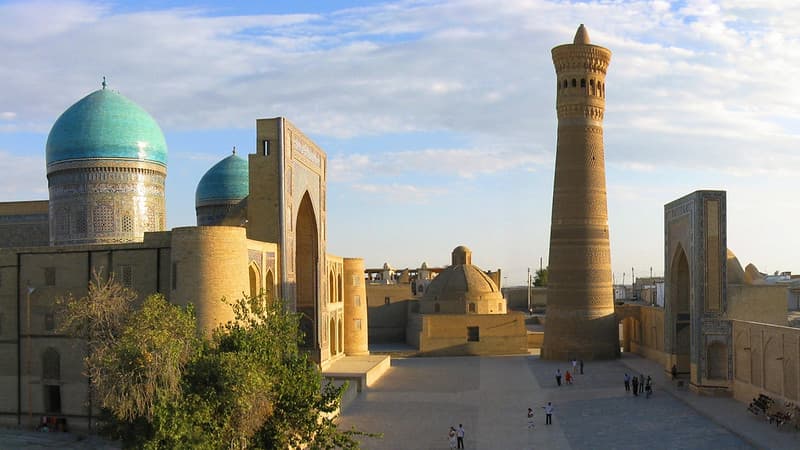
The Historic Centre of Bukhara, located in UZBEKISTAN, is one of the most complete and pristine examples of a medieval city in Central Asia. With an urban fabric spanning over two millennia along the Silk Road, the city is an open-air museum featuring more than 140 protected architectural monuments, including towering brick minarets, sprawling madrasas, lively trading domes, and ancient royal fortresses.
Attraction
Tourists worldwide are captivated by Bukhara’s authentic, living history and distinct atmosphere:
- Immersive Silk Road Heritage: Unlike static archaeological sites, Bukhara’s historic core is fully inhabited, allowing visitors to experience traditional craft workshops, bustling bazaars, and local life set against a backdrop of 16th- to 17th-century Islamic architecture.
- Iconic Landmarks: Visitors flock to see legendary structures like the soaring Kalyan Minaret (which famously impressed Genghis Khan enough to spare it from destruction), the massive Ark Fortress, and the tranquil, century-old Lyab-i Hauz pond square.
- Artisanal Traditions: It is a hub for authentic Central Asian crafts, renowned for intricate gold embroidery, ceramics, handmade carpets, and traditional metalworking.

World Heritage
Inscribed in 1993, the historic center was recognized for its Outstanding Universal Value:
- Architectural Completeness: It represents the most intact and complete example of a medieval Islamic trading city in Central Asia, retaining its ancient street layout and scale.
- Masterpieces of Design: The site features crucial milestones in Islamic architecture, such as the 10th-century Samanid Mausoleum—a masterpiece of early brickwork combining pre-Islamic and Islamic design elements.
Gateway
Bukhara itself serves as the immediate gateway to the historic site.
- Airport: The city is served by Bukhara International Airport (BHK), which handles domestic connections from Tashkent as well as select international flights.
- Lodging: Bukhara offers a wide abundance of accommodation choices, ranging from family-run boutique guesthouses housed in historic old courtyard homes to modern hotels located just outside the old town boundaries.
When
- Spring (April to June) and Autumn (September to November): These shoulder seasons provide the most comfortable weather for walking the dusty, sunlit streets of the old city.
- Note: Summer temperatures in Uzbekistan can be intensely hot, often exceeding 40°C (104°F), making midday exploration exhausting.
Consideration
- Footwear: The historic center features uneven brick paving, dirt paths, and stone steps; sturdy, comfortable walking shoes are essential.
- Modest Dress: As a region with deep Islamic traditions, visitors should dress respectfully, particularly when entering active mosques, mausoleums, and sacred spaces.
- Cash and Currency: While card payments are increasingly accepted in major hotels and restaurants, carrying local cash (Uzbek Som) is necessary for small shops, artisan stalls, and bazaars.

Resources
- UNESCO World Heritage Centre: Official documentation and historical justification for Bukhara’s inclusion on the World Heritage list.
- Official Uzbekistan Tourism Website: Comprehensive travel guides, visa information, and regional itineraries.
- Lonely Planet – Uzbekistan Guide: Reliable practical advice on transport, local customs, and city highlights.
- Caravanistan: An independent, highly detailed travel guide for the Silk Road countries, offering invaluable logistical tips for independent travelers.
- GetYourGuide: A platform offering bookable walking tours, historical excursions, and cultural experiences in Bukhara.
Featured Image
The Kalyan Minaret, Kalyan Mosque, and Mir-i-Arab Madrasah (DullHunk, Flickr/CC BY-SA 2.0).
News Feed
Advertisement


Comments:
Leave a Reply