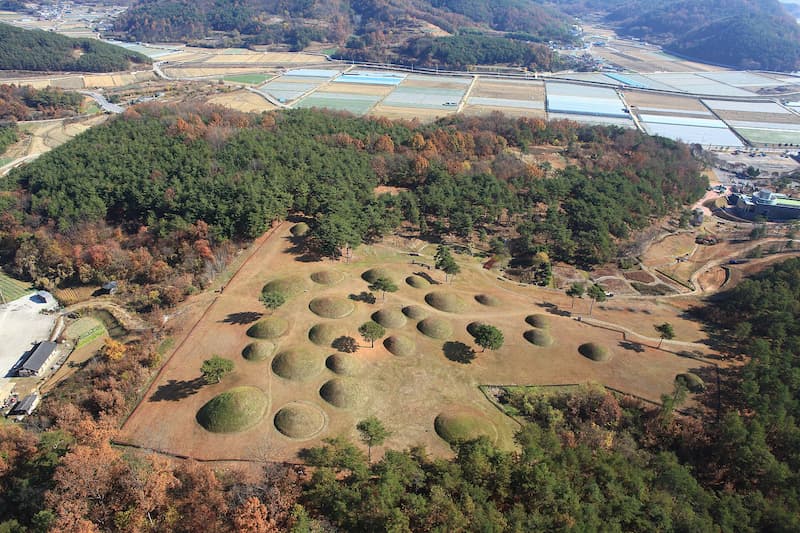
The Gaya Tumuli are a remarkable series of seven ancient cemetery sites located across the southern Korean Peninsula. These burial mounds of REPUBLIC OF KOREA were constructed between the 1st and 6th centuries CE by the Gaya Confederacy, a collection of autonomous polities that played a crucial role in the history of ancient East Asia.
The Gaya Tumuli are a serial World Heritage property comprising seven distinct clusters:
- Daeseong-dong (Gimhae)
- Marisan (Haman)
- Okjeon (Hapcheon)
- Jisan-dong (Goryeong)
- Songhak-dong (Goseong)
- Gyo-dong and Songhyeon-dong (Changnyeong)
- Yugok-ri and Durak-ri (Namwon)
Each site features densely packed mounds atop elevated terrain, housing stone-lined burial chambers. These tombs have yielded significant iron artifacts, earthenware, and jewelry, reflecting the sophisticated craftsmanship and social hierarchy of the Gaya people.
Attraction
- A Hidden Gem: Unlike the more famous Silla or Baekje sites, the Gaya Tumuli offer a more tranquil, off-the-beaten-path experience, perfect for those seeking authentic history without the massive crowds.
- Stunning Landscapes: Located on hills and elevated terrain, these tumuli offer expansive, scenic views of the surrounding Korean countryside.
- Cultural Discovery: Visitors can explore small, highly informative on-site museums and interpretive panels that use reconstructed burial scenes to bring the ancient Gaya society to life.
- Iron Age Legacy: The site is a dream for history buffs interested in Korea’s “Iron Age” dominance, as Gaya was famously the hub of iron production and maritime trade in the region.

World Heritage
Inscribed in 2023, the Gaya Tumuli possess “Outstanding Universal Value” because:
- Unique Political System: They provide physical evidence of a rare political structure where autonomous, equal polities coexisted, collaborated, and traded while maintaining their own distinct identities.
- Regional Balance: The confederacy played a vital role in maintaining the balance of power in ancient East Asia through its flexible engagement with neighboring states.
- Architectural Diversity: They demonstrate distinct burial techniques and pottery styles that differentiate the Gaya civilization from its more centralized neighbors, illustrating the cultural diversity of ancient Korea.
Gateway
There is no single “gateway” because the seven sites are spread across different regions. However, Busan or Daegu are the most practical bases for international travelers.
- Airport: Gimhae International Airport (PUS) in Busan is the primary entry point for the southern region.
- Logistics: From Busan or Daegu (TAE), you can reach the individual sites via express buses or KTX/SRT trains. Gimhae (Daeseong-dong) is very accessible from Busan, while Goryeong (Jisan-dong) is best reached via Daegu. Given the distance between some sites (like Namwon), it is recommended to visit them as distinct regional day trips rather than trying to see all seven at once.
When
- Spring (April to June): The most comfortable weather, with cherry blossoms framing the burial mounds.
- Autumn (September to November): Ideal for hiking; the foliage turns brilliant red and orange, enhancing the ancient atmosphere of the mounds.
- Avoid: Mid-summer (July–August) is hot and humid; mid-winter (December–February) can be biting cold, making outdoor exploration less enjoyable.
Consideration
- Transport: Public transport is convenient for some sites (like Gimhae and Changnyeong), but renting a car or hiring a local driver is highly recommended for sites in Goryeong or Hapcheon to save time.
- Footwear: You will be walking on grass, dirt paths, and potentially uneven terrain. Sturdy walking shoes are a must.
- Preparation: Download offline maps. While the sites are well-signposted, the surrounding rural areas may have limited English signage.
- Respect: These are sacred burial grounds. Always stay on marked paths and follow local guidelines regarding noise and site maintenance.

Resources
- UNESCO World Heritage – Gaya Tumuli – The official documentation of the site’s significance.
- Visit Korea – Gaya Culture Route – An excellent guide provided by the Cultural Heritage Administration for mapping out your journey.
- Gyeongsangbuk-do Official Tourism – Provides regional context and links to other cultural heritage sites in the area.
- TripBucket – Gaya Tumuli Sites – A helpful visual summary of the seven individual sites.
- Booking.com – Busan/Daegu Hotels – A reliable platform to book your stay in the gateway city.


Comments:
Leave a Reply