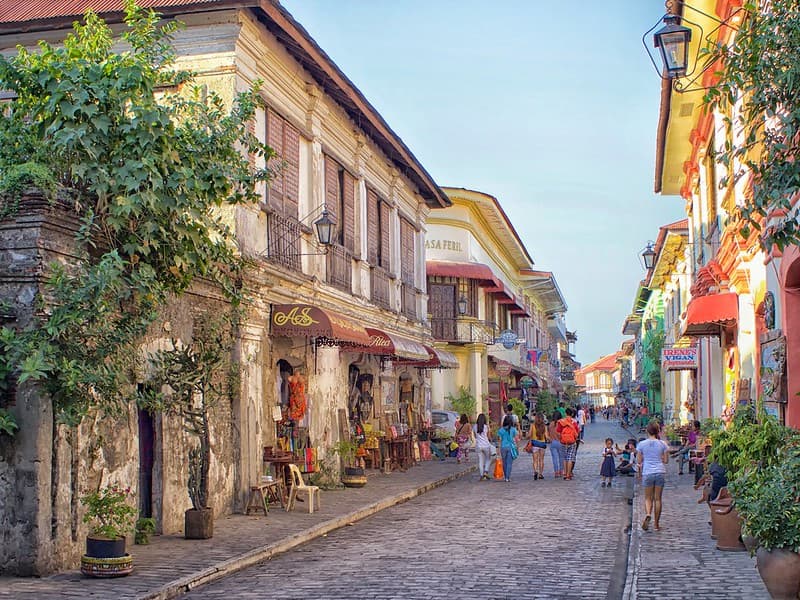
The Historic City of Vigan, located in the province of Ilocos Sur on the island of Luzon, PHILIPPINES is the finest surviving example of a planned Spanish colonial town in Asia. Established in the 16th century, it is renowned for its intact “Bahay na Bato” (stone house) architecture, which artfully fuses European colonial design with local Filipino and Chinese influences.
Vigan is a “living museum” where centuries-old urban planning remains visible. Its historic core, particularly the famous Calle Crisologo, features cobblestone streets lined with colonial-era mansions characterized by sliding capiz shell windows, thick stone walls, and red-tiled roofs. Unlike many other colonial towns that suffered extensive damage during the Second World War, Vigan’s heritage core has remained remarkably preserved.
Attraction
- Time-Travel Atmosphere: Walking down the cobblestone streets, especially at night when antique-style streetlamps illuminate the colonial facades, creates a nostalgic, romantic experience.
- Cultural Fusion: Visitors are drawn to the unique blend of cultures visible in the local craft shops, museums, and ancestral homes.
- Local Cuisine: The city is a culinary destination, famous for its Vigan Empanada, Longganisa (local sausage), and Bagnet (crispy pork belly).
- Horse-Drawn Carriages: The Kalesa—a traditional horse-drawn carriage—remains a popular and charming way to navigate the narrow streets, replacing modern motor vehicles in the heritage core.

World Heritage
Inscribed in 1999, Vigan’s status is rooted in its Outstanding Universal Value:
- Architectural Significance: It is the most intact example of a planned Spanish colonial town in Asia. Its architecture reflects a unique fusion of Asian design and construction with European colonial planning.
- Cultural Integrity: It serves as an exceptional testimony to the cultural landscape of the Philippines during the Spanish period, demonstrating how different cultural elements (Chinese, Ilocano, and Spanish) integrated to create a townscape with no parallel anywhere else in Southeast Asia.
Gateway
Laoag City is the most practical gateway for international and domestic travelers.
- Airport: Laoag International Airport (LAO) is the nearest commercial airport. From there, it is a roughly 1.5 to 2-hour land trip to Vigan.
- Lodging: Vigan itself offers a wealth of options, including well-restored heritage homes converted into boutique hotels, such as the Hotel Luna or Vigan Plaza Hotel, ensuring a rich, overnight experience.
When
The best time to visit is during the dry season, from November to February. During these months, the weather is cooler and drier, making it pleasant to walk the cobblestone streets and explore the city’s outdoor sights without the humidity of the summer months or the interruption of rain.
Consideration
- Footwear: The streets are paved with original cobblestones; wear comfortable, flat shoes to navigate them easily.
- Sun Protection: If visiting during the day, carry sunscreen and a hat, as the town core has limited shade.
- Respect the Heritage: Many of the ancestral homes are private property or museums; always observe signs and respect the privacy of residents.
- Transportation: While the core of Vigan is very walkable, hiring a local Kalesa for a guided city tour is highly recommended to get the most out of your visit.

Resources
- UNESCO World Heritage – Vigan – The official documentation of the site’s historical significance.
- Vigan City Official Tourism Portal – The primary resource for local events, site opening hours, and travel guides.
- Department of Tourism (Philippines) – Ilocos Region – Offers a broad overview of heritage sites and travel logistics in the region.
- Trip.com – Vigan Travel Guide – A modern traveler’s guide with insights on top-rated food and hotel experiences.
- Booking.com – Vigan Hotels – A reliable platform to secure your stay in a heritage hotel.


Comments:
One response to “Historic City of Vigan”
-
The best way to enjoy the scenery is to take a stroll, and marvel at the fine architecture and how it survived earthquakes, typhoons, and World War II.

Leave a Reply