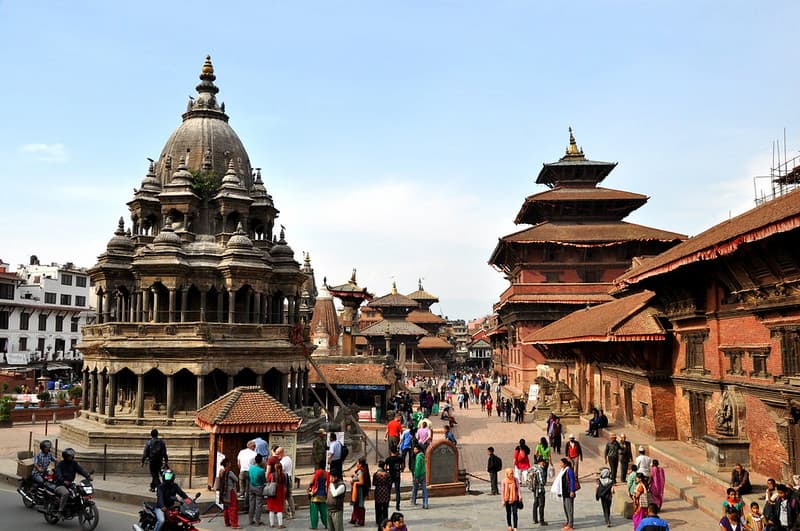
The Kathmandu Valley is a high-altitude basin in the heart of NEPAL, surrounded by the towering peaks of the Himalayas. Often described as an “open-air museum,” it is the political, cultural, and economic center of the nation. For centuries, it has served as a crucible where Buddhist and Hindu traditions have blended, creating a unique aesthetic characterized by intricate woodcarvings, pagoda-style temples, and vibrant, densely packed urban squares.
The valley contains three historic royal cities—Kathmandu, Patan, and Bhaktapur—which, despite their modern expansion, retain a core of ancient architecture. The landscape is dominated by Durbar Squares (royal palace plazas) adorned with stunning temples, and sacred pilgrimage sites like the stupas of Swayambhunath and Boudhanath, and the Hindu temple of Pashupatinath. The valley’s architecture is defined by the traditional Newari style, utilizing red brick, ornate carved timber, and gilded copper roofs.
Attraction
- Living Heritage: Unlike many heritage sites that are purely archaeological, the Kathmandu Valley is a living urban center. Visitors can witness daily life, ancient religious processions, and rituals that have remained unchanged for centuries.
- Spirituality: It is a major pilgrimage destination for both Hindus and Buddhists. The sight of thousands of devotees circling the giant, watchful eyes of the Boudhanath stupa or witnessing open-air cremations along the banks of the Bagmati River at Pashupatinath offers a profound, life-changing cultural experience.
- Art and Craftsmanship: The valley is world-renowned for its artistic heritage. From the masterful bronze statues in Patan to the exquisite woodcarvings in Bhaktapur, the level of detail in the architecture is a primary draw for art historians and travelers alike.
- Gateway to Adventure: Beyond the cultural immersion, the valley is the primary staging ground for trekkers and mountaineers heading into the broader Everest or Annapurna ranges.

World Heritage
The Kathmandu Valley was inscribed in 1979 as a collective World Heritage property consisting of seven monument zones. It is recognized for:
- Cultural Continuity: It illustrates the unique historical and artistic development of the Newar people, whose civilization represents a remarkable integration of Hindu and Buddhist beliefs.
- Architectural Synthesis: The buildings demonstrate a sophisticated fusion of indigenous traditional techniques with imported artistic trends from India and Tibet, defining a distinctive “Kathmandu style” that influenced architectural development across the Himalayas.
- Symbolic Landscape: The distribution of the seven monument zones—including royal palaces, sacred stupas, and cremation grounds—creates a symbolically rich landscape that reflects the cosmology and social structure of the ancient valley kingdoms.
Gateway
Kathmandu itself serves as the gateway.
- Commercial Airport: Tribhuvan International Airport (KTM) is the primary gateway to Nepal, handling the vast majority of international arrivals.
- Lodging: Kathmandu offers a diverse range of accommodations, from high-end heritage hotels in historic buildings to the popular, vibrant backpacker enclave of Thamel, which is dense with hostels, lodges, and boutique inns.
When
- Autumn (October to November): This is the “golden season.” The monsoon rains have cleared the dust, the mountain views are crystal clear, and the valley hosts major cultural festivals.
- Spring (March to May): A beautiful time for nature lovers, as the rhododendrons are in bloom and the weather is warm and pleasant.
- Avoid (June to August): This is the monsoon season. While the valley becomes lush and green, heavy rains can cause travel delays, and cloud cover frequently obscures the mountain vistas.
Consideration
- Air Quality: Kathmandu can experience high levels of dust and pollution, particularly during the dry season. Those with respiratory sensitivities should consider bringing high-quality face masks.
- Cultural Sensitivity: Always walk around stupas and shrines in a clockwise direction. When entering temples, dress modestly and always ask permission before taking photographs of religious ceremonies or individuals.
- Traffic: Traffic in the valley can be chaotic and congested. Build in extra “buffer time” for travel between the three cities.
- Altitude & Health: While the valley is at a moderate altitude (~1,400m), it is the start of much higher elevation trekking. If you are continuing to the mountains, familiarize yourself with the symptoms of altitude sickness.

Resources
- UNESCO World Heritage Centre – Kathmandu Valley – The official entry outlining the seven specific monument zones and their historical significance.
- Nepal Tourism Board – The primary government portal for travel guidelines, trekking permits, and cultural event calendars.
- Department of Archaeology – Nepal – Provides detailed information on the preservation status of the valley’s historic monuments.
- Kathmandu Valley Preservation Trust – A vital resource for understanding the ongoing restoration projects that keep the valley’s architecture alive.
- Booking.com – Kathmandu Accommodation – A primary platform for booking your stay in Kathmandu or the historic surrounding towns.


Comments:
5 responses to “Kathmandu Valley”
-
At the Ason Market, we can see all the ways the local people live. The hustle and bustle gives us an idea about the market place during medieval time. We see people selling all types of ingredients used for religious and ritual activities, fresh vegetables, fruits, dry fishes, dry meats, shops selling typical Nepalese clothes and people using old houses and also the temples as shops. This is where you will get a feeling of what it’s like for people in Kathmandu.
-
Swayambhunath Stupa. Nepal’s most significant Buddhist site is home to thousands of prayer flags and hundreds of curious macaques, earning it’s nickname, “Monkey Temple.”
This stupa can be admired from many points in Kathmandu Valley, as it is the largest. I had spent days enjoying its place on the city horizon, before trekking its steps to realize the most stunning view of this structure was from its peak, overlooking virtually every point in Kathmandu. I highly recommend the walk to the top, as you’re able to view Dewa Dharma Monastery, where a gorgeous bronze Buddha sits, and the gold Vajra (thunderbolt)— as well as gain an irrevocable sensation of your place in the world.
-
A visit to Patan is absolutely mandatory for first time visitors. It is nothing less than an architectural treasure
-
Bhaktapur has the best-preserved palace courtyards and is the oldest city centre in Nepal. This is the most beautiful, open museum type Durbar, holding exciting and the finest examples of medieval excellence. I was captivated to see different palaces, courtyards, royal bath, sculptures, pagodas, Shikhara style temples and Buddhist monastery displaying rich culture and wood, metal and stone artworks. Cultural life is proudly displayed all over ~ along narrow alleys artisans weave cloth and chisel timber; squares are filled with drying pots; and locals gather in the courtyards to bathe, collect water, play cards and socialise.
-
The best place to catch a glimpse of everyday life is at Patan Durbar Square – the heart of the old city. See old Newari men wearing traditional Dhaka hats lined up on a bench, street vendors selling prayer lights and marigolds, and women gathered together to knit. There is no better place than this public space to soak in the eclectic sights and boisterous chatter of the locals.

Leave a Reply