The Langkawi UNESCO Global Geopark is an archipelago of 99 islands located off the northwestern coast of Peninsular MALAYSIA. It is celebrated as one of the world’s most significant geological sites, showcasing a rich tapestry of ancient rock formations, diverse ecosystems, and a deep connection to human history.
The Geopark is not just a single park but a collection of diverse landscapes spanning three major geoforest parks:
- Machinchang Cambrian Geoforest Park: Home to the oldest geological formations in Southeast Asia, dating back over 500 million years. It features iconic sites like the Langkawi SkyBridge and rugged mountain peaks.
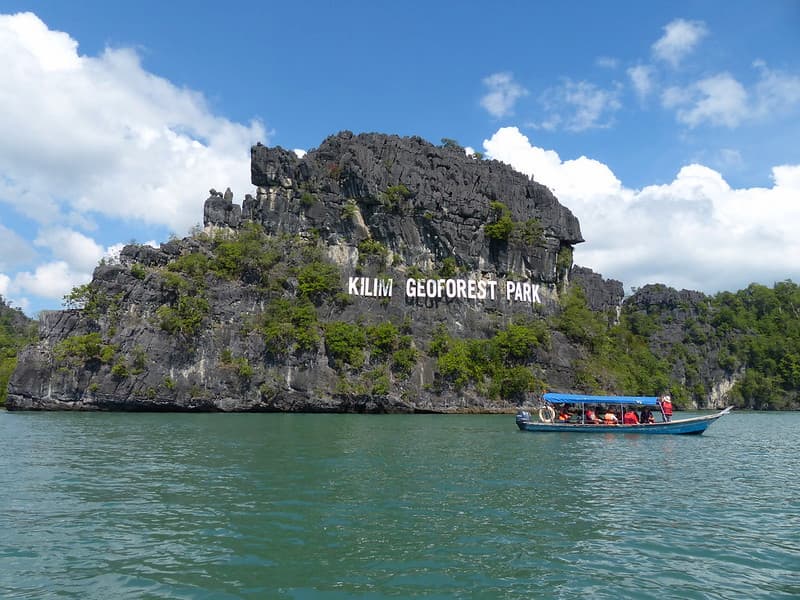
- Kilim Karst Geoforest Park: Famous for its towering limestone cliffs, mysterious caves (like Gua Kelawar), and expansive mangrove forests that support a complex marine and land-based ecosystem.
- Dayang Bunting Marble Geoforest Park: Renowned for its unique marble formations and the legendary “Lake of the Pregnant Maiden” (Tasik Dayang Bunting), a massive freshwater lake set within a collapsed cave system on a marble island.
Attraction
- Geological Time Travel: Visitors can witness rock layers from the Cambrian period, providing a rare glimpse into the Earth’s history before dinosaurs existed.
- Biodiversity: The Geopark is a haven for nature enthusiasts, home to rare species like the crab-eating macaque, dusky leaf monkeys, hornbills, and even migratory humpback dolphins in the surrounding waters.
- Eco-Adventure: From boat tours through mangrove mazes to cable car rides over ancient jungles and trekking through fossil-rich caves, the Geopark offers adventure in a protected, pristine environment.
- Cultural Legends: The site is deeply linked to local folklore, particularly the myth of the “Pregnant Maiden,” which adds a layer of cultural intrigue to the stunning natural scenery.

(Khalzuri Yazid, Flickr/CC BY-SA 2.0).
Global Geopark
Langkawi was the first UNESCO Global Geopark in Southeast Asia. Its status is justified by:
- International Geological Value: It contains the most complete Paleozoic era geological history in Southeast Asia (542–251 million years ago), clearly visible in its sedimentary rock sequences.
- Scientific Management: It adheres to UNESCO’s strict criteria for the sustainable management of natural resources, including ongoing research, the protection of fragile karst ecosystems, and disaster mitigation strategies.
- Community Integration: Unlike static protected areas, it actively promotes “geotourism,” where local communities play a central role in managing the land, educating visitors, and benefiting economically from conservation efforts.
Gateway
The primary gateway is Langkawi Island itself, which functions as a fully integrated tourist destination.
- Commercial Airport: Langkawi International Airport (LGK). It is well-connected with daily flights from Kuala Lumpur, Penang, and other regional hubs.
- Lodging: Langkawi offers an extensive range of accommodations, from luxury rainforest resorts (like The Datai) to accessible beachfront hotels in Pantai Cenang and Kuah Town.
- Logistics: The island is easily traversed by rental car, taxi, or ride-sharing apps, making it simple to reach any of the three geoforest parks from your chosen accommodation.
When
- Dry Season (December to April): The ideal time for outdoor activities, trekking, and boat tours, as the weather is consistently sunny with minimal rainfall.
- Mid-Season (May to October): Offers a “lush” experience with intermittent rain, smaller crowds, and more competitive accommodation pricing.
- Avoid: September through November, which typically sees the highest rainfall, potentially impacting boat access to the mangroves.
Consideration
- Conservation Rules: This is a protected area. Avoid touching delicate stalactites in caves, do not feed wild animals, and ensure you take all trash with you when trekking or boating.
- Gear: Bring high-quality insect repellent (especially for the mangroves), sunscreen, a waterproof bag for electronics during boat trips, and sturdy, comfortable footwear for exploring caves and trails.
- Guided Tours: Many areas, especially within the Kilim Karst Geoforest Park, are best experienced with a licensed nature guide who can explain the geological significance of the fossils and rock formations you are seeing.
Resources
- Langkawi UNESCO Global Geopark Official Site – The primary source for maps, conservation guidelines, and educational materials.
- Naturally Langkawi – The official tourism portal for environmental and nature-based activities in the Geopark.
- UNESCO Global Geoparks Network – For the formal scientific criteria and international context of the Geopark designation.
- JungleWalla Tours – An award-winning local tour operator providing expert-led nature and educational excursions in the Geopark.
- Trip.com – Langkawi Geopark Experiences – A comprehensive booking platform for boat tours, cable car tickets, and adventure packages; this site utilizes affiliate marketing.
Featured Image
Kilim Karst Geoforest Park (Katja Hasselkus, Flickr/PDM 1.0).
News Feed
Advertisement


Comments:
Leave a Reply