Where ancient hunter-gatherers built a sedentary lifestyle without farming
The UNESCO World Heritage site titled “Jomon Prehistoric Sites in Northern JAPAN” is a serial cultural property consisting of 17 archaeological sites located across the southern part of Hokkaido Island and the northern Tohoku region (Aomori, Iwate, and Akita Prefectures). These settlements, stone circles, burial mounds, and shell middens date from roughly 13,000 BCE to 400 BCE, providing physical evidence of the pre-agricultural Jomon culture.
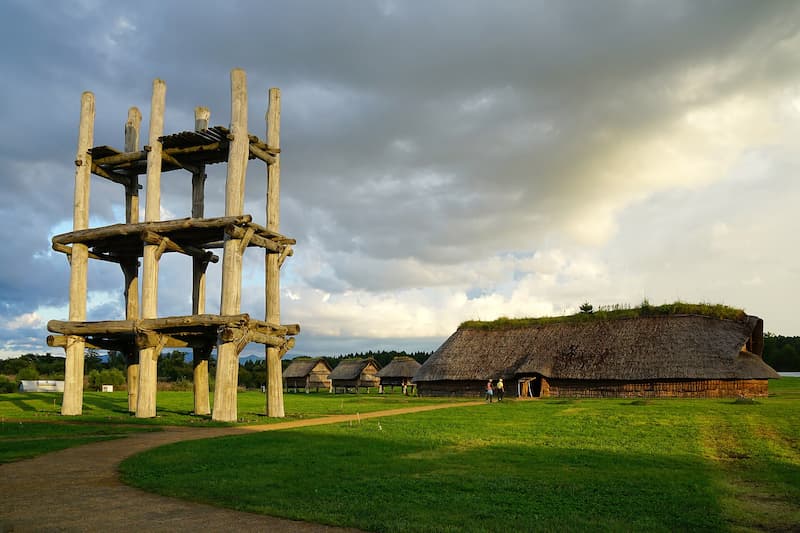
Unlike most ancient hunter-gatherer societies across the world that remained nomadic, the Jomon people developed a complex, sedentary lifestyle without adopting farming. Key components of the site include the monumental Sannai-Maruyama Site in Aomori—featuring large-scale wooden structures, pit dwellings, and vast refuse mounds—as well as the Oyu Stone Circles in Akita, the Kawayodo and Goshono settlements, and the Washinoki stone circle in Hokkaido. The archaeological layers have yielded exquisite artifacts, including flame-style clay pottery, woven baskets, lacquered items, and iconic clay figurines (dogu).
Attraction
The site draws international archaeologists, history enthusiasts, and travelers curious about unique human developmental paths. It offers a rare glimpse into a prehistoric society that lived in balance with nature for over ten millennia without industrialization or destructive warfare.
Visitors travel to Sannai-Maruyama to walk among reconstructed life-sized Jomon pit houses and massive six-pillar wooden towers. Modern museum centers adjacent to the main dig sites display thousands of excavated artifacts, including mysterious dogu figurines with large “goggle” eyes, elaborate pottery, and delicate jade ornaments. Tourists can participate in hands-on workshops to craft traditional clay figurines or make fire using ancient techniques, enjoying an interactive cultural journey across northern Japan’s pristine rural landscapes.

World Heritage
Inscribed on the UNESCO World Heritage List in 2021, the property is recognized under Cultural Criteria (iii) and (v):
- Criterion (iii) – Exceptional Testimony to Prehistoric Culture: The ensemble offers an exceptional testimony to a unique pre-agricultural, sedentary culture that developed over more than 10,000 years in East Asia, showcasing complex spiritual beliefs, ritual practices, and artistic traditions.
- Criterion (v) – Outstanding Example of Human Settlement: The sites represent an outstanding example of early human settlement demonstrating how a hunter-fisher-gatherer society adapted to changing post-glacial environments and managed natural marine, wetland, and forest resources sustainably over thousands of years.
Gateway
Travelers planning to explore the scattered Jomon archaeological sites can access the region via two practical Japanese gateway cities featuring public IATA-listed commercial airports searchable directly on IATA’s directory, lodging options, transport infrastructure, and tour guide services:
- Aomori City (Primary Regional Gateway – Tohoku Region):
- Airport: Aomori Airport (IATA Code: AOJ; ICAO Code: RJSA).
- Infrastructure and Distance: Located just 11 kilometers south of central Aomori. AOJ is an active domestic airport with direct flights from Tokyo (Haneda) and Osaka. Aomori serves as the primary base for exploring the main Sannai-Maruyama Site (located only 5 kilometers from the city center). The city offers extensive hotel accommodations, rental car agencies, public city buses connecting to the dig sites, and high-speed Tohoku Shinkansen bullet train access at Shin-Aomori Station. Certified English-speaking tour guides operate locally.
- Hakodate (Secondary Regional Gateway – Hokkaido Region):
- Airport: Hakodate Airport (IATA Code: HKD; ICAO Code: RJCH).
- Infrastructure and Distance: Situated approximately 9 kilometers from central Hakodate. HKD is an active commercial airport fully searchable on IATA’s directory, offering flights across Japan. Hakodate serves as the gateway to the Hokkaido Jomon cluster (including Kakiushima and Ofune sites). It offers complete hotel infrastructure, rental car desks, and local bus connections reaching northern Jomon museums.
When
The ideal windows to visit the Jomon prehistoric sites are during Spring (May to June) and Autumn (September to November):
- Autumn (September to November): Offers comfortable, crisp weather (12°C to 20°C / 54°F to 68°F) and striking fall foliage across Tohoku and Hokkaido, providing ideal conditions for outdoor archaeological walks.
- Spring (May to June): Features mild, pleasant weather (14°C to 22°C / 57°F to 72°F) and lush green landscapes with clear views of surrounding mountain ranges.
- Summer (July to August): Warm to humid (22°C to 28°C / 72°F to 82°F); outdoor walking tours require sun protection and insect repellent.
- Winter (December to March): Cold (-5°C to 4°C / 23°F to 39°F) with heavy snowfall across northern Honshu and Hokkaido. While major museum centers remain open, outdoor dig sites and reconstructed pit houses may have restricted access or require walking through heavy snow.
Consideration
- Geographic Dispersion: The 17 component sites are spread across four separate prefectures in northern Japan. Travelers interested in visiting multiple locations should rent a car or carefully plan rail and local bus schedules using regional transport passes (such as the JR East-South Hokkaido Rail Pass).
- Footwear and Outdoor Conditions: Visiting archaeological parks involves walking on unpaved dirt footpaths, grass mounds, and wooden staircases. Comfortable, sturdy walking shoes are essential.
- Language and Information Access: While major sites like Sannai-Maruyama offer multi-language signage and audio guide apps, smaller rural sites may have limited English information. Downloading offline translation applications prior to visiting is recommended.
- Museum Hours and Closures: Most official site centers and interpretation halls close on Mondays or specific winter dates for conservation work; checking opening schedules online beforehand is advised.
- Currency and Payments: Japanese Yen (JPY) is the standard currency. While major hotels and museum ticket counters accept credit cards, carrying cash is necessary for rural buses, local taxis, and small souvenir shops.

Resources
- UNESCO World Heritage Centre: Official inscription portal detailing boundaries, criteria evaluations, and conservation reports.
- Jomon Prehistoric Sites Official World Heritage Portal: Official management website detailing the 17 component sites, artifact galleries, and visitor routes.
- Aomori Sightseeing Guide (Aptinet): Official prefectural tourism board portal providing transit schedules, site passes, and lodging directories.
- Hokkaido Official Tourism Portal: Official regional travel site featuring Hokkaido Jomon cluster itineraries and transit advice.
- Trip.com: Global travel booking platform offering bookings for car rentals, day tours, rail passes, and private charters across northern Japan.


Comments:
Leave a Reply