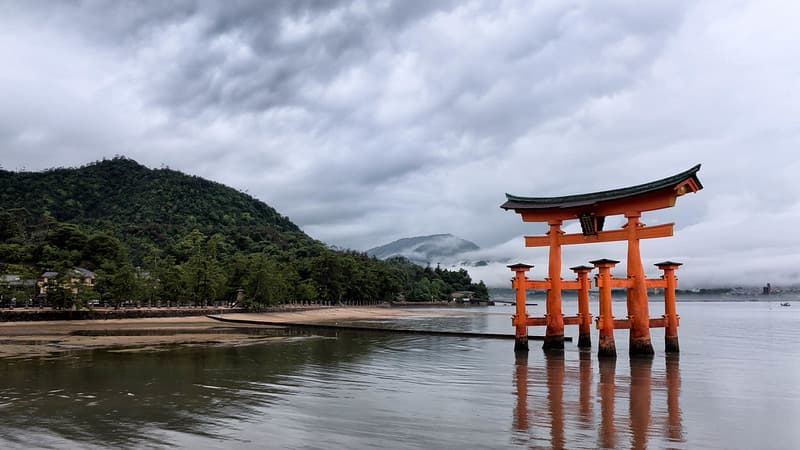
Where an iconic gate and boardwalk appear to float
The UNESCO World Heritage site titled “Itsukushima Shinto Shrine” (Itsukushima Jinja) is an ancient Shinto religious complex situated on Itsukushima Island (commonly known as Miyajima) in the Seto Inland Sea, within Hiroshima Prefecture, JAPAN. Originating in the 6th century and reconstructed in its present grand layout in 1168 under the patronage of the powerful warlord Taira no Kiyomori, the shrine complex is renowned for its bold boardwalk layout built entirely over a tidal inlet.
The architectural ensemble consists of twenty-one timber structures—including the Main Hall (Honden), Oratory (Haiden), Offerings Hall (Heiden), a Noh drama stage, and interconnecting wooden boardwalk corridors supported by thick stilt pillars driven into the sandy seabed. The shrine’s most iconic landmark is its monumental vermilion Torii gate, standing approximately 16 meters tall offshore in the Seto Inland Sea. Engineered to withstand maritime tides and typhoon swells without foundation anchoring, the shrine complex seamlessly integrates traditional Shinto timber architecture with the natural shoreline, backed by the sacred evergreen rainforests of Mount Misen (Misen-san).
Attraction
Itsukushima Shinto Shrine attracts global travelers, photographers, and cultural enthusiasts who come to witness its floating illusion produced by rising ocean tides. Historically considered so sacred that commoners were forbidden to set foot on the island’s soil, the shrine was constructed over the sea water so that pilgrims could approach via boat through the offshore Torii gate.
Visitors experience a dynamic landscape that changes dramatically with the daily tidal cycles. At high tide, the vermilion shrine structures and the massive Torii gate appear to float gracefully on the calm sea surface, reflecting against the surrounding mountain scenery. At low tide, the sea recedes completely, allowing tourists to walk along the exposed mudflats directly to the base of the colossal wooden gate pillars. Beyond the shrine, visitors enjoy walking along historic stone lantern paths, taking ropeway cable cars up Mount Misen for panoramic views across the Seto Inland Sea, meeting wild sika deer that roam freely through town, and sampling local culinary delicacies such as grilled oysters and maple-leaf-shaped sweet cakes (momiji manju).

World Heritage
Inscribed on the UNESCO World Heritage List in 1996 under Cultural Criteria (i), (ii), (iv), and (vi), Itsukushima Shinto Shrine is celebrated for its artistic, spatial, and spiritual harmony:
- Criterion (i) – Masterpiece of Human Creative Genius: The shrine ensemble is a supreme artistic masterpiece, harmoniously combining natural island landscape elements—sea, shore, and sacred forest—with refined Japanese timber architecture.
- Criterion (ii) – Interchange of Architectural Influence: The site illustrates the perfection of the Shinden-zukuri architectural style, a secular aristocratic layout adapted exceptionally for a sacred coastal Shinto sanctuary, influencing subsequent Japanese religious architecture.
- Criterion (iv) – Outstanding Architectural Ensemble: The property represents an exceptional architectural style that visually expresses the ancient Shinto worship of nature, where the island itself is venerated as a deity (kami).
- Criterion (vi) – Direct Association with Spiritual Traditions: The shrine is directly connected to deep Shinto religious practices and Japanese spiritual traditions that emphasize environmental purity and cosmic harmony between humans and the natural world.
Gateway
Travelers can conveniently access Itsukushima Shinto Shrine via two practical Japanese gateway cities located in Hiroshima and Yamaguchi Prefectures featuring public IATA-listed airports, overnight lodging options, transport infrastructure, and tour guide services:
- Hiroshima (Primary Regional Gateway):
- Airport: Hiroshima Airport (IATA Code: HIJ; ICAO Code: RJOA).
- Infrastructure and Distance: Situated approximately 50 kilometers east of central Hiroshima City and 70 kilometers from Miyajimaguchi ferry port. Hiroshima Airport operates domestic flights connecting Tokyo, Sapporo, and Okinawa, alongside international routes. Hiroshima provides extensive accommodation options from luxury international hotels to traditional Japanese inns (ryokan). Frequent limousines connect the airport to Hiroshima Station, where JR San-yo Line trains run to Miyajimaguchi Station in 28 minutes. From the mainland pier, public passenger ferries (JR Ferry and Matsuyama-Miyajima Ferry) complete the 10-minute crossing to Miyajima Island every 15 minutes. Licensed English-speaking guides operate daily.
- Iwakuni (Secondary Local Gateway):
- Airport: Iwakuni Kintaikyo Airport (IATA Code: IWK; ICAO Code: RJOI).
- Infrastructure and Distance: Located 25 kilometers southwest of Miyajimaguchi ferry port. IWK operates commercial flights from Tokyo Haneda. Iwakuni offers traditional inns, business hotels, and local train connections straight to Miyajimaguchi in 20 minutes.
When
The optimal windows to visit Itsukushima Shinto Shrine are during Autumn (October to November) and Spring (March to May), when weather conditions and foliage are at their finest:
- Autumn (October to November): Brings pleasant, crisp weather (12°C to 20°C) and spectacular maple foliage (koyo) across Momijidani Park and Mount Misen, creating striking contrasts against vermilion shrine buildings.
- Spring (March to May): Features mild temperatures (10°C to 18°C) and cherry blossom (sakura) blooms across the island, providing ideal conditions for outdoor walking and ferry rides.
- Summer (June to August): Warm and humid (25°C to 33°C) with occasional rainfall; summer nights host scenic illuminated boat tours around the floating gate.
- Winter (December to February): Chilly (2°C to 10°C) with clear blue skies, minimal crowds, and occasional snow dusting Mount Misen.
Consideration
- Check Tide Schedules: Review daily Miyajima tide tables before visiting. Planning arrival times around peak high tide lets you see the shrine “floating,” while low tide allows walking under the Torii gate.
- Miyajima Visitor Tourist Tax: A local visitor tax (typically 100 JPY) is included in passenger ferry ticket purchases to support island preservation efforts.
- Wild Sika Deer Rules: Free-roaming deer on the island are wild animals. Feeding, petting, or teasing them is prohibited, and visitors should protect paper tickets and maps from hungry deer.
- Footwear and Stair Walking: Navigating boardwalk corridors, sandy mudflats, and stone mountain trails requires comfortable, non-slip walking shoes.
- Evening Ferry Timetables: While passenger ferries run late into the evening, train connections and shops on the island close relatively early. If staying overnight on the mainland, check final ferry departure times carefully.

Resources
- UNESCO World Heritage Centre: Official designation portal detailing cultural criteria, boundary maps, and conservation updates.
- Miyajima Official Tourism Association: Official island portal offering live tide charts, ferry schedules, map guides, and event info.
- Hiroshima Official Tourism Portal (Dive! Hiroshima): Official prefectural travel site providing transportation routes, hotel listings, and regional guides.
- Japan National Tourism Organization (JNTO): Official national travel portal offering transit advice, cultural background, and regional itineraries.
- GetYourGuide: Popular online travel marketplace offering bookings for guided walking tours, ferry packages, and day excursions from Hiroshima to Miyajima.
Featured Image
Torii gate, Itsukushima Shinto Shrine (Mustang Joe, Flickr/CC0 1.0).
News Feed
Advertisement


Comments:
One response to “Itsukushima Shinto Shrine”
-
Although most of the shrine is closed to the public, you can walk around its main deck, along the main altar and noh performance stage. And, when it is low tide, you can walk along the sea floor right up to the gate for a close look. It is amazing that such this gigantic gate stands firmly by its own weight and four supporting pillars.

Leave a Reply