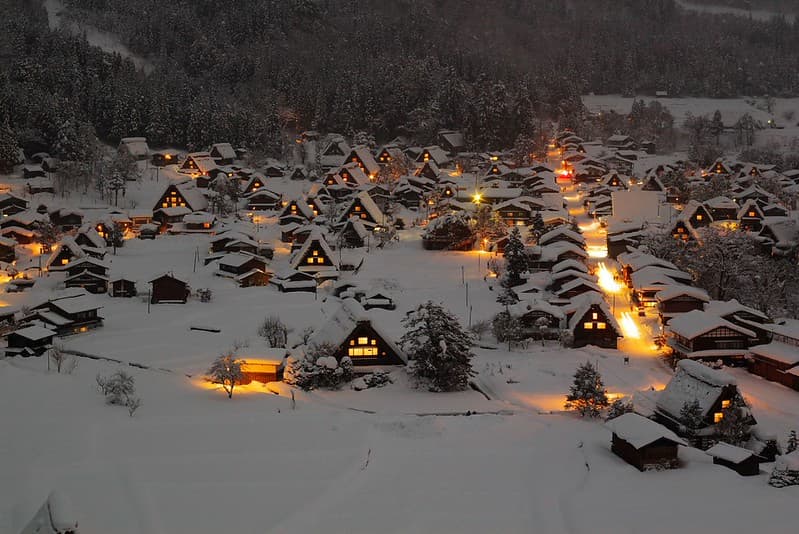
The Historic Villages of Shirakawa-go and Gokayama are renowned for their traditional gassho-zukuri (praying hands) farmhouses, featuring steeply pitched thatched roofs designed to withstand heavy winter snowfall. Located in the remote, mountainous river valleys of Gifu and Toyama prefectures, JAPAN, these villages are a profound example of traditional human settlement that has adapted harmoniously to a harsh, isolated environment.
The site consists of three historic villages: Ogimachi (in Shirakawa-go) and Ainokura and Suganuma (in Gokayama). For centuries, these communities were virtually cut off from the outside world due to geography and extreme weather, leading to a unique culture centered on mutual assistance (yui) and a sustainable lifestyle that included sericulture (silkworm farming) in the multi-level roof spaces of their homes.
Attraction
- Unique Architecture: The gassho-zukuri structures are iconic, particularly when blanketed in deep snow or reflected in flooded rice paddies in spring.
- Cultural Immersion: Unlike “open-air museums,” these are living villages where residents still reside. Staying overnight in a traditional farmhouse allows for an authentic experience of rural Japanese life.
- Seasonal Beauty: The villages are highly photogenic in all seasons—cherry blossoms in spring, vibrant greenery in summer, brilliant autumn foliage, and magical winter snow scenes.

World Heritage
Inscribed in 1995, the site meets UNESCO criteria for its Outstanding Universal Value:
- Adaptation to Climate: The gassho-zukuri houses are an outstanding example of architectural adaptation to the specific climatic challenges of a heavy-snowfall region.
- Traditional Human Settlement: It represents a significant stage in human history, preserving a traditional lifestyle and social structure (based on the yui system of cooperation) that is now vulnerable to the impacts of modern development.
Gateway
The typical gateways are:
Toyama
- Transport: Served by Toyama Airport (TOY). From the city, there is a highway bus connection that takes approximately 80–85 minutes to reach Shirakawa-go.
- Lodging: As a major city, Toyama offers a wide range of accommodation options, including business hotels and larger tourist hotels, providing a convenient base for travelers.
Komatsu
- Transport: Served by Komatsu Airport (KMQ). Travelers typically take a shuttle or local transit into Kanazawa or another nearby hub to connect to the highway bus network for Shirakawa-go.
- Lodging: Komatsu and the surrounding Ishikawa area provide various lodging facilities, ranging from traditional inns to modern hotels.
Nagoya
- Transport: Served by Chubu Centrair International Airport (NGO). This is a major international hub. Travelers can reach Shirakawa-go via a bus or train journey that takes approximately 3 hours.
- Lodging: Being a large metropolitan area, Nagoya offers an extensive array of lodging, from luxury hotels to budget-friendly options, suitable for all types of travelers.
When
- Mid-January to mid-February: Best for the iconic “deep snow” aesthetic and rare evening illumination events.
- Early May: Ideal for photographers, as the flooded rice paddies create “mirror” reflections of the houses against the fresh green mountain backdrop.
- Late October to early November: Perfect for those seeking vibrant autumn foliage.
Consideration
- Respect Residents: These are not theme parks; please respect the privacy of residents and stay on designated paths.
- Hours of Operation: Public sightseeing hours in Ogimachi are generally 8:00 AM to 5:00 PM. Tourists staying overnight may explore outside these hours, but day-trippers should plan accordingly.
- Winter Travel: If visiting in winter, ensure your vehicle (if driving) has proper snow tires or chains, as roads can be treacherous.
- Booking: Buses and farmhouse accommodations fill up months in advance, especially during peak light-up events or holiday seasons.

Resources
- Shirakawa-go Tourist Association – The official site for local event information, transport, and alerts.
- UNESCO World Heritage Centre – Official documentation of the site’s historical and cultural significance.
- Shirakawa-Going – A practical, user-friendly travel guide for planning your visit and avoiding peak congestion.
- Japan Bus Online – Essential for reserving your bus transit from Kanazawa or Takayama.
- Trip.com – Kanazawa Hotels – A reliable platform to book your stay in your gateway city.
Featured Image
Ogimachi, Shirakawa-go in winter (Tsuda, Flickr/CC BY-SA 2.0).
News Feed
Advertisement


Comments:
5 responses to “Historic Villages of Shirakawa-go and Gokayama”
-
If you are from Kanazawa, head out early in the morning for a 1 hour bus ride to Shirakawa-go. There are a number of departures from daily but if you want to maximize your time in the village, you might want to take the earliest bus. I spent roughly 5 hours in Shirakawa-go before I took a connecting bus to my next destination: Takayama.
As a UNESCO World Heritage Site, Shirakawa-go does not really have a particular must-see attraction. The attraction is the village itself, replete with thatched roof houses built without using a single nail.
Where to eat in Shirakawa-go: Irori is my restaurant of choice. Located a few steps away from the bus station, you can feast in delicious Hoba Miso which is a specialty within the Gifu Prefecture.
You can choose to stay overnight in one of those thatched roof houses or take the bus later in the day to your next destination, Takayama.
-
The village is amazing in summer and spring time but during winter, it’s truly an extraordinary sight
-
I went to Shirokawa-go and stayed a night in one of those houses before. its a very beautiful place. in winter time, the village will have very heavy snow fall thats why the roofs are built with big slope to avoid snow accumulation on top of roofs cause it will collapse the houses.
-
The roofs in particular help residents deal with the region’s harsh weather. If the roof is steep, the snow will fall off easily. Beyond winter, these roofs offered plenty of work space for silk cultivation. At one time silk cultivation was the main industry in our village. Creating a large space also helped house a large number of families together for the industry’s labor force. Thus, this architecture mirrors the culture of our village.
-
Exploring the village will surely give you a surreal feel of the old and rural Japanese experience. A quick walk up the hilly portion of village brings you to a spot that perfectly captures the whole village. While the day offers a beautiful and panoramic view of the village, it is also worth witnessing the area during the night when the houses light up.

Leave a Reply